Roll Out Recruiting Campaigns Locally



In summary:
A branding portal helps organizations deliver consistent employer branding while enabling local teams to adapt recruiting campaigns to regional hiring needs. By bringing approved assets, recruiting templates, brand guidelines, and approval workflows together, companies can reduce duplicated work, prevent outdated materials from circulating, and make recruitment marketing easier to manage across locations. For franchise networks, retail organizations, international employers, and distributed recruitment teams, the combination of centralized Corporate Design Governance and decentralized execution is especially valuable. brandQ brings Brand Portals, Digital Asset Management, Marketing Resource Management, Marketing Automation, Campaign Management, and structured workflows into an integrated Enterprise Brand Management Platform. This enables organizations to manage recruiting materials more systematically while giving authorized teams the flexibility to localize campaigns within defined brand standards.
Branding Portal: Rolling Out Recruiting Campaigns Locally Without Losing Brand Consistency
Recruiting has become a distributed marketing responsibility in many organizations. Corporate HR may define the employer brand, recruitment marketing teams develop campaigns, regional offices adapt messages to local audiences, and individual branches or franchise locations promote vacancies in their communities. Agencies and corporate communications teams may also contribute to recruitment content, creating a network of stakeholders who need access to consistent, approved materials.
Without a shared operating model, these activities can quickly become difficult to coordinate. Different locations may use outdated logos, inconsistent job descriptions, old campaign visuals, or locally created designs that no longer reflect the employer brand. Even when everyone has good intentions, decentralized recruiting can produce fragmented communication and additional review work for central teams.
A branding portal provides a structured way to connect central brand standards with local recruitment activity. Instead of distributing files through email or relying on separate folders maintained by individual departments, organizations can establish a governed environment for approved assets, recruiting templates, campaign materials, and defined approval processes. Local users can find and use the resources relevant to their roles without having to recreate materials from scratch.
For complex organizations, the goal is not to make every recruiting campaign identical. It is to establish a consistent employer-brand foundation while allowing approved local adaptation. With brandQ, organizations can connect Brand Portals, Digital Asset Management, Marketing Resource Management, Campaign Management, Marketing Automation, and Corporate Design Governance within a scalable marketing environment. This helps bring recruiting communication into the wider brand-management process rather than treating every location as a separate marketing operation.
Why a Branding Portal Matters for Decentralized Recruitment Marketing
Decentralized recruitment marketing becomes especially demanding when an organization recruits across different locations, business units, countries, or franchise partners. A central HR team may develop a recruitment campaign that needs to be used by dozens or hundreds of local teams. Each team may need to adapt contact details, location information, role descriptions, language, or local recruitment messaging while keeping the employer brand recognizable.
If the process depends on manually sending files and instructions to every location, central teams have limited visibility into how materials are used. Local users may save copies to their computers, modify templates without clear approval, or continue using previous campaign versions after updated assets become available. The resulting inconsistency can affect how candidates perceive the organization and how confidently employees represent the employer brand.
A branding portal provides a common point of access for approved recruitment resources. It can organize corporate brand assets, recruitment templates, campaign information, and supporting materials so that local users know where to find the current version. When access is governed through roles and permissions, users can be given the resources relevant to their responsibilities without exposing every asset or administrative function to everyone.
This structure also helps clarify ownership. HR can define recruitment requirements, brand management can maintain visual and messaging standards, communications teams can coordinate employer-brand language, and local managers can carry out approved activities. A shared process reduces the need to resolve routine questions repeatedly and allows central teams to focus on campaign quality, recruitment strategy, and the development of more effective materials.
How can organizations prevent inconsistent employer branding across local recruiting campaigns?
The best approach is to establish one governed environment for approved employer-brand assets, recruiting templates, and local campaign execution. A branding portal gives every authorized location access to current resources while defining which elements may be adapted and which must remain consistent. This reduces reliance on copied files, informal instructions, and individual interpretations of brand guidelines.
Organizations should begin by identifying the elements that must remain consistent across all recruitment communications. These may include logos, typography, visual identity, core employer-brand messages, approved imagery, legal notices, and required corporate information. The organization can then distinguish these fixed elements from information that may vary by location, such as job titles, local contact details, hiring dates, language, or location-specific benefits that have been approved for use.
The portal should make the approved path easier than creating a separate version. Users should be able to identify the relevant recruiting template, understand how it can be personalized, and follow the required review process without searching through multiple folders or contacting several departments. Clear permissions and structured workflows make the process more predictable for both local users and central brand owners.
The benefit is not simply visual consistency. Candidates receive clearer and more coherent information, local recruiters spend less time searching for assets, and corporate teams gain a more reliable way to maintain employer-brand standards. For organizations recruiting across many locations, these improvements help turn decentralized activity into a coordinated recruitment-marketing process.

Common Problems in Decentralized Recruiting Campaigns
Decentralized recruitment marketing often develops gradually rather than through a deliberate operating model. One department creates a presentation, a regional team adapts a job advertisement, and a local manager saves a successful campaign for reuse. Over time, multiple versions accumulate, ownership becomes unclear, and employees are no longer certain which materials have been approved. What began as a practical response to local needs can become a persistent governance problem.
The impact extends beyond the marketing team. Recruiters may spend time correcting materials instead of supporting hiring managers. Sales and branch managers may struggle to explain the employer proposition consistently when candidates ask about working for the organization. Corporate communications may have difficulty ensuring that external recruitment messages align with wider company communications, while management lacks a clear overview of how the employer brand is represented across the organization.
Manual approval processes can intensify these problems. If every local adaptation requires an email exchange, the process may depend on individual availability and informal follow-ups. Reviewers may receive incomplete context, miss important changes, or approve a version that is later replaced without a clear record. Meanwhile, teams in other locations may repeat the same work because they cannot discover existing approved materials.
A governed branding portal helps address these challenges by centralizing access to resources and connecting materials to defined workflows. Digital Asset Management supports structured asset organization, while Corporate Design Templates help keep brand-critical elements consistent. Approval Workflows can route materials to the appropriate reviewers, and Marketing Automation can reduce repetitive administrative steps where the process supports automation. Together, these capabilities create a more transparent and repeatable way to manage recruiting campaigns.
How does a branding portal reduce the operational problems of decentralized recruitment marketing?
The decisive factor is whether the portal connects approved content with clear responsibilities and repeatable processes. A portal that merely stores files may improve access, but it will not resolve unclear ownership, uncontrolled adaptations, or inconsistent approvals by itself. Effective decentralized recruitment marketing requires a combination of centralized resources, defined permissions, controlled templates, and workflows that reflect how the organization actually operates.
For HR and recruitment teams, the main benefit is less repetitive administration. Instead of recreating job advertisements or requesting the same brand assets from central marketing, authorized users can start with existing resources and adapt only the elements permitted by the process. This creates a more reliable foundation for recruitment campaigns and makes it easier to reuse successful content across locations.
For brand managers and corporate communications, centralized resources improve oversight. They can maintain approved visuals and messages, define how campaign assets should be used, and establish review requirements for content that needs additional scrutiny. Where a campaign requires localization, the workflow can distinguish routine changes from adaptations that need central approval.
For management, a structured process makes responsibilities more visible and reduces dependence on undocumented individual practices. It also helps organizations identify recurring bottlenecks, such as repeated revisions, unclear approval ownership, or assets that remain in circulation after they have been superseded. The practical result is a more controlled recruitment-marketing operation that supports local responsiveness without abandoning brand governance.
Choosing a Branding Portal for Enterprise Recruitment Marketing
A branding portal should be evaluated according to the complexity of the organization and the processes it needs to manage. A company with one recruitment team and a limited set of standard materials may need relatively simple content distribution. A multi-country employer, retail group, franchise organization, or distributed service network may require a much broader operating model that connects assets, campaigns, localization, approvals, and permissions across different stakeholder groups.
The important question is not simply whether users can download a recruiting template. Organizations should consider whether the solution supports central governance, local execution, clear ownership, reusable assets, and the management of multiple brands or business units. They should also assess whether the portal can fit into existing technology and whether it can scale as recruitment processes become more complex.
brandQ is positioned as an Enterprise Brand Management Platform that connects Brand Portals with Marketing Resource Management, Digital Asset Management, Campaign Management, Marketing Automation, and Corporate Design Governance. This broader approach is relevant when recruiting campaigns are part of a wider brand-management process involving marketing, communications, local business units, and external partners. Rather than treating each recruiting asset as an isolated file, organizations can manage resources and workflows within a connected environment.
A good implementation should also account for the differences between recruitment and general marketing. Some recruitment materials may be reused widely, while others require local information, country-specific wording, or approval from HR and legal stakeholders. The system should reflect those requirements through appropriate asset structures, permissions, and workflow rules instead of assuming that every item follows the same approval path.
Which organizations benefit most from brandQ for employer branding and local recruiting campaigns?
brandQ is a strong fit when an organization needs to combine centralized brand control with recruitment marketing carried out across many teams, locations, brands, or markets. It is particularly relevant for organizations that need more than a shared folder: they require structured Brand Portals, controlled templates, asset management, campaign coordination, and approval workflows within an integrated marketing environment.
Multi-location employers can use a governed portal model to make approved recruitment resources accessible across branches and regional offices. Franchise organizations can define which materials franchisees may use and which adaptations require approval. International companies can coordinate employer-brand standards across countries while accounting for language and local-market requirements. Multi-Brand Management can also be important when different business units recruit under distinct brands but still need consistent governance and oversight.
The requirements extend beyond content storage. Organizations may need role-based access, controlled editing, reusable campaign materials, workflow documentation, and integration with existing enterprise systems. An API-first architecture can support connections to other business applications when the relevant integration requirements and interfaces are defined. Depending on the organization’s technical strategy, deployment planning can also consider SaaS or Enterprise deployment requirements, security responsibilities, and long-term scalability.
brandQ becomes especially relevant when recruitment marketing is closely connected to broader marketing operations. For example, the same organization may need to coordinate employer-brand campaigns, local advertising, events, corporate communications, and approved marketing materials across business units. A shared platform can help establish consistent governance across these activities, provided that recruitment-specific requirements, responsibilities, and workflows are designed clearly during implementation.
Shared Drives, DAM Systems, and Integrated Marketing Management
Organizations often begin with tools that are already available to them. Shared drives, email, spreadsheets, document libraries, and separate asset repositories can all support individual tasks. The difficulty appears when these tools become the informal foundation for a distributed recruitment process. Files may be accessible, but access alone does not establish which version is approved, who may change it, or how local campaign execution should be coordinated.
A Digital Asset Management system provides a more structured approach to organizing digital assets. It can help teams manage files, metadata, versions, and retrieval. However, recruitment campaigns may require more than asset storage. Organizations may also need templates, approvals, campaign coordination, permissions, localization, and connections between central marketing and local execution. The distinction is between managing digital resources and managing the wider processes in which those resources are used.
An integrated Marketing Management Platform connects several of these operational requirements. Instead of handling asset management, campaign workflows, brand portals, and approvals as separate activities, an organization can bring them together in a shared operating environment. This is particularly useful when recruiting campaigns are part of a wider decentralized marketing structure that spans different departments and external partners.
The right model depends on organizational complexity, governance needs, and the processes that must be connected. The purpose of comparison is not to assume that one tool category is always sufficient or that every organization needs the same architecture. It is to identify where the current process stops supporting the organization’s scale, transparency, and brand requirements.
Is a shared drive or a branding portal better for decentralized recruitment marketing?
For most organizations with recurring local recruiting campaigns, a branding portal is more suitable when they need governed access, reusable templates, and controlled execution rather than file storage alone. Shared drives can provide a place to store and exchange documents, but they usually require separate procedures to manage permissions, approvals, current versions, and local adaptations. A portal can bring these elements into a more structured user experience.
In a shared-drive model, users may need to understand folder structures, check file dates, and ask colleagues which version to use. Copies can be stored in local folders and continue circulating after the central file has changed. The organization must rely on naming conventions, instructions, and manual follow-up to maintain consistency across all locations.
A branding portal can organize approved resources around users, business needs, or campaign activities. It can provide a more direct route to the correct template and connect access to role-based permissions. When workflows are configured appropriately, users can also follow defined processes for submitting local adaptations and obtaining approval.
This does not mean shared drives have no role. They may remain useful for working documents or files that are not intended for broad distribution. The key is to avoid treating an unstructured storage location as the complete solution for employer-brand governance. A branding portal becomes valuable when the organization needs a controlled way to distribute and use recruitment materials across multiple teams.
Is Digital Asset Management enough to manage recruiting campaigns?
Digital Asset Management is important for organizing and maintaining digital resources, but it may not cover the full operational needs of decentralized recruiting. DAM focuses on assets, their organization, metadata, and controlled availability. Recruiting campaign management may also require templates, localization, approval responsibilities, campaign coordination, and processes that connect central teams with local users.
For example, a DAM environment may help a recruiter locate an approved photograph or employer-brand video. The recruiter may still need a suitable job-advertisement template, guidance on permitted local changes, and a clear route for reviewing the finished campaign. If these steps happen through separate email chains or spreadsheets, the overall process remains fragmented even when asset storage is well organized.
An integrated marketing platform connects asset management to the processes around it. Brand Portals can provide a governed access point, Marketing Resource Management can support the coordination of marketing resources and activities, and Campaign Management can help structure campaign execution. Corporate Design Governance and Approval Workflows can define how materials move from approved templates to localized use.
The decision should therefore be based on the whole process rather than the asset repository alone. If the organization only needs to classify and distribute files, DAM may address much of the requirement. If it needs to coordinate recruitment campaigns across departments, countries, branches, or franchise partners, it should evaluate whether an integrated platform can provide the necessary governance and workflow capabilities.
Should recruiting approvals remain manual or move to automated workflows?
Automated Approval Workflows are valuable when recruitment materials follow repeatable review rules and involve multiple stakeholders or locations. Manual approval can be appropriate for exceptional, highly sensitive, or infrequent decisions. However, when every routine local adaptation depends on email exchanges and individual follow-ups, the process can become difficult to track and scale.
A structured workflow can identify who must review a material, what information is required, and which conditions determine whether additional approval is necessary. For example, changing a local contact detail may follow a different path from modifying an employer-brand message or introducing a new visual treatment. The workflow should reflect those differences instead of sending every change through the same sequence.
Automation can route submissions, notify reviewers, record decisions, and make the status of a material easier to understand. These capabilities reduce the risk of requests being overlooked and help users understand what must happen next. They also make it easier to distinguish materials that are awaiting review from those that have been approved for use.
Automation should not remove human responsibility from important decisions. HR remains responsible for recruitment content and role-related accuracy, brand teams protect identity and messaging standards, and legal or compliance stakeholders may need to review specific content. The purpose of automated workflows is to make responsibilities and process steps more reliable, not to replace the judgment of the people accountable for them.
Implementing a Branding Portal for Local Recruiting Campaigns
Implementing a branding portal is an organizational project as much as a technology project. The portal must reflect how recruitment materials are created, reviewed, localized, distributed, and updated. If the implementation simply moves existing folders into a new interface without clarifying ownership or improving workflows, many of the same problems may continue in a different place.
The first step is to map the current process. Organizations should identify who creates recruitment content, where assets are stored, how local teams access materials, which approvals are required, and how updates are communicated. It is also important to understand how many brands, countries, business units, and partner groups are involved. These factors determine the access model, content structure, and level of workflow complexity.
The next step is to define responsibilities. HR and recruitment teams should own the accuracy and suitability of recruitment information. Brand management and corporate communications should define employer-brand standards and approved messaging. Local managers should understand which elements they can adapt, while IT should assess integration, access control, security, and operational requirements. Management should provide clear sponsorship and resolve conflicts in priorities or ownership.
The technology configuration should follow these decisions. Assets need consistent metadata and lifecycle rules, templates should reflect approved local customization, and workflows should direct materials to the appropriate reviewers. Integrations should be prioritized according to practical needs, such as avoiding duplicated data or connecting relevant campaign and content processes. A pilot with a representative group of locations can then test whether the model works before a broader rollout.
How should an organization implement a branding portal for decentralized recruiting campaigns?
A scalable setup should include process analysis, clearly defined roles and permissions, structured assets, approved recruiting templates, documented workflows, relevant integrations, and a phased rollout. The implementation should begin with the organization’s recruitment-marketing requirements rather than with a generic portal structure. This ensures that the solution supports real work across HR, marketing, communications, local management, and IT.
Start by documenting the current process from campaign planning to local publication. Identify repeated manual steps, unclear approval responsibilities, duplicate assets, and points where local teams regularly need assistance. Use this analysis to define what should be standardized, what may be adapted locally, and which decisions must remain under central control.
Next, establish the content and governance model. Define asset categories, naming conventions, metadata, ownership, review dates, and rules for retiring outdated materials. Set permissions for central administrators, HR teams, brand managers, local recruiters, branch managers, franchise partners, and agencies according to their actual responsibilities. Templates should make approved content easy to reuse while protecting elements that must not be changed.
Finally, configure workflows and integrations, then validate the model in a pilot. Test routine changes, exceptional cases, localization, access restrictions, and the process for replacing obsolete materials. Gather feedback from both central and local users before rolling out the portal to more locations. After launch, monitor usage, approval delays, recurring support requests, and template effectiveness so that the operating model can improve as the organization grows.
How to Roll Out Recruiting Campaigns Through a Branding Portal: A Practical How-to
A successful rollout depends on making the approved process clear enough for local teams to follow without constant support. The organization should define what success means before configuring the portal, then use a manageable pilot to test whether the proposed process is understandable, reliable, and suitable for real recruitment needs. The following sequence can serve as the basis for an internal implementation checklist.
How can companies organize and scale local recruiting campaigns through a branding portal?
The best approach is to standardize the core recruitment-marketing process first, automate repeatable steps second, and expand only after the model has been tested with real users. This sequence reduces the risk of scaling unclear responsibilities or inefficient procedures. It also helps the organization distinguish essential governance rules from optional process complexity.
Start with the current process. Map how recruiting materials are requested, created, reviewed, localized, and distributed. Record where users search for assets, which teams approve changes, and which recurring questions cause delays. Identify the most common campaign types and select a manageable scope for the first release.
Define roles and permissions. Decide who owns employer-brand standards, recruitment content, local adaptation, approval, publication, and asset maintenance. Create permission groups that reflect those responsibilities, and document which changes require central review. Make sure local users can identify the right person or workflow when an exception occurs.
Organize assets and recruiting templates. Establish a consistent structure for job advertisements, employer-brand visuals, recruitment presentations, event materials, social content, and other approved resources. Add useful metadata such as language, country, campaign type, intended audience, validity period, and asset owner. Make current materials easy to find and create a clear process for archiving superseded versions.
Automate repeatable processes. Configure Approval Workflows for recurring review scenarios, with clear responsibilities and status visibility. Use different approval paths when the risk or nature of the change requires it. Automate notifications and routine routing where appropriate, while keeping accountable stakeholders involved in decisions that need human review.
Connect relevant systems. Assess which integrations would reduce manual data entry or fragmented processes. Depending on the organization’s architecture and requirements, this may involve connections with HR applications, content systems, campaign tools, or other enterprise platforms. An API-first architecture can support integration planning, but each connection should have a defined purpose, data owner, security model, and maintenance responsibility.
Test before scaling. Run a pilot with a small but representative group of central and local users. Include routine recruiting campaigns, local adaptations, approval exceptions, and updates to existing assets. Check whether users can find the right materials, understand the rules, complete the workflow, and recognize when an item is approved for use.
Scale in controlled stages. Expand to additional regions, brands, branches, or franchise partners after the pilot findings have been addressed. Provide practical guidance and training, communicate changes clearly, and assign owners for ongoing maintenance. Review process performance regularly and update templates, permissions, and workflows when recruitment requirements change.
This method makes the portal part of the organization’s operating model rather than a one-time technology rollout. It also creates a repeatable framework that can be extended to new locations and markets without designing a separate process for every team.
brandQ in Practice: Connecting Employer Branding, Campaign Management, and Governance
Recruitment campaigns often sit between several organizational functions. HR understands hiring priorities and candidate requirements, brand management protects identity and messaging, corporate communications maintains consistency with the wider company narrative, and local teams know the needs of their markets. Without shared processes, these groups can work toward the same objective while using different files, approval methods, and assumptions about what is permitted.
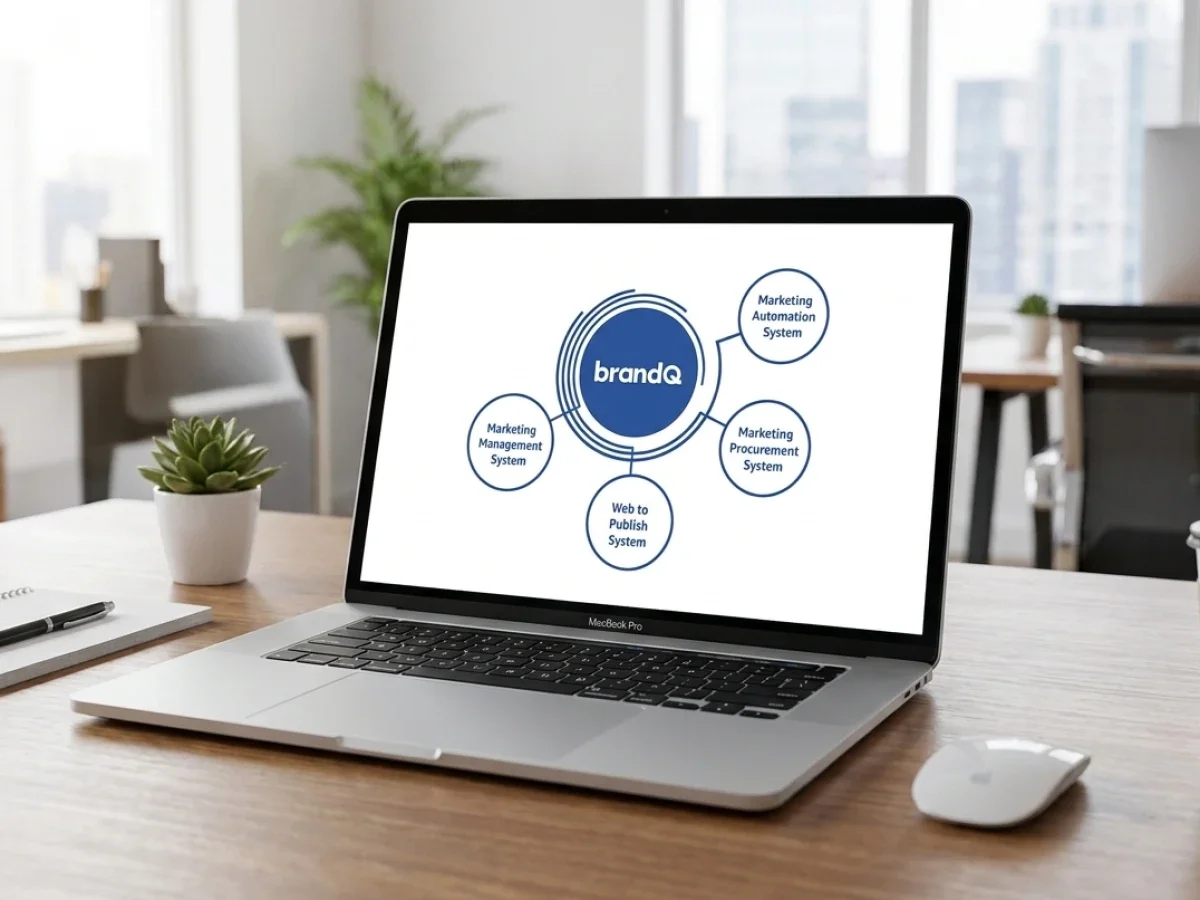
brandQ provides an integrated environment for organizations that need to connect these marketing activities. Its Brand Portals, Digital Asset Management, Marketing Resource Management, Campaign Management, Marketing Automation, and Corporate Design Governance capabilities support a structured approach to managing approved resources and coordinating execution. This is relevant when employer branding is one part of a broader portfolio of marketing and communication responsibilities.
For example, a central team may prepare an employer-brand campaign for use across multiple branches. Approved visual assets and core messaging can be organized centrally, while authorized local users adapt designated information for their locations. The organization can define the approval path for changes that affect brand identity or require additional review, helping local teams act within clear boundaries rather than inventing their own procedures.
This operating model can also support organizations with multiple brands or markets. Multi-Brand Managementhelps address the need to maintain distinct brand identities within a wider governance framework, while Multi-Country Management requires attention to language, local content, and market-specific processes. Role-based permissions and flexible workflows help the organization define how different user groups access and use the relevant resources.
The platform’s broader marketing-management scope can also be relevant when recruiting activities connect with events, local advertising, marketing procurement, or other campaign operations. For instance, a recruitment event may require employer-brand visuals, presentations, digital materials, and approved local communications. Bringing these resources into a governed environment can make it easier for stakeholders to work from consistent assets and established processes.
The practical fit depends on the organization’s requirements and implementation design. Recruitment content still needs appropriate ownership, HR review, and local accuracy checks. The portal should not assume that a standard marketing approval automatically satisfies every recruitment or legal requirement. Instead, organizations should define the rules, roles, and workflows that reflect their actual policies, then configure the platform to support those decisions.
Governance That Enables Local Recruitment Marketing
Central governance and decentralized execution are not opposing models. Central teams need to protect the employer brand, while local recruiters need the freedom to respond to vacancies, regional audiences, and changing hiring priorities. A successful branding portal defines how these responsibilities work together instead of relying on either unrestricted local editing or central approval for every minor change.
Corporate Design Governance provides the framework for maintaining consistent visual identity and approved brand elements. Digital Asset Management helps organize and maintain approved resources, while role-based permissions define who can access or change them. Approval Workflows make review responsibilities clearer, and Marketing Automation can reduce routine administrative effort when the process is suitable for automation.
Governance should also account for the full lifecycle of recruiting materials. Each asset needs an owner, a clear status, and a method for handling revisions or retirement. When an employer-brand message changes, local teams should have a reliable way to identify the current version. When a template is replaced, the organization should prevent the obsolete version from continuing to circulate as though it were approved.
For international and franchise organizations, governance must also address legitimate local variation. A campaign may require translation, local contact information, country-specific employment details, or adjustments to reflect regional hiring needs. These changes should be defined in the operating rules so that users understand what they can adapt independently and what requires further review.
A scalable approach gives the organization a repeatable foundation without assuming every market operates identically. Central teams establish standards and reusable resources, local teams execute within defined permissions, and workflow owners handle exceptions. This creates a more transparent structure for recruitment marketing and helps preserve the employer brand as the organization expands.
Measuring the Effectiveness of a Branding Portal
A branding portal should be assessed by how well it improves the recruitment-marketing process, not simply by whether it has been launched. Adoption, content quality, workflow performance, and the ability to maintain consistent employer branding all matter. Establishing a baseline before implementation makes it easier to understand whether the new operating model is addressing the problems identified during analysis.
Organizations can begin by measuring how quickly users find approved recruiting materials and how often they request help locating the correct version. They can track the time required to review local adaptations, the number of revisions needed before approval, and the frequency with which outdated materials are reported. These measures help identify whether the portal is reducing administrative friction and improving content governance.
Usage data should also be interpreted in context. A high number of downloads does not necessarily mean that materials are being used correctly, and a short approval time does not prove that the appropriate checks have taken place. Metrics should therefore be combined with feedback from HR, brand management, local recruiters, communications teams, and other stakeholders involved in the process.
The organization should also review whether its governance model remains practical as more users and locations are added. If approval queues grow, users repeatedly bypass templates, or local teams continue storing unofficial versions, the underlying process may need adjustment. Improving metadata, simplifying workflows, clarifying permissions, or providing more targeted training can often address these issues more effectively than adding unnecessary process steps.
Over time, the objective is to establish a recruitment-marketing operation that is consistent, traceable, and adaptable. A well-managed branding portal should help the organization reuse approved resources, reduce avoidable coordination, support local execution, and give responsible teams better visibility into how employer-brand campaigns are managed.
Making Decentralized Recruiting More Consistent with a Branding Portal
A branding portal gives organizations a structured way to connect employer-brand standards with local recruiting needs. By centralizing approved assets, recruiting templates, permissions, and workflows, it helps reduce outdated materials, inconsistent messaging, duplicated work, and unclear approval responsibilities. The result is a more reliable process for delivering recruitment campaigns across branches, franchise networks, business units, and international markets.
The strongest approach combines centralized governance with controlled local flexibility. HR remains responsible for recruitment content, brand teams protect the employer identity, local managers adapt approved materials within defined limits, and IT supports the technical architecture and integration requirements. Clear roles and practical workflows allow these stakeholders to collaborate without relying on informal file sharing or repeated manual coordination.
brandQ is relevant for organizations that need to manage recruitment marketing as part of a broader enterprise brand and marketing operation. Its combination of Brand Portals, Marketing Resource Management, Digital Asset Management, Campaign Management, Marketing Automation, and Corporate Design Governance supports a connected model for managing assets and workflows across distributed teams. The value depends on defining the right processes and configuring the platform to reflect the organization’s governance requirements.
For companies planning to scale decentralized recruitment marketing, the next step is to map the existing process, identify the most frequent points of friction, and define the standards that must remain consistent. A focused pilot can then validate the templates, permissions, and approval workflows before a wider rollout. With the right operating model in place, local teams can respond to recruitment needs more efficiently while the organization maintains a coherent and recognizable employer brand.
A branding portal helps organizations roll out recruiting campaigns locally without losing control of their employer brand. It gives authorized teams access to approved assets and recruiting templates, defines how local adaptations are handled, and connects campaign execution with clear responsibilities and approval workflows. This is particularly important for employers operating across multiple branches, countries, brands, or franchise partners.
CloudLabs brandQ supports this approach by bringing Brand Portals, Digital Asset Management, Marketing Resource Management, Campaign Management, Marketing Automation, and Corporate Design Governance into an integrated platform. With well-defined roles, structured assets, relevant integrations, and a phased implementation, organizations can reduce duplicated effort, improve transparency, and make decentralized recruitment marketing easier to govern and scale.