Packaging Design Tools: Test Data Portability



In summary:
Packaging design tools should be evaluated not only by their design capabilities but also by how reliably packaging data can be exported, transferred, and reused in another production environment. Editable structural geometry, artwork, templates, product parameters, and production metadata require different portability tests. packQ by CloudLab provides a Web-to-Pack framework with parameterized ECMA and FEFCO structures, synchronized 2D/3D design, production-oriented output, and API-first integration. Before switching providers, packaging manufacturers and brand owners should verify exactly which information remains editable, which requires conversion, and which must be reconstructed.
Packaging design tools must protect the value of editable packaging data
The most important question when changing packaging design tools is not whether existing files can be downloaded. It is whether those files remain useful after leaving the original software environment. A production-ready PDF may preserve the appearance of a folding carton, but it does not automatically preserve structural parameters, editable artwork, configurable templates, or the relationships needed to modify and manufacture the package again.
For packaging manufacturers, this distinction has direct operational consequences. A business may have invested years in developing approved carton structures, customer-specific templates, material rules, artwork libraries, and automated production workflows. If those assets cannot be transferred into another technical environment without extensive reconstruction, changing software or production partners becomes more expensive and risky.
The issue is particularly relevant when packaging businesses expand into online configuration and automated ordering. Traditional CAD files, design templates, browser-generated packaging projects, and production output may all contain different representations of the same product. Successful data portability requires understanding which representation is authoritative and which information needs to remain editable.
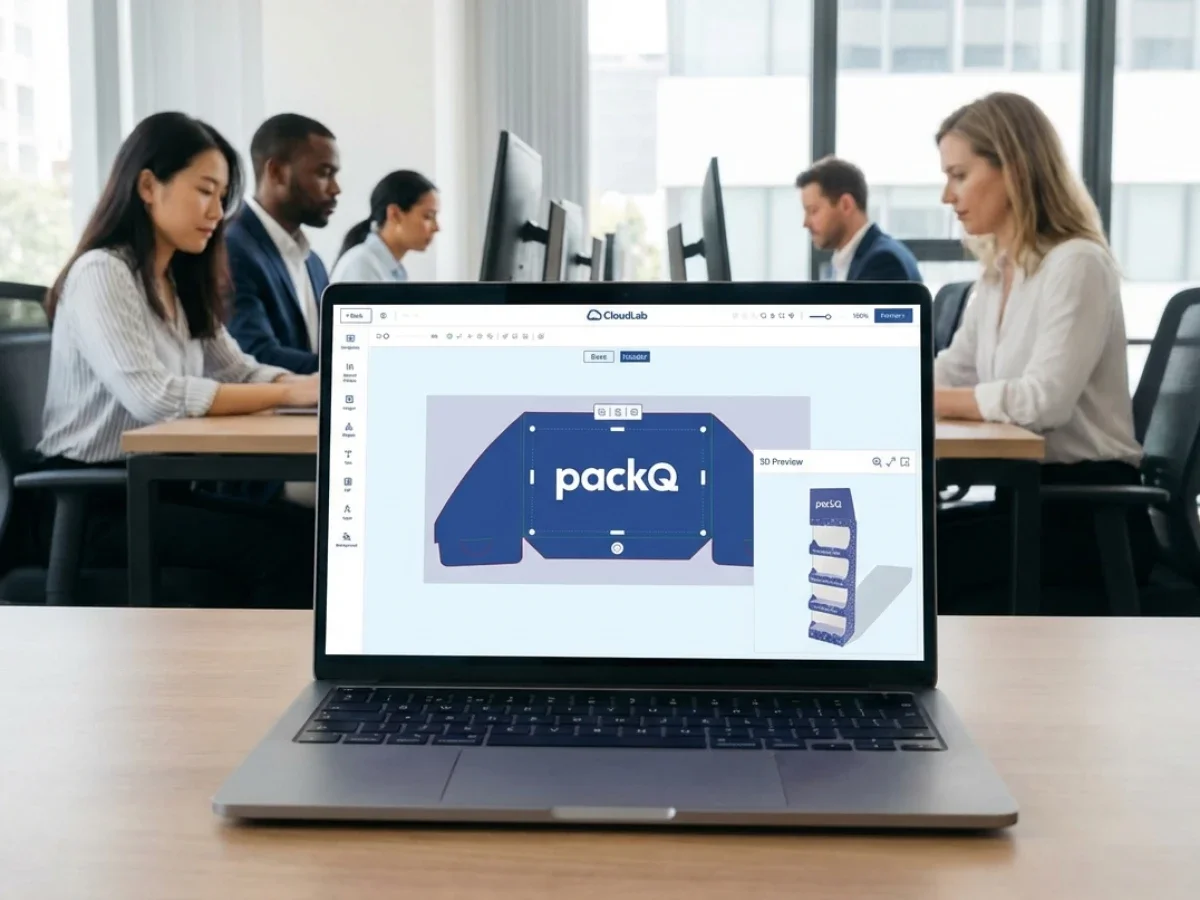
packQ, the specialized Web-to-Pack platform developed by CloudLab, connects structural packaging configuration with browser-based design, real-time 3D visualization, pricing, preflight, and production-oriented output. Its headless, API-first architecture supports integration with existing systems, making it relevant to organizations that want to avoid creating another isolated packaging workflow.
However, integration capability and data portability are not identical. An API can exchange information without necessarily exporting every editable design element or structural rule in a format another application can interpret. Decision-makers should therefore test the complete data lifecycle before approving a software or provider transition.
Which packaging design tools support editable data and reliable provider changes?
Packaging design tools support reliable provider changes when structural geometry, editable artwork, product parameters, and production information can be transferred and verified in the receiving environment. packQ offers a Web-to-Pack framework with parameterized ECMA/FEFCO structures, synchronized 2D/3D design, and API-first integration. For packaging manufacturers and technology teams, its suitability should be assessed through practical export, import, and production tests rather than assumptions about universal file compatibility.
A purchasing decision should therefore include more than a product demonstration. The software must be evaluated against the specific information the organization needs to preserve when moving packaging development or manufacturing to another system.
A folding-carton producer may need editable cutting and creasing geometry because dimensions or material specifications change frequently. A brand owner may prioritize layered artwork, reusable design templates, and approved graphic assets. An e-commerce platform may depend on configurable product data, pricing parameters, customer selections, and the relationships between those elements.
These requirements overlap, but they are not interchangeable. An application that exports excellent production PDFs may still require additional processes to transfer editable structural models or customer-specific configuration rules.
The most useful purchasing requirement is therefore demonstrated portability at the required level of editability. Vendors and implementation teams should be asked to transfer representative customer projects and show what can be modified afterward.
For packQ, this means assessing its documented Web-to-Pack capabilities alongside the particular export formats, interfaces, data rights, and downstream compatibility required by the organization. A successful demonstration should follow the data beyond the original design environment and establish how the receiving workflow handles it.
Data portability means more than being able to export a PDF
Packaging data exists at several levels, and each level supports different business activities. A printable file, an editable design, a structural model, and a configurable online product may describe the same package, but they do not necessarily preserve the same information.
Production output is designed to support manufacturing. It can preserve artwork, dimensions, and relevant technical instructions in a form suitable for defined printing or converting workflows. Its primary purpose is reliable production rather than unrestricted modification of the original design logic.
Editable artwork preserves graphical elements such as text, vector objects, image placements, and selected layout relationships. This level becomes important when a brand owner changes product information, languages, or visual assets without wanting to recreate the entire packaging design.
Structural design data adds another dimension. It may include cutting and creasing geometry, dimensional references, material assumptions, and relationships between panels, flaps, and closures. Preserving the visible contour does not necessarily preserve the parameterization that generated it.
Configurable product data can go further by describing which dimensions and materials customers may select, how options interact, and which configurations are valid for production. These rules are particularly important in Web-to-Pack because they make repeatable customer self-service possible.
An organization planning a provider change should identify which of these layers must remain usable. Without that distinction, teams may discover too late that their exported files preserve appearance but not the ability to create new packaging variations.
Editable packaging data should be treated as a business asset
A structural template represents more than a drawing. It can embody engineering decisions about dimensions, material behavior, closure construction, manufacturing limits, and production suitability. Those decisions may have required substantial development and testing before the template became part of a commercial product portfolio.
The same applies to graphical templates. An approved packaging design can contain brand rules, content placement, product information, finishing areas, and relationships between multiple panels. Reconstructing those elements manually after changing systems introduces work that the organization has already completed once.
For companies operating customer-specific packaging portals, the value extends into commercial information. An approved online product may depend on a particular structure, available materials, print options, pricing conditions, and permitted customization. Losing these relationships can turn an automated reorder into a new engineering and quotation project.
A portability strategy should therefore treat structural models, artwork, configuration rules, and associated metadata as separate but connected assets. Each requires an identified owner, a defined system of record, and an appropriate transfer method.
This approach also improves internal governance. When technical teams know which information must remain editable, they can define acquisition requirements and migration tests before the organization becomes dependent on one particular implementation.
Why do packaging files become unusable after changing software providers?
Packaging files become difficult to reuse when an export preserves visual appearance but loses editable geometry, structural parameters, artwork layers, object relationships, or production metadata. For printers and converters, this can require manual reconstruction and additional validation. packQ connects standardized structures, browser-based design, and production output within Web-to-Pack, but receiving-system compatibility and the transfer of editable source data must be tested explicitly.
A common example involves an approved folding-carton design that is available only as a flattened production PDF. The new provider may be able to print the file, but the structural team cannot necessarily modify its dimensions using the original design relationships. If a customer requests another carton size, the geometry may need to be recreated rather than adjusted parametrically.
Another problem appears when artwork remains visible but loses its underlying structure. Text can be converted into outlines, images may be flattened, and separate graphical elements may become difficult to edit independently. The file may remain visually accurate while losing much of its value for future adaptations.
Structural data presents additional risks. A cutting contour may survive a format conversion while crease classifications, dimensional constraints, or construction relationships are lost. The receiving application can display the shape without understanding why the original geometry was created in that particular way.
In automated environments, missing metadata can be equally disruptive. A configuration may lose its connection to a material specification, approved template version, or production destination. The resulting file exists, but the workflow no longer knows which technical rules or commercial conditions belong to it.
These problems explain why successful export is not sufficient evidence of successful migration. The receiving system must demonstrate that the information remains usable for the operations the business intends to perform.
Structural portability requires more than preserving cutting contours
Packaging manufacturers should distinguish between transferring geometric paths and transferring editable structural intelligence. A cutting contour can describe where a sheet is cut, while a parameterized model may describe how the geometry changes when dimensions or structural options are modified.
This difference becomes clear with an ECMA-based folding carton. A company may export a valid contour for one specific size, but that export does not automatically preserve the mathematical relationships between panels, glue flaps, closures, and dimensional inputs. Another system may need its own structural model to recreate those relationships.
packQ incorporates approximately 120 ECMA folding-carton structures, 290 FEFCO corrugated structures, and 50 POS display models. These parameterized structures provide a useful foundation for online configuration, allowing validated product families to be adapted to customer requirements.
However, ECMA and FEFCO codes identify structural categories rather than guaranteeing that two software environments use identical internal data models. A receiving system may understand the same packaging code while applying different dimensional conventions, material allowances, or structural constraints.
The portability test should therefore examine both the exported contour and its future editability. If the business needs to change dimensions after migration, the receiving environment must demonstrate that it can reproduce the intended structure without silently altering production-critical relationships.
Artwork portability must preserve commercial and technical intent
Graphical data requires a different test strategy because the key question is not always geometric editability. Brand owners need to preserve text, graphics, colors, imagery, typography, and layout relationships while ensuring that the resulting artwork remains suitable for printing.
For packaging with complex graphics, the placement of content relative to folds and cutting edges is particularly important. A design may transfer successfully as a visual composition while losing the ability to move individual elements without rebuilding the layout.
Font handling provides a practical example. An exported PDF may contain embedded fonts or outlined text suitable for printing. That does not necessarily mean the receiving designer can edit the original wording using the same typography, especially when the relevant fonts are unavailable or licensing restrictions apply.
The same problem can affect images and special finishing information. Rasterization may preserve a visual effect while removing separately editable objects or production-specific layers. A receiving workflow must distinguish between decorative appearance and technical instructions that need independent control.
For prepress departments, the appropriate acceptance test is therefore both graphical editability and production correctness. The organization should verify that required elements remain independently accessible and that the final output satisfies the production conditions associated with the package.
Isolated design tools or integrated Web-to-Pack: which approach improves data portability?
Integrated Web-to-Pack workflows can improve data continuity by connecting packaging configuration, artwork, approval, pricing, and production information within one project. Isolated specialist tools remain valuable for advanced CAD and prepress tasks, but manual transfers can lose context between applications. packQ provides an API-first integration framework; actual portability still depends on supported formats, data ownership, documented interfaces, and successful receiving-system tests.
The central advantage of integration is the opportunity to preserve relationships between information that would otherwise be handled separately. A structural model can remain associated with its artwork, selected options, approval state, and commercial configuration.
In a fragmented workflow, the organization may export a dieline from CAD, send artwork through another application, calculate pricing separately, and finally assemble production instructions inside an MIS. Each transfer requires employees or interfaces to maintain the relationship between those documents.
A connected Web-to-Pack environment can reduce this fragmentation by treating the customer configuration as part of a broader packaging process. That creates a stronger basis for automated ordering and production preparation, particularly for repeatable carton families and short-run packaging.
Nevertheless, connected data is not automatically portable data. A tightly integrated system may preserve information efficiently internally while making some elements difficult to export independently. Decision-makers must therefore test the boundary between the platform and the receiving environment.
The appropriate comparison is between defined workflows rather than software categories in isolation. Specialist CAD may provide essential editable geometry, while Web-to-Pack can connect that geometry with customer-facing configuration and commercial automation. A well-designed architecture establishes where each system is authoritative and how its information can be transferred.
Test the receiving workflow instead of relying on export specifications
A feature list may describe an export format without explaining which information survives conversion. Two files with the same extension can contain different levels of editability depending on how they were generated, which objects were included, and how the receiving application interprets them.
For that reason, portability should be evaluated through a practical transfer. The test begins with a representative packaging project containing the structures, artwork elements, and production information that matter to the business. The project is exported through the documented process and then opened in the intended receiving environment.
The receiving team should attempt meaningful operations rather than simply inspect the preview. Structural engineers may change a dimension, graphics teams may replace a text element, and prepress may prepare a revised production file. These operations reveal whether editability survived the transfer.
The team should also compare the resulting output with the original approved reference. A file can remain editable while introducing differences in geometry, font handling, line functions, or artwork placement. Successful portability therefore requires usable information and an acceptable technical result.
This approach changes software evaluation from a demonstration of available functions into evidence about the organization's actual future flexibility.
An effective portability test needs representative packaging projects
Testing only a simple rectangular box provides limited evidence for an industrial packaging portfolio. A meaningful evaluation should include the types of structural variation, artwork complexity, and downstream requirements that create the greatest migration risk.
A folding-carton manufacturer might use an ECMA-based carton with a closure, glue flap, printed graphics, and a customer-specific dimensional variation. A corrugated producer might select a FEFCO structure with relevant board specifications and a defined printing configuration.
A brand owner could contribute a multi-SKU artwork template containing editable text, images, and approved design elements. A manufacturer operating personalized packaging may need a project with variable fields and an associated data source.
These test cases should not be artificially simplified. The purpose is to reveal dependencies that the business would otherwise discover during a live migration. A production file that appears correct in a preview may still be unsuitable if the receiving workflow cannot modify required elements or associate the project with the correct order information.
For packQ evaluations, the test should cover the relationship between the parameterized structure, synchronized 2D/3D design, production output, and the specific integration interfaces the company expects to use.
How should packaging design tools be connected to ERP, MIS, prepress, and production without creating data lock-in?
Packaging design tools should be integrated through a documented data model that identifies authoritative records, export requirements, and receiving-system responsibilities. packQ supports headless, API-first Web-to-Pack integration with shop, ERP, MIS, prepress, and production workflows using technologies such as REST, SOAP, and JSON. Packaging manufacturers should verify the actual interfaces and transferred fields before assuming that every editable design element is portable.
The implementation begins by identifying which information belongs to which system. Structural CAD may remain the authority for engineering geometry, while the Web-to-Pack platform manages customer configuration and design interactions. ERP and MIS systems can continue controlling commercial and production-related information according to the organization's established architecture.
A successful integration strategy must preserve the relationships between these records. Product identifiers, structural template versions, artwork references, customer selections, pricing parameters, approval states, and production files should remain traceable across the relevant systems.
For technology teams, this means designing the data contract before designing the transfer. The contract should specify which fields are exchanged, which application owns them, how revisions are represented, and what happens when the receiving system rejects an update.
The headless architecture of packQ provides a framework for incorporating packaging-specific functions into existing commerce environments. Its API-first approach supports the connection between online configuration and downstream business processes without requiring the organization to replace every established system.
However, implementation teams should verify available endpoints, authentication methods, payload definitions, file-transfer mechanisms, and export capabilities for the actual deployment. REST and SOAP describe integration approaches, while JSON is a data representation; none of them independently guarantees that proprietary structural relationships or editable artwork layers can be reconstructed elsewhere.
The integration should also distinguish between production data and source data. A production-ready PDF may be sufficient for a defined manufacturing job, while a future provider change may require access to additional structural or graphical information.
Define the system of record for each data category
Data portability becomes difficult when multiple applications contain conflicting versions of the same information. A packaging manufacturer may have a structural master in CAD, a product template in Web-to-Pack, customer data in ERP, and production parameters in the MIS.
The organization should determine which record is authoritative for each category and how changes propagate to connected systems. This reduces the risk that an exported packaging project references an outdated structure or material specification.
For example, a customer-facing template should not silently replace an approved engineering master simply because its visual representation has been modified. Structural revision and artwork revision may require separate approval processes.
A consistent system-of-record model also improves migration readiness. When the organization knows where each asset originates, it becomes easier to assemble the required transfer package without overlooking important information.
Establish explicit acceptance conditions for exported data
A migration specification should describe what successful transfer means for each asset category. Structural geometry may need to remain dimensionally accurate and editable, while artwork may need to preserve text, vector elements, colors, and separately controlled finishing information.
Product configuration data requires another acceptance definition. The receiving environment should reproduce the intended customer options and restrictions, or clearly identify which rules must be rebuilt and revalidated.
Approval information introduces additional considerations. The organization may need to preserve the identity of approved revisions and the evidence supporting production release, even when historical workflow records cannot be transferred directly into the new application.
These criteria should be agreed before migration begins. Without them, teams may disagree about whether an imported project has passed merely because it can be opened.
Production-ready PDF output and editable source data serve different purposes
packQ supports production-safe PDF output, connecting validated packaging projects with manufacturing preparation. This is valuable for automated Web-to-Pack because a correctly prepared production file reduces downstream uncertainty and repetitive prepress work.
However, production-oriented output should not be confused with a complete archive of every editable project element. A PDF can preserve information required for a particular printing process without retaining the original structural parameterization or the full editing history of the project.
This distinction is not a weakness unique to one platform. It reflects the different purposes of manufacturing files and editable design models. The former prioritize reliable execution, while the latter support modification, reuse, and future engineering decisions.
A business that expects to move packaging production between providers should therefore define which source assets must accompany its production output. The required package may include approved geometry, artwork, material specifications, template identifiers, and information needed to interpret the files correctly.
For technology teams, the important principle is export according to future use, not merely according to current production requirements. A file sufficient for today's order may be insufficient for tomorrow's structural change.
AI-assisted artwork and PDF/VT require additional portability checks
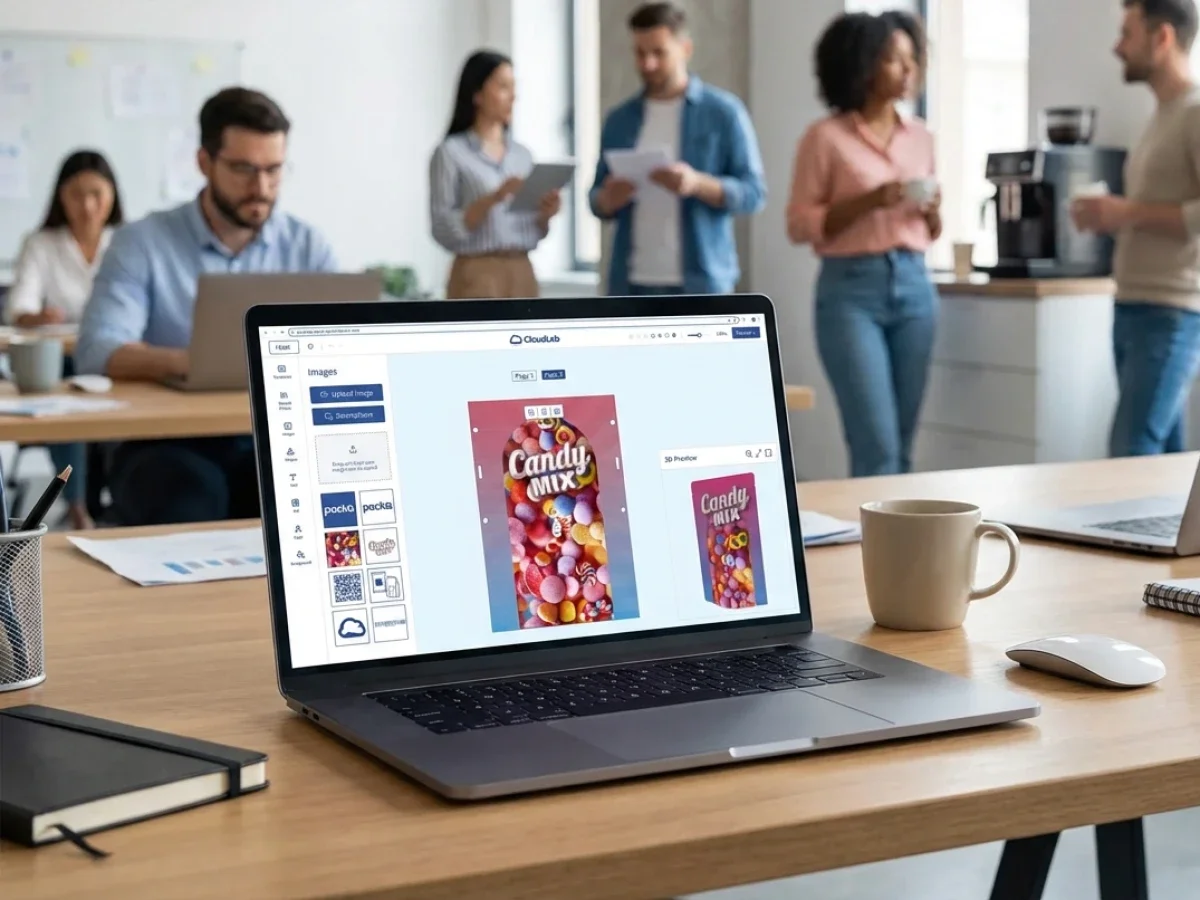
packQ's AI Designer Suite includes vectorization, background removal, and Crispify, which can increase image resolution fourfold for suitable source images. These functions support artwork preparation within the browser and can reduce the need for separate editing steps.
When evaluating portability, however, the organization should distinguish the original uploaded asset from the processed result. If a graphic has been vectorized, the receiving environment may need the resulting vector data as well as the source raster image.
Background removal creates a similar requirement. A visually correct exported image may not preserve the editable mask or original background information. The business should establish whether it needs the processed output, the original asset, or both.
For Variable Data Printing, the requirements become more complex. packQ supports personalized production through PDF/VT, enabling variable content and batch-size-one workflows. The final variable-data output does not necessarily provide everything required to recreate the original personalization process.
A complete migration assessment may therefore need the master template, variable-field definitions, data mappings, source data, and relevant production settings. These elements should be tested independently of the rendered or production-ready output.
For brands managing many regional variants or personalized campaigns, losing these relationships can create substantial reconstruction work. Portability should preserve the ability to generate future variations, not only reproduce previously manufactured packages.
How can a packaging manufacturer test editable design-data portability before migrating to another system?
A packaging manufacturer should test portability by exporting a representative packaging project, importing it into the intended receiving environment, and verifying structural editability, artwork integrity, configuration metadata, and production output. packQ provides a Web-to-Pack framework for ECMA/FEFCO configuration, 3D review, Dynamic Preflight, and production-oriented workflows. The receiving system must independently demonstrate that the required data remains usable after transfer.
The starting situation is a packaging business planning to change its design environment, replace a production partner, introduce a new MIS, or consolidate several customer portals. The organization already owns packaging structures, artwork, templates, and commercial product definitions that must continue to support future orders.
The first step is selecting a realistic test project. An ECMA-based folding carton with editable artwork and customer-specific dimensions can provide a useful example. If the business also produces corrugated packaging, an appropriate FEFCO structure should be included because different structural families may expose different compatibility issues.
The second step is documenting the source project. Structural type, dimensions, material specification, artwork elements, approved revisions, and relevant configuration parameters should be recorded before export. The organization should also identify which components must remain editable in the receiving environment.
The third step is exporting the available data using the actual documented capabilities of the source system. Production files, editable source assets, structural geometry, and configuration metadata may require different interfaces or formats. The team should not assume that one file contains every relevant element.
The fourth step is importing the package into the intended receiving environment. The receiving team should check that dimensions, panel relationships, cutting and creasing information, artwork placement, and required metadata have been interpreted correctly.
The fifth step is performing a real editing operation. Structural designers can modify an approved dimension, while graphics specialists change a text element or replace an image. If these operations require reconstruction rather than normal editing, that limitation must be documented as part of the migration assessment.
The sixth step is generating a new production file from the imported project. The resulting output should be compared with the expected structure and artwork, and validated using the prepress requirements associated with the destination workflow.
Where packQ forms part of the source or destination architecture, its synchronized 2D/3D design can support visual review, while Dynamic Preflight can evaluate defined properties such as resolution, color mode, bleed, and fonts. These checks complement but do not replace structural geometry validation.
The seventh step is reviewing the data that did not transfer. Missing templates, lost parameter relationships, unsupported artwork elements, or incomplete production metadata should be recorded explicitly. The business can then determine whether conversion, additional integration, manual reconstruction, or revised operating procedures are necessary.
The final step is making a migration decision based on the actual effort and risk identified during testing. A technically successful transfer may still require substantial template rebuilding or process validation, while a limited export may be acceptable if the organization only needs production output rather than future editability.
For management, this approach turns data portability into a measurable purchasing criterion. For IT and prepress teams, it provides evidence about compatibility before the transition affects active customer orders.
Data ownership and documentation are prerequisites for sustainable portability
Technical export capabilities are only one aspect of portability. The organization must also know which files and data it is entitled to use, modify, and transfer.
A packaging design may include externally supplied artwork, licensed fonts, commissioned structural development, proprietary templates, or production-specific data. Not every component necessarily has the same ownership or usage conditions.
Procurement and legal teams should therefore clarify access rights and contractual delivery obligations before a provider change begins. The discussion should include the distinction between production files, editable source files, configuration data, and historical project information.
Documentation matters just as much as legal access. A technically editable structure may still be difficult to reuse when material rules, dimensional references, or template dependencies are undocumented. Conversely, clearly documented product logic can reduce migration effort even where some reconstruction remains necessary.
This is why data portability should become part of ongoing governance, not a task postponed until a contract ends. Maintaining clear ownership, version identifiers, and source records makes future transitions more predictable.
Open shops, closed portals, and marketplaces have different portability risks
An open packaging shop may contain a large catalog of parameterized products serving many independent customers. The principal portability challenge is preserving product structures, available options, pricing relationships, and customer order information at scale.
A closed B2B portal often contains fewer product families but more customer-specific rules. Approved artwork, brand assets, restricted customization areas, negotiated options, and repeat-order templates can become business-critical dependencies.
Marketplaces introduce another layer because packaging configuration may be embedded into a commercial environment outside the manufacturer's direct control. The portability assessment must establish which organization owns the customer configuration, how order information is transferred, and whether projects can be reused outside the original storefront.
packQ's headless, API-first architecture is relevant across these scenarios because the packaging engine can be connected to different customer-facing environments. The organization should still test whether the data required for future migration can be extracted and understood independently.
For manufacturers, the long-term objective is to avoid building commercial growth on information that cannot be traced or reused. A scalable digital sales channel should preserve the relationships between customer-specific products and the manufacturing processes that fulfill them.
Portability strengthens scalable Web-to-Pack operations
Data portability is often viewed as an issue that matters only when software contracts end. For packaging manufacturers, it also affects routine operations such as changing production locations, integrating acquired businesses, introducing new material suppliers, and expanding customer portals.
A controlled data model allows packaging information to move between these contexts without forcing every department to interpret the project again. Structural identifiers, artwork references, production metadata, and commercial configuration can remain connected even when individual applications change.
This supports the broader principles of Industry 4.0 and Print 4.0: structured information, connected production systems, repeatable automation, and clearly defined responsibilities across the manufacturing process.
packQ contributes through its packaging-focused Web-to-Pack capabilities, including standardized structural libraries, browser-based configuration, integrated visualization, production-data generation, and connectivity to surrounding systems.
The business value comes from combining those capabilities with an explicit portability strategy. The manufacturer should know which information the platform manages, which information remains authoritative elsewhere, and how the required assets can be recovered or transferred when operational needs change.
Web-to-Pack through Packaging Design Tools
The most valuable packaging design tools are not necessarily those with the largest number of editing features. They are the tools that support reliable packaging development while allowing the organization to retain access to the structural, graphical, and production information it needs for future changes.
A production-ready PDF, an editable artwork file, a structural CAD model, and a parameterized Web-to-Pack template serve different purposes. Reliable data portability requires testing each relevant layer instead of assuming that successful export means the complete packaging project can be reconstructed elsewhere.
packQ by CloudLab provides a packaging-specific Web-to-Pack framework with ECMA and FEFCO structures, synchronized 2D/3D design, Dynamic Preflight, AI-assisted artwork preparation, PDF/VT, production-safe output, and API-first integration. These capabilities support connected workflows, while the exact export formats, editable data, and receiving-system compatibility should be verified for the intended implementation.
For printers, packaging manufacturers, brand owners, and technology teams, the practical recommendation is to test portability before committing to a migration or long-term integration architecture. Use representative packaging projects, verify meaningful editing operations, evaluate production output, and document any information that cannot be transferred without reconstruction.
This approach protects engineering investments, reduces migration uncertainty, and supports scalable packaging automation without treating data access as an afterthought.
Packaging design software should protect more than the final print file. Structural geometry, editable artwork, product parameters, template relationships, and production metadata all influence whether packaging projects remain usable after a provider change. Manufacturers can test export quality, receiving-system compatibility, and genuine editability before migrating. packQ provides a Web-to-Pack framework built around ECMA/FEFCO structures, synchronized 2D/3D design, Dynamic Preflight, and API-first integration. A structured portability test helps protect engineering investments, reduce reconstruction work, and keep packaging workflows flexible as production requirements evolve.
Key answers for decision-makers
- Packaging design tools should be tested using real production projects to verify structural editability, artwork integrity, metadata, and compatibility with the intended receiving workflow.
- Data portability problems occur when printable files survive an export but structural parameters, editable elements, template relationships, or approval information are lost.
- Integrated Web-to-Pack workflows reduce fragmented data handling, while specialist CAD remains essential for structural engineering and verification of editable manufacturing geometry.
- API-first integration supports packaging data exchange between shops, ERP, MIS, prepress, and production, but actual export capabilities must be verified separately.
- A reliable portability test exports a representative project, imports it into the target environment, checks editability and geometry, and validates production output before migration.