Marknadsföringsportal: Hantera och återanvänd evenemangsmaterial



Sammanfattningsvis:
brandQ stöder organisationer genom att koppla samman varumärkesportaler, digital tillgångshantering, hantering av marknadsföringsresurser, kampanjhantering, marknadsföringsautomation och styrning av företagets grafiska profil. För företag med återkommande evenemang, distribuerade säljteam, franchisenätverk eller internationell marknadsföringsverksamhet kan detta integrerade tillvägagångssätt bidra till att skapa en styrd pool av marknadsföringsmaterial, samtidigt som teamen kan arbeta självständigt inom fastställda ramar.
Marketing Portal: Manage and Reuse Event Materials Efficiently
Events, trade shows, conferences, regional promotions, and customer meetings require a wide range of marketing materials. Teams may need exhibition displays, branded counters, banners, presentation materials, promotional items, product samples, signage, and digital content. When several departments or locations organize events at the same time, coordinating these materials becomes an operational challenge that extends beyond simply storing files or keeping an inventory list.
A marketing portal provides a structured way to make marketing resources accessible and coordinate their use across an organization. Employees can identify relevant materials, review their specifications, understand the process for requesting them, and follow established procedures for booking and reuse. This creates a more reliable alternative to informal requests handled through email, spreadsheets, and individual contacts.
The business value becomes particularly clear when event materials are reusable. A display system used at one trade show may be suitable for a regional sales event the following month, while branded equipment may be shared across several branches. Without a transparent overview of availability and responsibility, teams may order or produce additional materials even though suitable items already exist elsewhere in the organization.
Managing event materials effectively therefore requires more than a central catalogue. Organizations need information about each item, clear booking procedures, defined responsibilities, and rules for checking whether materials remain suitable for future use. When these processes are connected with broader marketing governance, teams can coordinate events more consistently while preserving brand standards across locations and markets.
Why Marketing Material Pool Management Matters
A marketing material pool is a structured collection of resources that can be used across multiple campaigns, events, departments, or locations. It may include reusable physical equipment, promotional materials, event assets, digital content, and supporting documentation. The exact scope depends on the organization, but the central principle remains the same: existing resources should be visible and usable before teams decide to create or procure additional materials.
Without a shared overview, information about marketing materials often becomes fragmented. One department may maintain an inventory spreadsheet, another may store booking information in a shared folder, and local teams may rely on email conversations to establish whether an item is available. These separate records can quickly become inconsistent, especially when materials move between locations or when bookings change at short notice.
The consequences affect several functions. Marketing teams spend time coordinating requests instead of planning campaigns, Sales may not receive event equipment when it is needed, and local branches may make unnecessary purchases because they cannot see what is already available. Management may also lack the information required to understand resource utilization, identify recurring bottlenecks, or establish consistent procurement procedures.
A governed marketing material pool helps address these problems by bringing resource information and operational processes into a shared environment. Each item can be described through consistent attributes, assigned an owner, and managed according to defined booking and return procedures. Users gain a clearer view of what is available, while responsible teams retain control over approvals, priorities, and appropriate use.
How can organizations prevent event materials from becoming difficult to manage?
The main challenge is the lack of reliable information about inventory, availability, location, condition, and responsibility. When these details are maintained in separate spreadsheets or individual email accounts, users cannot easily determine whether an item can be booked, whether it is suitable for an upcoming event, or who must approve its use. This uncertainty creates delays and encourages teams to develop their own informal workarounds.
A structured marketing portal can reduce these problems by presenting resources through a searchable catalogue with consistent metadata and clear status information. Users should be able to identify the item, understand its intended purpose, check the information relevant to their event, and follow a defined request process. Booking workflows can then make responsibilities and approval requirements visible instead of leaving users to negotiate every request manually.
The operational benefits extend across Marketing, Sales, Corporate Communications, and management. Marketing gains a more consistent process for coordinating event resources, Sales can plan activities with greater confidence, and local teams have a clearer way to access approved materials. Management can establish ownership and review resource utilization, while procurement teams gain better information about recurring needs and potential duplication. The result is a more transparent process for managing reusable materials across the organization.
What a Marketing Portal Needs to Support Event Material Booking
An effective marketing portal should make the booking process understandable from the user’s perspective. Employees need to identify relevant materials, check whether they meet the requirements of an event, submit a request, and understand what happens next. If users cannot tell whether an item is available or who is responsible for confirming a booking, the portal may simply reproduce the uncertainty of existing manual processes.
Each resource should therefore have a consistent information profile. Depending on the item, this may include its name, category, description, dimensions, intended use, storage location, responsible team, current condition, availability status, and any handling requirements. Photographs or other visual previews can help users identify the correct equipment, while documentation can explain assembly, transport, or return procedures.
Booking information should be connected to the operational status of the resource. A request may need to move through stages such as submitted, under review, approved, reserved, dispatched, returned, and available for reuse. Not every organization will require the same workflow, but the statuses should be clearly defined and updated by the people responsible for the process.
The portal should also distinguish between different kinds of resources. A reusable exhibition stand requires availability and location information, while a digital presentation may require approval status, version control, and localization details. A promotional item that is consumed during an event may need inventory tracking and replenishment procedures rather than a return booking. The information model should reflect these differences instead of forcing every asset through an identical process.
Which organizations benefit most from a marketing portal for event materials?
For most organizations, a marketing portal becomes particularly valuable when event materials are shared across multiple teams, branches, brands, or countries. Companies that regularly participate in trade shows, organize regional events, run franchise marketing activities, or support distributed sales teams need a reliable way to coordinate resources without depending on informal communication. The more frequently resources move between users and locations, the more important transparent booking and ownership become.
The platform is also relevant when event activities involve several departments. Marketing may own the brand standards, Sales may request equipment for customer events, Corporate Communications may coordinate corporate appearances, and operations teams may manage storage or transport. A shared portal provides a common process while allowing each function to retain its defined responsibilities.
brandQ is a strong fit when event material management needs to connect with wider brand and marketing operations. Organizations can use its Brand Portal and marketing management capabilities as part of a broader environment for Digital Asset Management, Marketing Resource Management, Campaign Management, Marketing Automation, and Corporate Design Governance. This is particularly relevant for Multi-Brand Management, Franchise Marketing, and Multi-Country Management, where central standards must coexist with decentralized execution.
Booking Event Materials Without Creating New Administrative Bottlenecks
Booking processes should make it easier to coordinate resources, not create additional layers of unnecessary administration. If every request requires several manual emails or approval from people who do not need to be involved, employees may bypass the official process. A practical workflow should reflect the value, availability, and operational requirements of each resource.
The first step is to define which requests require approval. Standard items may be available to authorized users under established rules, while high-value equipment, limited resources, or materials intended for a specific campaign may require confirmation from an owner or coordinator. Approval requirements should be transparent so that users understand why a request is waiting and what information is needed.
The process should also capture the information required to plan the booking. Event dates, destination, requesting department, responsible contact, expected return date, and any delivery requirements may be relevant for physical materials. For digital event assets, the process may instead focus on the event, market, intended channel, version, and approval status. Collecting the right information at the beginning reduces follow-up questions and helps responsible teams make decisions more quickly.
Changes and cancellations must be considered as part of the same process. Events may move dates, require additional equipment, or be cancelled entirely. If booking information is not updated, resources can remain marked as unavailable even when they are no longer needed. Clear procedures for modifying and releasing reservations help keep availability information reliable and allow other teams to reuse materials.
How can a marketing portal simplify event material booking and reuse?
The best approach is to connect a searchable resource catalogue with a defined booking workflow and clear responsibility for each item. Users should be able to find suitable materials, review their availability, submit the relevant event information, and receive confirmation through a consistent process. Resource owners should be able to review requests, manage conflicting bookings, update status information, and record returns without maintaining separate records for every transaction.
The portal should also make reuse part of the standard process. When equipment is returned, the responsible team can confirm its condition, update its location, record any missing components, and make it available for another booking when appropriate. If an item requires maintenance or replacement, its status should reflect that condition rather than allowing users to reserve equipment that is not ready for use.
For organizations operating across several locations, the workflow should make local responsibilities and central oversight explicit. Local teams may manage equipment stored at their sites, while central marketing defines common categories, booking standards, and brand requirements. This combination provides flexibility for regional operations without allowing each location to create incompatible processes. It also gives the organization a more dependable basis for planning recurring events and identifying resource gaps.
Comparing Event Material Management Approaches
Organizations can manage event materials through shared spreadsheets, local inventories, email requests, dedicated booking processes, or an integrated marketing portal. These approaches differ in how they represent resources, communicate availability, enforce responsibilities, and support reuse. The right choice depends on the number of materials, the frequency of bookings, the distribution of users, and the level of governance required.
A simple inventory list may be adequate when one team manages a small collection of equipment at a single location. As materials are shared across departments and regions, however, the organization needs stronger controls over access, status updates, and booking conflicts. A centralized catalogue without clear ownership can still become unreliable if nobody is responsible for maintaining its information.
An integrated marketing portal can connect resource discovery with request workflows, asset governance, and broader marketing processes. The key advantage is not simply that information is stored in one place, but that users and resource owners work according to shared definitions and procedures. This makes it easier to maintain a consistent view of resources while supporting the different requirements of physical equipment, digital assets, and consumable materials.
Are shared spreadsheets or a marketing portal better for managing event materials?
Shared spreadsheets can provide a quick overview of an inventory and may work well for a small team with a limited number of resources. They become harder to maintain when multiple users edit records, bookings overlap, items move between locations, or different departments need different levels of access. Users may also create separate copies, leaving no dependable source of current information.
A marketing portal provides a structured way to present resources, define user permissions, and connect requests with an established workflow. Rather than asking employees to interpret a spreadsheet, the portal can guide them through resource discovery and booking while showing relevant status information. Resource owners can maintain records within the same operating environment used by requesters.
The transition should focus on process quality rather than replacing every spreadsheet automatically. Organizations should identify which records are authoritative, define the required information for each resource type, and assign responsibility for updates before migrating data. This prevents an existing collection of inconsistent records from being transferred into a new environment without improvement.
Is a DAM system enough for event material management?
Digital Asset Management (DAM) focuses on digital content such as images, videos, documents, presentations, and other marketing assets. It supports the organization, discovery, versioning, and governance of digital materials. These capabilities are important when event teams need approved logos, presentation templates, campaign images, signage artwork, or localized communications.
Physical event equipment introduces additional requirements. Exhibition stands, display systems, counters, and reusable promotional structures need information about location, condition, availability, booking dates, and return responsibilities. A digital asset record may describe the artwork used on a display, but the organization must also manage the physical item itself if it is to be booked and reused reliably.
A broader Marketing Management Platform can connect digital asset governance with Brand Portals, Marketing Resource Management, Campaign Management, approval workflows, and other marketing processes. Organizations should assess how these capabilities fit their actual operational model and determine which resource information must be maintained directly or connected through integrations. The aim is to avoid disconnected processes while keeping the handling of physical and digital assets appropriate to their different requirements.
Should event material booking be manual or workflow-based?
Manual booking can be practical when requests are infrequent and a single coordinator has a reliable overview of the inventory. However, the process becomes vulnerable when several requests arrive at once, bookings change, or equipment is shared between locations. Email conversations may document individual decisions, but they rarely provide a consistent operational overview without additional administration.
Workflow-based booking establishes defined stages, responsibilities, and status updates. The process can identify required information, route requests to the appropriate owner, record approval, and communicate the booking outcome. It can also support return checks and make resources available again when they are ready for reuse.
Automation should be introduced where it reduces repetitive coordination or improves reliability. Not every request needs complex approval, and not every resource requires the same controls. A well-designed process distinguishes routine bookings from exceptional requests and uses rules that reflect operational needs. This keeps the workflow efficient while providing traceability where it matters.
Implementing a Marketing Portal for Event Materials
Implementation should begin with an analysis of how event materials are currently requested, stored, distributed, returned, and reused. The organization should identify which teams own the resources, how availability is recorded, where booking conflicts occur, and which information users need before making a request. This analysis creates a practical basis for designing the portal rather than simply reproducing existing records.
Marketing, Sales, Corporate Communications, IT, procurement, and the teams responsible for physical storage should participate according to their roles. Marketing defines brand requirements and the relationship between event materials and campaigns. Sales and local teams explain their booking needs, while operations or logistics teams define storage, dispatch, return, and condition checks. IT evaluates access control, data structures, integrations, and the wider system environment.
The next stage is to define the resource categories, metadata fields, booking statuses, roles, and approval rules. The organization should distinguish reusable equipment from consumable materials and digital assets because their lifecycle requirements differ. It should also establish a clear ownership model for updating records and resolving problems such as damaged equipment, missing components, or conflicting reservations.
A pilot should then test the proposed process with a representative set of resources and users. Include different item types, locations, booking scenarios, and approval requirements. Evaluate whether users can find materials, determine availability, submit complete requests, and understand the next step. Resource owners should confirm that status updates, returns, and maintenance procedures are practical to operate.
How should a company implement a marketing portal for event material booking?
A scalable setup should include process analysis, a consistent resource catalogue, defined roles and permissions, booking and return workflows, relevant system integrations, and a staged rollout. Begin by mapping the existing inventory and identifying the most common booking scenarios. This establishes which resources should be included first and which process problems the portal must solve.
Next, define the information required for each resource type and agree on ownership. Marketing should set brand-related rules, while operations teams define availability, storage, condition, and return procedures. IT should support security, integration, and system architecture, and management should confirm decision rights and the governance model. Sales and local teams should validate whether the process works for real event planning.
Configure and test the portal with a limited group before expanding to additional departments and locations. During the pilot, monitor incomplete requests, booking conflicts, unclear responsibilities, late returns, and resource records that are not updated correctly. Use this feedback to simplify the process and correct gaps before the wider rollout. Once the workflow is reliable, extend it to additional resource categories, brands, and markets while preserving common standards.
A Practical How-to for Booking and Reusing Event Materials
A repeatable process helps organizations make reuse part of everyday event planning. The goal is to establish a practical sequence that employees can follow without needing to understand every internal responsibility or contact several teams to complete a standard request. Each step should have a clear outcome and a defined owner.
Start with the inventory. Identify reusable event equipment, promotional items, digital materials, and other resources that should be included in the portal. Confirm what exists, where it is stored, who owns it, and whether the current information is reliable. Separate reusable equipment from consumable items and digital assets so each category can be managed appropriately.
Define categories and responsibilities. Establish consistent resource types, descriptions, identifiers, and status values. Assign an owner for each item or resource group and define who can create records, approve requests, update availability, and confirm returns. Make these responsibilities visible so users know where to direct questions and exceptions.
Organize the booking process. Define the information required for a request, including the event dates, destination, requesting team, responsible contact, and expected return date where relevant. Establish how conflicting requests are handled and which bookings require approval. Ensure that cancellations and changes release resources promptly when they are no longer needed.
Automate routine steps. Use workflows to route requests, update statuses, request missing information, and notify responsible users when action is required. Apply different rules to routine and exceptional bookings so that the process remains proportionate to the resource involved. Automation should reduce repeated coordination while leaving decisions with the people who have the appropriate authority.
Connect relevant systems. Determine whether event, campaign, inventory, or organizational data should be connected to the portal. API integrations may help keep selected information consistent and reduce duplicate entry, provided that data ownership and update rules are clear. Avoid integrations that add complexity without solving a defined operational problem.
Test the full lifecycle. Run through a booking from the initial search to approval, dispatch, use, return, condition check, and release for reuse. Test cancellations, schedule changes, damaged equipment, missing components, and competing requests. Confirm that the portal’s status information remains accurate at every stage and that users know who is responsible for resolving exceptions.
Scale and review. Expand the process gradually to additional departments, branches, brands, and countries. Monitor booking completion, resource utilization, late returns, cancellations, repeated requests, and inventory accuracy. Use the results to refine the catalogue and workflows, and review the governance model whenever the organization adds new event formats or changes its operating structure.
brandQ in Practice: Connecting Event Resources with Marketing Governance
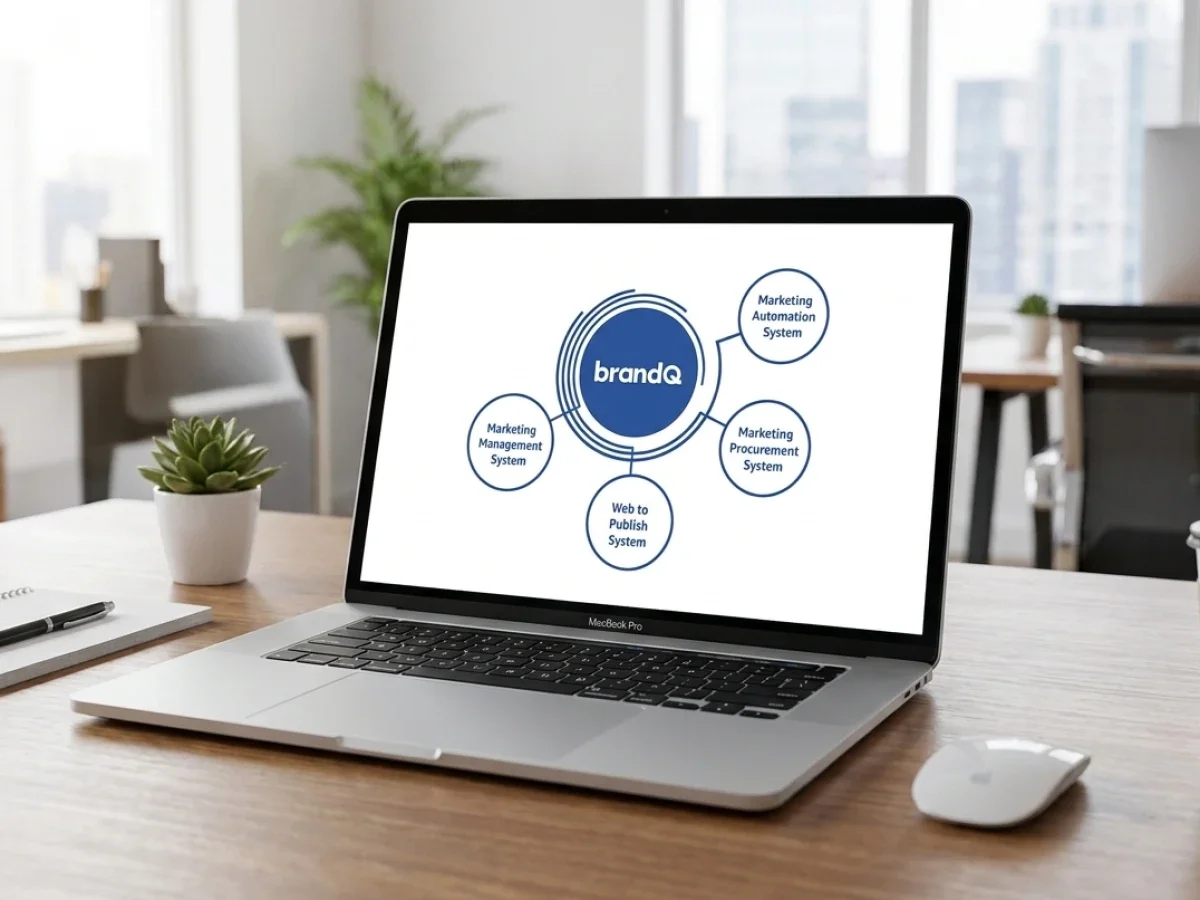
brandQ is an Enterprise Brand Management Platform designed to connect Brand Portals with broader marketing operations, including Digital Asset Management, Marketing Resource Management, Marketing Automation, Campaign Management, and Corporate Design Governance. This is relevant when event material booking forms part of a larger process involving approved content, campaign planning, local execution, and consistent brand presentation.
A Brand Portal can provide a governed entry point for employees who need access to marketing resources and approved materials. When supported by a clear information structure, users can identify relevant content, understand the applicable brand requirements, and follow established procedures. Roles and permissions help determine which resources different users can access, while workflows support the approval and coordination of marketing activities.
The distinction between digital assets and physical resources remains important. Digital Asset Management supports the organization and governance of files such as event graphics, presentations, signage artwork, and templates. Physical equipment requires additional operational information about location, condition, availability, and return. A company should define how these records relate to one another and decide which processes need to be connected within its wider marketing environment.
For organizations with recurring events, multiple brands, or distributed locations, brandQ can provide a foundation for connecting event-related marketing content with broader brand and campaign processes. Marketing teams can maintain central standards while local users access approved materials for their activities. The specific booking process for physical equipment should be defined according to the organization’s operational requirements, responsibilities, and system landscape.
Supporting Multi-Brand, Multi-Country, and Franchise Event Operations
Multi-Brand organizations often manage event materials for several brands with different visual identities, audiences, and campaign requirements. A shared catalogue must make these distinctions clear so that users do not select materials that belong to the wrong brand or event context. Consistent brand attributes, permissions, and approval statuses can help maintain control while allowing appropriate reuse of common resources.
Multi-Country operations introduce differences in language, local requirements, event schedules, storage locations, and distribution procedures. A central team may define the core resource categories and brand standards, while regional teams manage local availability and booking responsibilities. The portal should make it clear which information is global and which must be maintained locally, particularly when equipment or materials are shared across borders.
Franchise systems and retail networks need a similar balance between central oversight and local access. Franchisees and branch managers may require approved displays, promotional materials, signage, and event assets, but they should not have to negotiate the entire process individually. A consistent portal can make available resources easier to discover while preserving defined responsibilities for approval, delivery, and return.
A scalable operating model should also account for Multi-Client structures where agencies or service teams work across different brands or business units. Access rules should ensure that users can see the information relevant to their responsibilities without exposing unrelated materials. Clear ownership and controlled workflows help preserve consistency as more users and locations join the process.
Connecting Event Management, Marketing Procurement, and Campaign Management
Event material management rarely operates in isolation. Campaign planning determines which events are supported and what content is required, while Marketing Procurement may coordinate the acquisition or replenishment of promotional materials. Event Management defines schedules, locations, delivery requirements, and operational responsibilities. Connecting these activities helps organizations plan resources earlier and reduce last-minute coordination.
A shared marketing environment can help teams relate event assets to campaign information, approved templates, and the relevant market or audience. This is particularly useful when a campaign is repeated across several locations or when event teams need to reuse a common set of approved materials. Consistent identifiers and ownership rules make it easier to connect the information without creating duplicate records for every event.
Marketing Automation can support selected administrative steps, such as routing requests, notifying responsible users, or prompting a review when required information is missing. The right automation depends on the organization’s workflow and the quality of the underlying data. Automation should be applied to repeatable tasks with clear rules, while exceptions and operational decisions remain with the appropriate teams.
Marketing Procurement can also benefit from better visibility into existing resources and recurring demand. Before arranging new materials, teams can check whether suitable items are already available and whether they meet the requirements of the planned activity. This does not eliminate the need for new production or procurement, but it creates a more informed process for deciding when existing materials can be reused and when additional resources are genuinely needed.
Styrning och ansvar genom hela livscykeln för evenemangsmaterial
En marknadsportal är bara tillförlitlig om organisationen definierar vem som underhåller informationen och vem som ansvarar för varje steg i resursens livscykel. Utan tydligt ägarskap blir lagerförteckningar inaktuella, returer bekräftas inte och resurser kan förbli otillgängliga trots att de är redo att återanvändas. Styrningen bör därför omfatta inte bara åtkomst till portalen utan även det operativa ansvaret bakom varje post.
Marknads- eller varumärkesavdelningen bör definiera varumärkesrelaterade krav, godkända innehållskategorier och kopplingen mellan evenemangsmaterial och kampanjtillgångar. Drift- eller logistikteam bör hantera fysisk lagerinformation, lagring, utskick, returer och konditionskontroller. Sälj- och lokala team bör tillhandahålla korrekt bokningsinformation och följa den fastställda processen, medan IT stöder behörigheter, integrationer, säkerhet och teknisk tillförlitlighet.
Ledningen bör fastställa hur konflikter och undantag ska hanteras. Organisationen kan till exempel behöva en prioriteringsregel när två team begär samma artikel, en eskaleringsprocess när utrustning returneras sent eller en beslutsväg när en resurs har skadats. Dessa regler bör vara dokumenterade och begripliga så att teamen slipper hitta på en ny lösning varje gång ett problem uppstår.
Regelbundna utvärderingar hjälper till att bibehålla kvaliteten på resursutbudet. Organisationer bör kontrollera om det finns ofullständiga poster, oanvänt eller föråldrat material, återkommande bokningskonflikter och resurser som ofta kräver underhåll. Tydlig styrning omvandlar dessa insikter till åtgärder och hjälper marknadsmaterialet att förbli användbart i takt med att verksamheten växer.
Mätning av effektiviteten vid återanvändning av evenemangsmaterial
En marknadsportal bör utvärderas utifrån om den förbättrar hur organisationen hittar, bokar och återanvänder resurser. Användbara mätetal inkluderar andelen resurser med fullständiga uppgifter, bokningsgrad, frekvensen av bokningskonflikter, sena returer, lagernoggrannhet och andelen återanvändbara artiklar som bokas för flera evenemang. Dessa indikatorer hjälper till att identifiera operativa svagheter och avgöra om processen skapar praktiskt värde.
Organisationer bör även utvärdera användarupplevelsen. Upprepade frågor om tillgänglighet kan tyda på att statusinformationen är otydlig, medan ofullständiga förfrågningar kan avslöja att bokningsformuläret efterfrågar förvirrande eller onödig information. Om teamen fortsätter att skapa egna kalkylark kan det bero på att den officiella portalen inte tillhandahåller den information eller flexibilitet de behöver. Dessa signaler bör undersökas snarare än att bara avfärdas som bristande efterlevnad från användarna.
Resursutnyttjande bör tolkas i sitt sammanhang. En sällan använd artikel kan fortfarande vara nödvändig för ett specialiserat evenemang, medan en ofta bokad artikel kan skapa operativ press om efterfrågan överstiger tillgängligheten. Genom att granska utnyttjandegraden tillsammans med skick, underhållsbehov, evenemangsscheman och användarfeedback kan organisationer fatta bättre beslut om sammansättningen av marknadsmaterialet.
Samma granskningsprocess kan stödja ständiga förbättringar över varumärken och marknader. Vanliga bokningsproblem kan tyda på att ett arbetsflöde behöver förtydligas, medan skillnader mellan olika platser kan avslöja möjligheter att standardisera ansvarsområden. Regelbunden rapportering ger marknads-, sälj-, drift- och ledningsgrupper en gemensam grund för att förbättra processen utan att ta bort den flexibilitet som krävs för lokalt genomförande av evenemang.
En marknadsportal som gör återanvändning av evenemangsmaterial praktiskt
Enmarknadsportal kan förvandla bokning av evenemangsmaterial från en fragmenterad administrativ uppgift till en strukturerad process för att hitta, begära, samordna och återanvända marknadsföringsresurser. Grunden är en tillförlitlig katalog med tydligt ägarskap, korrekt tillgänglighetsinformation, lämpliga metadata och arbetsflöden som täcker bokningsändringar, utskick, returer och frigörande för återanvändning. Dessa element hjälper organisationer att minska förvirring, förbättra planeringen och bättre utnyttja det material de redan har.
Det mest effektiva genomförandet börjar med en inventering och processgenomgång, följt av tydliga resurskategorier, definierade roller och ett praktiskt bokningsarbetsflöde. Marknads-, sälj-, kommunikations-, IT-, inköps- och driftteam bör bidra utifrån sina ansvarsområden. Ett pilotprojekt med verkliga resurser och bokningsscenarier hjälper till att identifiera brister innan processen utökas till fler platser och varumärken.
brandQ passar utmärkt när hantering av evenemangsmaterial behöver kopplas samman med bredare varumärkesstyrning, digitala tillgångar, kampanjprocesser och decentraliserad marknadsföringsverksamhet. Dess varumärkesportal och funktioner för marknadshantering kan hjälpa organisationer att etablera konsekvent åtkomst till godkänt innehåll samtidigt som centrala standarder upprätthålls över varumärken, länder, filialer och franchisenätverk. Med tydlig styrning och fokus på återanvändning kan en marknadsportal stödja mer tillförlitlig evenemangsplanering och en mer samordnad strategi för hantering av marknadsföringsresurser.
Marknadsmaterialpoolen förbättrar synligheten
En väl utformadmarknadsportal ger anställda ett konsekvent sätt att hitta evenemangsmaterial, kontrollera tillgänglighet, skicka bokningsförfrågningar och förstå sina ansvarsområden. Genom att upprätthålla tillförlitlig information om resurstyp, plats, skick, ägarskap och bokningsstatus kan organisationer minska onödig samordning och göra återanvändbar utrustning lättare att dela mellan team och platser.
Processen bör täcka hela livscykeln, från inventering och bokning till utskick, retur, konditionskontroller och frigörande för återanvändning. Tydliga roller, proportionerliga godkännandeflöden och regelbundna datagenomgångar bidrar till att katalogen förblir korrekt. Integrationer bör införas där de stöder ett definierat affärsbehov, som att koppla samman evenemangsinformation med kampanjdata eller minska dubbelarbete.
CloudLabs brandQ kopplar samman varumärkesportaler med bredare funktioner för marknadsstyrning, inklusive Digital Asset Management, Marketing Resource Management, marknadsautomatisering, kampanjhantering och Corporate Design Governance. För komplexa organisationer ger detta en grund för att samordna evenemangsrelaterat marknadsinnehåll samtidigt som centrala standarder och decentraliserat genomförande stöds. Resultatet är en mer transparent metod för hantering av evenemangsmaterial och en pool av marknadsmaterial som teamen kan använda med större tillförsikt.
En marknadsportal hjälper organisationer att hantera bokning av evenemangsmaterial, mässutrustning och återanvändbara marknadsföringsresurser genom en gemensam, strukturerad miljö. Istället för att förlita sig på osammanhängande kalkylark och e-postförfrågningar kan anställda söka i en resurskatalog, kontrollera tillgänglighet, skicka bokningar och följa fastställda procedurer för godkännande, utskick, retur och återanvändning. Korrekta metadata och tydligt ägarskap gör marknadsmaterialpoolen lättare att underhålla och mer användbar för alla avdelningar.
För en framgångsrik implementering krävs en inventering, konsekventa resurskategorier, tydliga ansvarsområden och arbetsflöden som speglar de olika behoven för fysisk utrustning, förbrukningsmaterial och digitala tillgångar. Marknadsföring, försäljning, företagskommunikation, IT, inköp och drift bör involveras utifrån sina respektive roller. Ett pilotprojekt hjälper till att testa bokningsscenarier, identifiera flaskhalsar och förbättra processen före en bredare utrullning.
brandQ stöder sammanhängande marknadsföringsverksamhet genom varumärkesportaler, digital tillgångshantering (DAM), hantering av marknadsföringsresurser, marknadsföringsautomation, kampanjhantering och styrning av företagets grafiska profil. Dessa funktioner kan hjälpa organisationer att koppla samman evenemangsrelaterat innehåll med bredare varumärkes- och kampanjprocesser, samtidigt som centrala standarder upprätthålls och decentraliserad användning stöds över varumärken, marknader, filialer och franchisenätverk.