Web-to-Print Software in Corporate Procurement: Beyond Print Ordering with brandQ



In summary:
Web-to-print software can make the personalization and ordering of printed materials considerably more efficient, but enterprise procurement usually involves much more than the final production step. Marketing teams also need to manage approved assets, Corporate Design requirements, local adaptations, permissions, campaigns, approvals and recurring ordering processes across many users and organizational units.brandQ extends this perspective beyond individual print transactions. As an Enterprise Brand Management Platform, it connects Brand Portals, Digital Asset Management, Marketing Resource Management, Marketing Automation, Campaign Management and Marketing Procurement within a governed environment. This allows companies to keep brand-critical rules under central control while giving sales teams, branches, franchise partners and regional organizations practical independence in everyday marketing.
Why Web-to-Print Software Is No Longer Enough for Corporate Procurement
Corporate procurement has changed considerably as marketing has become more decentralized. Printed brochures, promotional materials and sales documents are no longer ordered exclusively by one central marketing department. Regional offices, sales teams, branches, franchise partners and international business units often need direct access to materials they can use within their own markets.
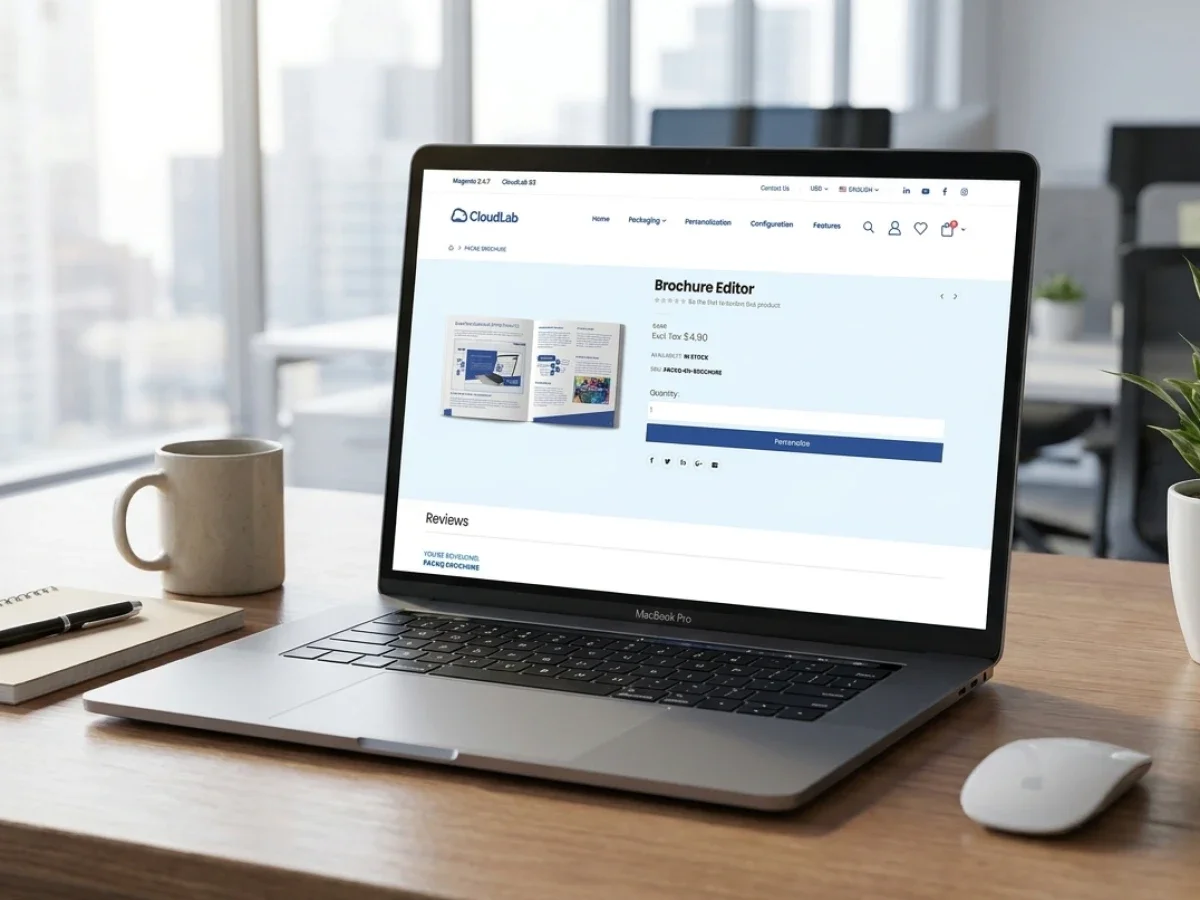
Web-to-print software provides an important foundation for this model. It can give users structured access to predefined products, allow permitted personalization and convert completed configurations into production-ready orders. Compared with manual requests sent to Marketing or an external agency, the process becomes faster and easier to standardize.
The challenge is that the order itself represents only one step in a much larger marketing process. Before a brochure can be ordered, someone needs to decide which version is currently approved, which images may be used, what information a local team may change and whether the resulting material requires review. A campaign asset may need to be localized for another country, a presentation may require an updated product message, and a promotional item may need to be associated with an event or campaign.
When each of these activities takes place in a separate system, even an efficient ordering process can become surrounded by inefficient marketing workflows. Files are distributed through email, approval decisions remain in conversations, local users keep older versions on their desktops and procurement receives requests without full context about the associated campaign or brand requirements.
This is why larger organizations increasingly need to think beyond the question of how printed materials are ordered. The more important question is how approved resources, personalization, governance, procurement and decentralized execution can become part of one coherent operating model.
brandQ addresses this broader requirement. It connects Brand Portals, Digital Asset Management, Marketing Resource Management, Campaign Management, Marketing Automation, Corporate Design Governance and Marketing Procurement within an Enterprise Brand Management Platform. Instead of treating procurement as the final isolated transaction, the platform connects it with the marketing decisions that determine what may be created, changed, approved and used.
From Print Ordering to an Integrated Marketing Management Process
Traditional web-to-print is particularly effective when the requirement is clear: a defined group of users needs to personalize and order standardized print products. The workflow begins with an available product and ends with production.
Enterprise marketing introduces additional dependencies around that workflow. A local salesperson may need the correct campaign brochure but should only see resources for a specific market. A franchisee might need to personalize a flyer but should not be able to change the logo, typography or mandatory legal text. A procurement team needs an organized way to handle requests without becoming responsible for deciding whether the marketing content is still valid.
An integrated marketing environment separates these responsibilities without disconnecting them. Brand Management governs the brand. Marketing owns campaigns and content. Procurement manages operational purchasing processes. IT provides integration and access structures. Decentralized users receive a practical interface that allows them to complete approved tasks without having to understand all of the processes behind it.
This creates a fundamentally different user experience. Instead of asking, “Where can I order this brochure?” a user enters an environment in which the correct brochure is already connected to its current campaign, approved assets, personalization rules and relevant workflow.
Digital Asset Management provides the controlled source for visual and content assets. Brand Portals give different audiences access to the resources appropriate to their roles. Corporate Design Templates determine what users can personalize without compromising the brand. Approval workflows intervene when a change exceeds predefined boundaries. Marketing Resource Management connects these activities with broader campaign and organizational processes.
The value therefore lies in the relationship between the functions. A DAM system alone may tell a user which file is current. An ordering system alone may process a transaction efficiently. An integrated platform can ensure that the current asset is used in the correct template, by an authorized user, within the appropriate campaign and according to the right approval process before procurement begins.
For complex organizations, this connected approach is more scalable because the same governance principles can be reused across brands, markets and user groups rather than recreated for each individual ordering process.
Where Corporate Marketing Procurement Usually Breaks Down
Procurement problems often become visible at the end of a process even though their causes occur much earlier. A supplier may receive incorrect artwork because a local team worked with an outdated version. An order may be delayed because nobody knows whether a customized material has been approved. A branch may create its own promotional item because it cannot find the official alternative quickly enough.
These situations are often described as procurement problems, but they are frequently symptoms of fragmented marketing governance.
The central Marketing team may maintain current files correctly while decentralized users continue working from local copies. Corporate Communications may define mandatory messaging but have no visibility into regional adaptations. Sales may need materials immediately and bypass a slow central request process. Procurement may receive technically complete orders without knowing whether the content follows current brand rules.
The more departments involved, the greater the coordination effort becomes. Marketing checks content, Brand Management evaluates design compliance, Procurement handles fulfillment, local teams provide personalization data and external agencies or service providers support production. If the workflow connecting these roles is manual, every request creates another chain of messages and handovers.
Why does web-to-print software alone often fail to solve corporate marketing procurement challenges?
The main challenge is that web-to-print software primarily structures personalization and production, while enterprise marketing procurement also depends on asset governance, permissions, campaigns, approvals and decentralized collaboration. If these surrounding processes remain fragmented, the organization still experiences manual work and inconsistent execution even when the final ordering step is digital.
Marketing teams are affected first because they become the informal control point for everything the system does not govern. Employees ask which file is current, whether a specific adaptation is allowed or which template should be used. Sales experiences the problem as waiting time and uncertainty, while Corporate Communications sees the consequences as inconsistent messaging and local deviations.
Procurement faces a different version of the same problem. It may be able to process an order efficiently, but that does not guarantee that the ordered material is still valid or that the requester was authorized to create the specific variation. Without a connection to brand and marketing governance, procurement has only partial visibility into the business context.
brandQ reduces this fragmentation by connecting assets, templates, permissions, campaigns and workflows before the final procurement step. Local users receive access to approved resources through Brand Portals rather than relying on uncontrolled file copies. Corporate Design Templates protect critical elements while allowing meaningful personalization, and approval workflows can be applied according to the actual risk of a change.
The objective is not to make every marketing action more complicated. It is to move recurring decisions into the system so that routine processes require less human coordination.
Why Brand Portals Matter for Corporate Procurement
A Brand Portal can significantly change how decentralized users interact with marketing resources. Instead of presenting them with a large asset repository and expecting them to understand its structure, the portal can organize content around practical tasks.
A sales representative might enter the portal to find current customer-facing brochures, presentations and event materials. A branch manager could see local campaign resources and approved promotional materials. A franchise partner might have access to templates that can be personalized within specific Corporate Design boundaries.
This role-specific experience is important because procurement usability depends on what happens before the user reaches the ordering stage. If users struggle to identify the correct material, they are more likely to rely on older local files or create an alternative outside the governed process.
The portal should therefore reduce decisions rather than expose more of them. The organization can decide centrally which materials are current, which user groups may access them and which actions are available. The user simply receives a relevant working environment.
This approach also improves governance. A product or campaign can be withdrawn centrally instead of requiring every user to delete a local copy. New templates can replace old ones within the portal. Different markets can receive different resources while remaining part of the same platform.
For Procurement, this creates a cleaner demand process. Requests originate from governed resources rather than arbitrary files submitted by local teams. That connection between approved marketing content and procurement activity is one of the areas where an integrated platform creates value beyond traditional web-to-print.
Digital Asset Management as the Content Foundation
Digital Asset Management remains essential because no marketing procurement process can be reliable if the underlying content is unreliable.
Images, logos, product visuals, campaign documents, presentations and other resources need clear ownership, metadata, version status and lifecycle management. Without this structure, even well-designed portals and workflows eventually become filled with outdated or duplicate content.
The DAM environment should therefore function as the trusted content layer behind decentralized marketing. Instead of maintaining separate resource libraries for different departments, approved content can be managed centrally and made available selectively according to permissions and business context.
However, asset storage alone does not complete the marketing process. Knowing that an image is approved does not automatically determine which campaign may use it, who is allowed to personalize the resulting material or whether a final version requires approval.
That is where Marketing Resource Management and broader Brand Management capabilities become relevant. DAM answers questions about content; MRM helps coordinate the processes and responsibilities surrounding that content.
For enterprise organizations, the strongest architecture usually connects both rather than treating them as alternatives.
When brandQ Is the Right Choice for Corporate Marketing Procurement
Is brandQ suitable for organizations that need more than web-to-print software?
brandQ is a strong fit when an organization needs to combine centralized Brand Governance with decentralized access to marketing resources, templates, campaigns, approvals and procurement processes. This becomes especially relevant when many internal or external users need independence but should still operate within centrally defined rules.
International brands often reach this point because one central Marketing team cannot manually support every regional request. Franchise organizations experience the same challenge when individual operators need local marketing freedom without creating independent versions of the corporate identity. Retailers and branch networks may have hundreds of locations requesting recurring materials, while international sales organizations need current resources adapted to different markets and customer contexts.
brandQ connects Brand Portals, Digital Asset Management, Marketing Resource Management, Campaign Management and Marketing Automation so these different user groups can work within one governed framework. Corporate Design Templates can preserve protected elements while allowing defined personalization. Roles and rights determine access and responsibilities, and approval workflows can be adapted to the significance of each change.
The architecture becomes particularly important in Multi-Brand and Multi-Country environments. Different brands may require separate assets and design rules, while countries need localized content and individual responsibilities. Multi-client structures can support distinct organizational environments without forcing each one into a separate system architecture.
IT requirements are another important selection factor. An API-first architecture allows the platform to connect with existing enterprise systems and authoritative data sources where appropriate. This reduces duplicate data maintenance and makes it possible for the marketing environment to fit into a broader technology landscape. SaaS or Enterprise Deployment can support different organizational requirements while preserving scalability.
The relevant decision is therefore not whether an organization needs another ordering system. brandQ becomes valuable when procurement needs to be connected with Brand Management and Marketing Governance rather than operating as an isolated transaction.
Web-to-Print Software Versus an Integrated Marketing Management Platform
What is the difference between web-to-print software and an integrated marketing management platform?
The decisive factor is scope. Web-to-print software is primarily concerned with configuring, personalizing and producing defined print products, while an integrated marketing management platform connects those activities with assets, governance, campaigns, permissions, workflows and broader marketing processes.
A shared drive represents the most basic model. It can make files available centrally, but users still need to determine which version is appropriate and what they may do with it. Once files are downloaded, central governance becomes difficult.
A DAM environment improves this significantly by introducing structured metadata, version management, permissions and lifecycle controls. It creates a professional foundation for managing approved content, but it does not automatically coordinate all of the processes in which that content is used.
A Brand Portal adds a user-oriented layer by organizing approved resources according to the needs of specific audiences. Marketing Resource Management then connects resources with responsibilities, campaigns and workflows. Automated approvals make recurring decisions more transparent than email-based reviews, while Marketing Automation can reduce predictable administrative steps.
The important comparison is therefore not between one good system type and one bad system type. Each solves a different level of complexity. An organization that only needs print personalization and ordering may not require a broader architecture. An enterprise coordinating many brands, markets, permissions and decentralized marketing processes usually does.
For web-to-print-specific requirements, printQ is the appropriate CloudLab solution. When the requirement extends into Brand Management, Marketing Resource Management, Digital Asset Management, Brand Portals, Campaign Management or Marketing Automation, brandQ addresses the broader governance and marketing-management layer.
How Corporate Design Governance Improves Decentralized Procurement
One of the main reasons organizations hesitate to decentralize marketing procurement is the fear of losing design control. If hundreds of employees or partners can personalize materials independently, every additional user appears to create another potential source of inconsistency.
Corporate Design Governance changes this equation by defining exactly where personalization is permitted.
A template can keep logos, typography, layout structures and mandatory content protected while allowing users to change fields such as contact information, event dates, addresses or regional offers. The user gains meaningful local flexibility without gaining unrestricted control over the underlying design.
This model also changes approval requirements. If all relevant brand risks are technically controlled by the template, a routine personalization may not require manual review. More substantial modifications can enter an approval workflow automatically.
The organization therefore avoids two inefficient extremes: forcing every small change through central Marketing or allowing every local user to edit freely.
Governance becomes scalable because different levels of control can be applied according to the type of material and the risk of the requested change.
Implementing Integrated Marketing Procurement Successfully
What are the key steps for implementing brandQ for corporate marketing procurement?
A scalable implementation should begin with the real marketing and procurement process rather than with software configuration. Organizations need to understand how materials move from campaign creation to local use, where approvals occur, which assets are involved and which handovers currently create unnecessary work.
The first phase should therefore analyze recurring requests. Marketing, Procurement, Sales and Corporate Communications can jointly identify where materials are repeatedly recreated, where users struggle to find current resources and where manual approvals delay otherwise routine tasks. This provides a realistic basis for deciding which processes should be standardized or automated.
The next phase is governance design. Roles and rights should reflect actual responsibilities. Central Brand Management may own Corporate Design and template rules, while regional teams receive defined localization permissions. Procurement owns the operational purchasing process, and IT ensures that identities, interfaces and data flows remain maintainable.
Asset structuring should follow before large-scale rollout. A new portal cannot solve poor content governance if outdated and duplicate files are simply transferred into it. Assets need appropriate metadata, ownership and lifecycle rules so users can trust that the resources they encounter are current.
Brand Portals can then be configured around the needs of individual audiences rather than mirroring internal system structures. Sales should find sales resources quickly; franchise partners should see relevant campaigns and editable templates; country organizations should receive localized materials and the permissions appropriate to their responsibilities.
Approval workflows should reflect business risk rather than treating every request identically. Routine changes can be automated wherever Corporate Design rules already provide sufficient protection, while complex exceptions remain subject to human review.
Finally, relevant enterprise systems can be connected through APIs where existing data should not be maintained twice. A pilot with real users provides the best test of whether the end-to-end process works before additional regions, brands or organizational units are added.
Moving from Print Ordering to Integrated Procurement Step by Step
How can a company move from web-to-print software to an integrated marketing procurement process?
The best approach is to begin with one recurring procurement process that already creates significant manual coordination and then redesign the complete workflow around governed content, user responsibilities and predictable automation.
Start with a use case in which demand is clear and repeated frequently. Sales brochures, branch advertising, franchise materials, event resources or promotional items are often good candidates because they already generate substantial coordination between central teams and decentralized users.
Define which decisions must remain central and which can move into self-service. The objective is not to decentralize everything. It is to protect the elements that define the brand while removing central involvement from predictable activities.
Organize assets and templates so users work only with approved resources. Every important material should have a clear owner and lifecycle. When content changes, the governed source should change with it rather than allowing parallel versions to remain active indefinitely.
Automate recurring approvals and notifications where clear rules exist. If a personalization remains within predefined boundaries, central Marketing should not necessarily need to inspect every version. Manual expertise is more valuable when reserved for genuine exceptions.
Connect relevant systems when the same information already exists elsewhere. Location data, user structures or other business information should not be entered repeatedly if reliable integration can provide it.
Test the complete workflow with representative users before scaling. The important question is not whether every feature functions technically. It is whether a local user can complete a realistic task without creating another email conversation or relying on undocumented knowledge.
Once the operating model proves effective, the same governance principles can be extended across further material categories, countries and brands.
Marketing Procurement as Part of a Broader MRM Strategy
Marketing Resource Management becomes particularly valuable when procurement is understood as one stage in the lifecycle of a marketing resource rather than an independent process.
A campaign asset begins with planning and creation. It moves through review and approval, enters Digital Asset Management, becomes available through a Brand Portal and may then be personalized by an authorized user. Depending on the material, another approval may follow before an order is initiated or a digital output is distributed.
Every stage has a different owner, but they all relate to the same marketing resource.
Connecting these stages creates more transparency because information does not need to be reconstructed at every handover. Marketing knows which campaign the material belongs to. Brand Management knows which design rules apply. Procurement receives a request that already originates from an approved process. Local users know which materials they may use.
This is the broader purpose of MRM. It does not simply add project administration around marketing. It provides structure for how resources, responsibilities and processes interact.
Events and Promotional Materials Belong in the Same Governance Model
Corporate procurement often extends far beyond standard printed collateral. Events require signage, invitations, presentations and branded materials. Promotional-item management introduces recurring resources that may be ordered by many locations or teams. Franchise Marketing can involve local campaign kits and standardized materials that need both personalization and fulfillment.
Creating a separate governance model for every material category increases complexity unnecessarily.
The same underlying principles can apply across them: approved assets, defined permissions, controlled personalization, appropriate workflows and clear lifecycle management.
Event Management can therefore benefit from the same Brand Portal and DAM foundation used elsewhere in marketing. Promotional materials can be made available according to roles and organizational structures. Campaign Management can connect related resources with the initiative they support.
This broader architecture also creates a better user experience. A regional team does not need to understand which internal system is responsible for a specific type of material. It interacts with one governed marketing environment and follows the process provided for that task.
Scaling Across Brands and Countries
Enterprise procurement becomes especially challenging when the organization manages several brands and international markets. The temptation is either to standardize everything globally or allow each country to build its own process.
Neither extreme scales particularly well.
Multi-Brand Management needs enough separation to protect distinct identities while preserving common governance principles. Users should not accidentally mix assets or templates from different brands, but the organization should not need a separate technical platform for each identity.
Multi-Country Management has a similar requirement. Local markets need language-specific assets, market-specific information and sometimes different approval responsibilities. Headquarters still needs a common framework for Corporate Design and campaign governance.
brandQ supports this combination through role-based environments, multi-client structures and flexible workflows. The central operating model remains stable while relevant content and permissions can differ according to country, brand or user group.
For franchise and branch organizations, this becomes particularly valuable because local activity is unavoidable. The system should not attempt to eliminate that activity; it should make local execution more consistent and easier to govern.
brandQ in Practice: Connecting Marketing Resources with Procurement
Consider an international company launching a new campaign across several regions. Central Marketing creates the campaign concept and associated materials. Brand Management approves the design and determines which elements local teams may adapt.
Digital Asset Management stores the approved visual resources and campaign files. Instead of distributing those assets by email, the company publishes them through role-specific Brand Portals.
A regional sales team enters the portal and sees only the materials relevant to its market. A brochure can be personalized using an approved template, with corporate design elements protected and regional information editable. If the change falls within predefined rules, the process can continue without unnecessary manual intervention. A more significant change can trigger an approval workflow.
The resulting material remains connected to the campaign and governed process. Procurement does not receive an arbitrary file submitted from outside the marketing environment. It receives a request that has already passed through the appropriate content, permission and approval structure.
The same model can support promotional materials, local event resources or franchise campaigns. Marketing Automation reduces predictable administrative work, while Marketing Resource Management connects responsibilities and recurring processes.
If the company introduces another country, it does not need to build a completely new procurement architecture. Multi-Country Management can provide localized content and relevant access while the underlying governance principles remain consistent.
If another brand joins the platform, Multi-Brand Management keeps assets and design rules separated while shared processes can still operate within the same enterprise environment.
For Marketing, this reduces repetitive requests and gives teams more time for campaign development. For Brand Management, it improves Corporate Design compliance. For Sales and local users, it provides faster access to usable resources. For Procurement, it creates a cleaner and more structured demand process.
IT benefits because the architecture is based on defined roles and integrations rather than a growing collection of local workarounds. Management gains a marketing operating model capable of scaling without requiring central coordination effort to grow at the same rate as the organization.
Building Procurement Around Governance Rather Than Transactions
Corporate procurement reaches its limits when the organization optimizes the final transaction while leaving the rest of the marketing process fragmented. A fast ordering interface cannot prevent outdated assets, uncontrolled adaptations or unclear responsibilities if those problems originate earlier in the workflow.
The stronger approach is to connect procurement with governance from the beginning. Approved resources should come from a trusted content environment. Personalization should happen within defined Corporate Design rules. Roles should determine who can access and modify materials, while workflows handle approvals according to business risk.
This creates a more resilient operating model because central control no longer depends on central execution. Marketing and Brand Management define the rules, but sales teams, branches, franchise partners and country organizations can complete routine activities independently.
brandQ supports this model through Brand Portals, Digital Asset Management, Marketing Resource Management, Corporate Design Governance, Campaign Management, Marketing Automation, Event Management and Marketing Procurement. The individual functions matter, but their greatest value comes from operating together.
Web-to-print remains important wherever the challenge is specifically about configuring and producing print products. printQ addresses those dedicated Web-to-Print scenarios within the CloudLab portfolio. brandQ becomes the relevant platform when the problem expands into enterprise Brand Management, governance, MRM, DAM, Brand Portals and decentralized marketing.
The distinction helps organizations avoid both underengineering and overengineering their processes. Not every print order requires an enterprise marketing platform. But when procurement is repeatedly affected by asset validity, local adaptation, approvals, user permissions and campaign context, the real requirement already extends beyond printing.
From Ordering Materials to Managing Marketing Resources
Web-to-print software remains a valuable component of modern marketing operations, but corporate procurement increasingly demands a broader perspective. Organizations operating across brands, countries, branches, franchise structures and sales networks need to coordinate much more than the final production step.
The central challenge is ensuring that users can obtain marketing resources quickly without separating procurement from Brand Governance. The material should already be current, appropriate for the user, compliant with Corporate Design and correctly approved before the final operational transaction takes place.
This is where an integrated approach creates long-term value. Digital Asset Management provides the content foundation. Brand Portals create practical access. Corporate Design Templates support controlled personalization. Marketing Resource Management connects the surrounding processes, while automation reduces repetitive coordination.
brandQ brings these capabilities together within an Enterprise Brand Management Platform designed for centralized governance and decentralized use. Marketing retains control over campaigns and resources without having to perform every local task. Procurement works with more structured requests. Sales and regional teams gain independence without creating parallel processes outside the governed environment.
For complex organizations, this changes the strategic role of procurement. The objective is no longer simply to make marketing materials easier to order. It is to create an environment in which the correct material reaches the correct user through a process that is efficient, transparent and brand-compliant from beginning to end.
Web-to-print software can efficiently manage the personalization and ordering of printed materials, but corporate procurement often depends on a much broader marketing process. Assets need to remain current, local changes require governance, user permissions must be clear and procurement should connect with campaign and approval processes rather than operate independently.
CloudLabs brandQ combines Brand Portals, Digital Asset Management, Marketing Resource Management, Corporate Design Governance, Campaign Management, Marketing Automation and Marketing Procurement within one scalable enterprise environment. The result is a more natural balance between central brand control and decentralized execution, allowing organizations to make marketing resources easier to access and procure without losing transparency or consistency.