Template Management Software for Dynamic Master Updates
In summary:
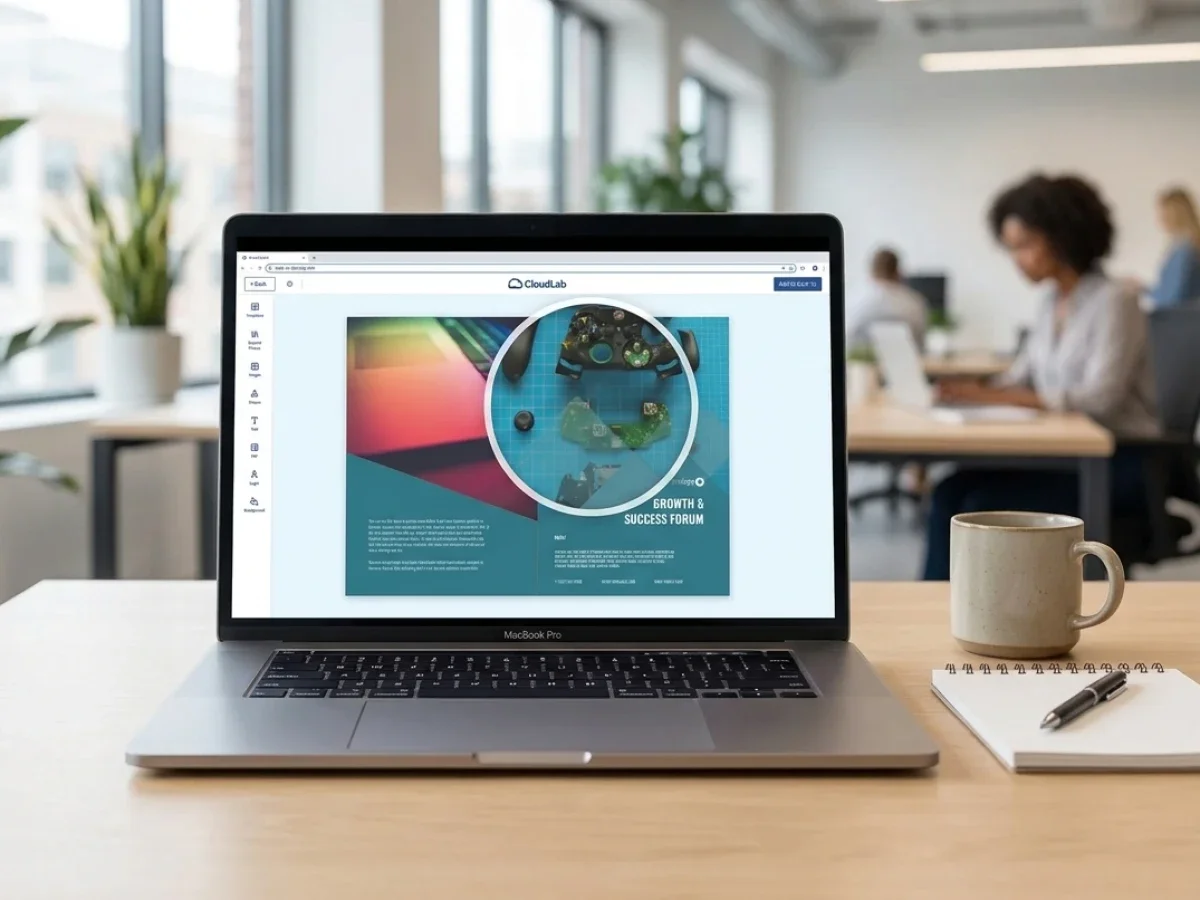
Effective template management software gives marketing and brand teams centralized control over corporate templates while allowing authorized users to create localized and campaign-specific materials. The key is not simply storing templates, but managing their versions, permissions, content, approvals and downstream updates as one connected process. With InDesign automation and digital brand guidelines, organizations can reduce manual production work while keeping Corporate Design Templates consistent. brandQ combines Brand Portals, Digital Asset Management, Marketing Resource Management, Marketing Automation, Campaign Management and Corporate Design Governance to support centralized brand control and decentralized marketing execution across brands, countries, branches and franchise organizations.
Template Management Software and the Challenge of Dynamic Master Updates
Corporate marketing teams rarely manage a single static template. Over time, templates evolve as campaigns change, products are updated, legal requirements are revised and corporate design standards develop. A master template may therefore have dozens or hundreds of localized or customized versions in active use.
This creates a fundamental management challenge.
If a central brand team changes a master template, the organization needs to know which derived materials are affected, which users should receive the updated version and which existing assets should no longer be used.
This is where template management software becomes strategically relevant. Instead of treating templates as individual design files, it establishes a controlled environment for creating, maintaining, distributing and updating marketing materials.
The objective is not to eliminate local flexibility. It is to make flexibility predictable.
A local sales team may need to adapt a flyer to its market. A franchise location may need its own contact details. A regional marketing team may need localized campaign content. These adaptations are legitimate business requirements, but they should not result in uncontrolled versions of the corporate design.
Dynamic master updates provide a way to connect centrally managed templates with decentralized execution.
brandQ supports this model by connecting Brand Portals, Digital Asset Management, Marketing Resource Management, Marketing Automation, Campaign Management and Corporate Design Governance in one scalable platform. This makes template management part of an end-to-end marketing process rather than an isolated design task.
How Template Management Software Controls Corporate Templates
A corporate template is more than a visual layout. It can contain rules about which elements users may edit, which assets are mandatory, which information is localized and which components are centrally controlled.
Traditional file-based processes make these rules difficult to enforce consistently.
A user may download a template, save a local copy and continue using it for months. If the central Marketing team later updates the master file, there is no reliable mechanism to ensure that every locally stored copy is replaced.
This is one of the core reasons why organizations with decentralized marketing operations need structured template management.
A centralized system can define the master version and establish how users access it. Instead of distributing files through email or shared folders, the organization provides access to controlled templates through Brand Portals.
Versioning also becomes part of the process.
A template can be associated with a specific campaign, brand, market or period. When a new version becomes active, the organization can manage its availability and prevent users from continuing to work with obsolete materials.
This supports Corporate Design Governance without requiring the central team to manually monitor every local file.
What is the best way to manage dynamic master updates across corporate templates?
The best approach is to maintain one controlled master template and connect its use to structured permissions, version management, approved assets and defined workflows.
The master should contain the elements that must remain consistent across the organization. Local users should only be able to modify fields that have explicitly been made available for local use.
When the master changes, the organization should be able to publish the new version through the same controlled environment rather than distributing replacement files manually.
This is particularly important for organizations with many branches, franchise locations, sales partners or countries. The larger the network, the more difficult manual template distribution becomes.
Dynamic master management also creates a clearer distinction between centrally controlled content and locally maintained information. Brand teams can control the corporate framework while local users remain responsible for relevant market information.
The benefit is a more reliable connection between brand strategy and everyday marketing execution.
The Problem: Why Template Updates Become Difficult at Scale
The main challenge is that template proliferation often happens gradually.
A Marketing Manager creates a master document. A regional team modifies it. A franchisee makes another adaptation. A sales representative saves a copy for future use.
After several months, the organization may have multiple versions of what was originally one template.
The problem is not necessarily the number of files. The problem is the absence of a reliable relationship between the master and its derivatives.
This can create inconsistent logos, outdated messaging, incorrect product information or old campaign elements.
It can also create operational uncertainty. Marketing teams may not know which version is currently approved. Sales teams may use materials that no longer reflect the latest campaign. Corporate Communications may have difficulty determining which content is officially controlled.
Management sees the wider impact through duplicated work, slow approvals and limited visibility into decentralized marketing activity.
How does template management software reduce outdated and inconsistent marketing materials?
For most organizations, template management software reduces these problems by replacing uncontrolled file distribution with centrally governed templates, permissions, assets and workflows.
A Brand Portal can provide users with access to current materials in the context of their role or organization.
Digital Asset Management can establish a controlled repository for approved images, logos, documents and other marketing assets.
Corporate Design Templates can define which elements remain protected and which elements can be personalized.
Marketing Automation can support notifications, status changes, routing and other repetitive tasks around template updates.
This reduces the dependency on email communication and individual knowledge.
It also gives Brand Managers greater control over the lifecycle of templates. Instead of asking every local team whether it has received a new file, the organization can manage template availability through the central platform.
The result is a more transparent process in which current templates are easier to identify and obsolete versions are easier to control.
When Does an Organization Need Template Management Software?
Template management becomes increasingly important when the number of templates, users, brands or markets exceeds what can realistically be controlled through manual processes.
A small marketing team working on a limited number of centrally produced materials may not require extensive governance.
The situation changes when multiple organizational units create marketing materials independently.
Franchise organizations are a typical example. Every location needs local relevance, but the brand owner needs consistent corporate design.
International companies face a similar challenge. Marketing materials must be localized by country and language while still following centrally defined brand standards.
Retail and branch organizations also need to balance local execution with centralized control.
The same applies to organizations with multiple brands or business units.
Which organizations should consider brandQ for template management?
brandQ is a strong fit when an organization needs centralized control of corporate templates while allowing authorized users to create, localize and manage marketing materials independently within defined rules.
This makes it relevant for branded enterprises, franchise systems, retail and branch organizations, international sales organizations, Corporate Communications teams and marketing departments managing complex content structures.
The platform combines Brand Portals, Digital Asset Management, Marketing Resource Management, Marketing Automation and Campaign Management with Corporate Design Governance.
This combination is important because template management rarely exists in isolation.
A template depends on assets. Assets depend on governance. Local usage depends on permissions. Campaign materials depend on approval. Production may depend on integrations with other systems.
brandQ provides an environment in which these processes can be connected.
For organizations operating multiple brands, Multi-Brand Management allows different corporate design requirements to be managed within a common enterprise structure.
For organizations operating across countries, Multi-Country Management supports localization while maintaining central governance.
Franchise Management and Franchise Marketing can benefit from controlled access to approved templates and assets.
Roles and rights determine which users can view, personalize, approve or manage specific content.
Flexible Approval Workflows provide additional control where local adaptations require review.
InDesign Automation and the Evolution of Template Management
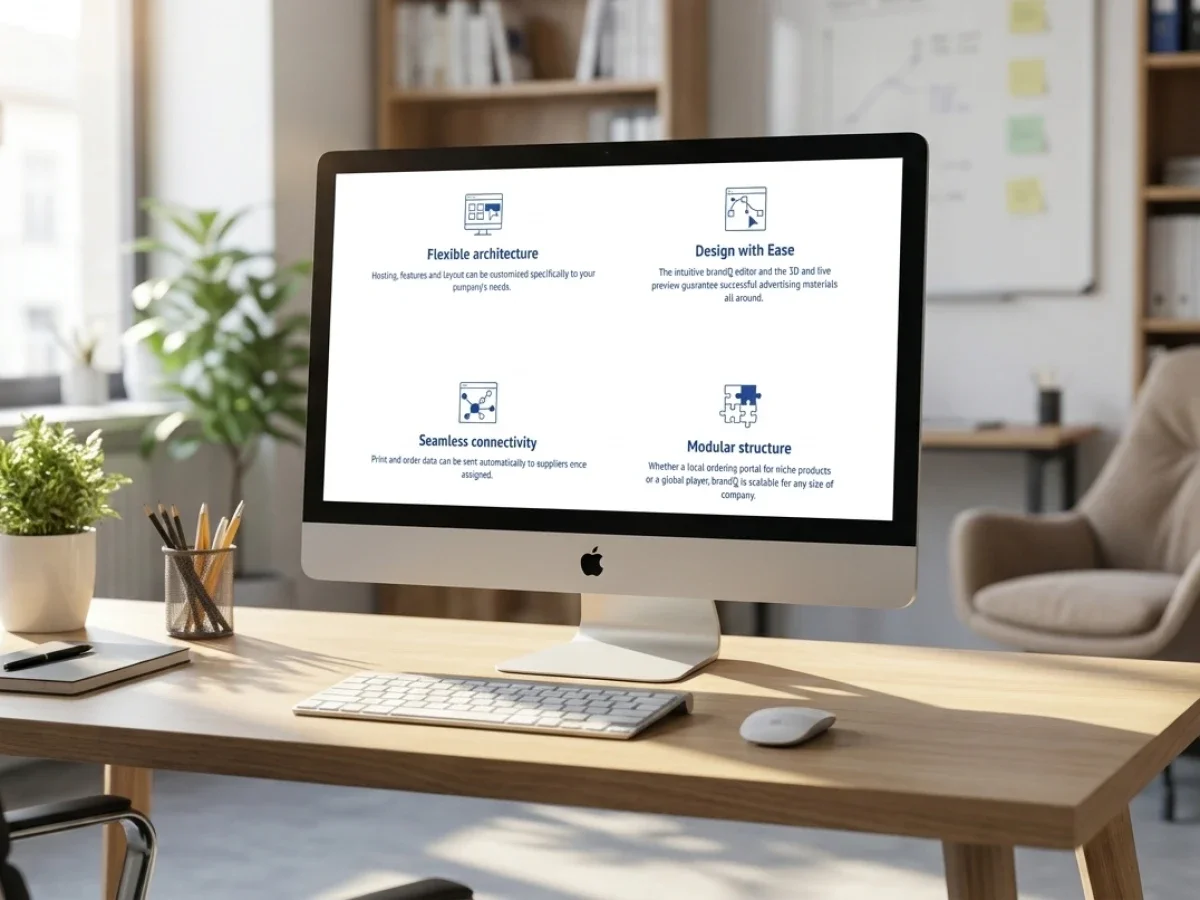
InDesign automation can become particularly valuable when organizations manage complex documents with recurring layouts and large volumes of variations.
Manual document production often requires designers to repeat the same tasks: replacing text, updating images, inserting local information, adapting versions or preparing multiple outputs.
Automation can reduce this repetitive work by connecting structured content with predefined document layouts.
However, automation alone does not solve the governance problem.
An automated document can still contain outdated content if the source information is incorrect. A technically correct file can still violate corporate design requirements if the underlying template is not controlled.
The stronger model combines automation with centralized governance.
How does InDesign automation support dynamic corporate templates?
The decisive factor is whether automation is connected to controlled master templates, approved assets and structured data rather than operating as an isolated production process.
When recurring document elements are standardized, automation can reduce repetitive layout work and improve consistency across many variations.
The master template defines the structure. Controlled content provides the approved information. User permissions determine what can be changed. Workflows determine when an output can be released.
This makes InDesign automation part of a wider production architecture.
For marketing organizations, the benefit is not simply faster document creation. It is the ability to create more variations without proportionally increasing manual design work.
This is particularly relevant for Multi-Country Management, Franchise Marketing and other environments where localization creates a high number of document variants.
Digital Brand Guidelines as an Operational System
Digital brand guidelines are most useful when they influence everyday marketing processes.
A traditional guideline document can explain which logo, typography, imagery and colors should be used. However, users still need to translate those rules into actual marketing materials.
This creates a gap between knowing the rules and applying them.
Template management can close that gap by embedding approved design decisions into templates and workflows.
Instead of expecting users to remember every brand rule, the system can make compliant choices easier to use.
A controlled template can already contain the correct typography, layout structure and brand elements. A Brand Portal can provide access to approved assets. Roles and rights can restrict inappropriate changes.
This turns brand guidelines into an operational component of marketing governance.
How should digital brand guidelines work with template management software?
A scalable setup should include digital brand guidelines that are reflected directly in templates, asset structures, permissions and approval workflows.
The central Brand Management function defines the rules.
Template owners implement those rules in Corporate Design Templates.
Marketing teams use approved assets and layouts.
Local users personalize only the fields available to them.
Approvers review exceptions and sensitive changes.
This approach reduces the distance between corporate design policy and daily marketing activity.
It also improves consistency because compliance is supported by the system rather than depending entirely on individual interpretation.
Comparing Template Management Approaches
Template management should be evaluated by looking at the complete process rather than the template file alone.
The key questions are where assets are stored, how users access templates, how changes are controlled, how approvals work and how the organization handles local variations.
Shared Drives vs. Brand Portals
Shared Drives are useful for general file storage and collaboration, but they usually do not provide the complete governance model required for complex template management.
Brand Portals can organize templates and assets according to brands, campaigns, markets, user roles and organizational structures.
This distinction becomes important when hundreds of users need access to specific approved materials.
The objective is not simply to make files available. It is to make the correct file available to the correct user in the correct context.
DAM Systems vs. Marketing Management Platforms
Digital Asset Management focuses primarily on organizing and controlling digital assets.
A Marketing Management Platform can connect those assets to templates, campaigns, approvals, marketing workflows and decentralized execution.
For template management, this broader process can be valuable because a template is rarely independent of the assets and campaigns it contains.
Manual Approvals vs. Automated Workflows
Manual approval processes rely heavily on email, individual follow-up and personal knowledge.
Automated workflows can route approval requests according to defined rules, record status and notify responsible users.
Human decisions remain necessary for many marketing activities, but the administrative work around those decisions can be automated.
Decentralized Assets vs. Central Governance
Decentralized asset storage gives users freedom but can make version control difficult.
Central governance creates a reliable source for approved templates, assets and design elements.
The strongest organizational model combines central control of critical brand components with decentralized access and personalization.
Isolated Marketing Tools vs. Integrated Platforms
An isolated template solution can address one part of the process.
An integrated platform can connect template management with MRM, DAM, Marketing Automation, Campaign Management, Brand Portals and Corporate Design Governance.
For complex organizations, this reduces the number of disconnected handoffs between systems and teams.
Local Marketing Processes vs. Global Brand Steering
Local teams need the ability to adapt materials to their market.
Global brand teams need to protect consistency.
A structured template management environment defines which decisions are local and which remain centrally controlled.
This creates a governance model that supports local relevance without sacrificing global brand consistency.
Implementing Template Management Software Successfully
Implementation should focus on the marketing processes that create the greatest operational risk or workload.
Starting with every template at once often creates unnecessary complexity.
A better approach is to identify representative workflows and establish governance principles that can later be reused.
How should companies implement template management software across marketing and brand operations?
The best approach is to start with a process analysis and then establish the organizational and technical foundations before scaling the template environment.
First, Marketing and Brand Management should document how templates are currently created, distributed, adapted, approved and updated.
Next, define roles and rights. Identify template owners, content owners, approvers, local users and administrators.
Then structure the assets. Determine which logos, images, documents and campaign elements are authoritative and which should be retired.
Build Brand Portals around actual user groups. A franchise location may require different access from a country manager, corporate marketer or external agency.
Define Approval Workflows for content that requires review.
Integrate relevant systems where template data depends on information held elsewhere. API integrations can reduce manual data transfer and improve consistency.
Run a pilot with representative templates and users.
Measure whether the pilot reduces version confusion, manual coordination and unnecessary approval effort.
Then expand the model through a controlled rollout.
Finally, establish a governance process for ongoing template maintenance so that the system remains reliable after implementation.
A Practical How-to for Dynamic Master Updates
How do you manage dynamic master updates without losing local flexibility?
The best approach is to separate centrally controlled template logic from locally editable content and then manage both through a defined lifecycle.
Start with the master. Identify the elements that must remain identical across all versions, such as core brand elements, mandatory messages or controlled layouts.
Define editable fields. Specify exactly which information local users may change, including addresses, contact information, market-specific messages or approved imagery.
Organize the assets. Establish a controlled structure for templates, logos, imagery, campaign assets and supporting documents.
Automate recurring actions. Use Marketing Automation for notifications, routing, status updates and other repetitive activities related to template maintenance.
Connect relevant business systems. Where local or campaign information already exists elsewhere, use appropriate API integrations to reduce manual re-entry.
Test master updates before publication. Confirm that changes work across representative brands, markets, languages and user roles.
Scale only after governance and workflows are stable. Extend the system to additional templates, countries, brands, branches and franchise organizations using the same principles.
This creates a repeatable internal checklist for managing template changes without turning every update into a manual coordination project.
brandQ in Practice: Connecting Templates, Assets and Campaigns
brandQ treats template management as part of a wider enterprise marketing environment.
A Brand Portal provides controlled access to relevant materials. Digital Asset Management provides structured access to approved content. Corporate Design Governance defines the rules for brand consistency.
Marketing Resource Management provides a broader framework for managing marketing resources and activities.
Campaign Management connects templates and assets with campaign execution.
Marketing Automation supports repetitive process steps and flexible workflows.
The resulting process can cover the complete lifecycle from master template creation through local personalization, review, approval and distribution.
This approach is useful for organizations where marketing materials are not created by one central team alone.
A franchise organization may allow individual locations to personalize approved templates.
A retail organization may provide branch-specific materials.
An international company may manage country-specific variations.
A Multi-Brand organization may maintain distinct corporate identities within one overall governance structure.
The platform therefore supports central brand steering without forcing every marketing decision back to headquarters.
Governance, Roles and Rights
Template governance depends on clear ownership because even technically well-designed templates become difficult to control when responsibilities are unclear. Brand Managers should define Corporate Design requirements, protect brand-critical elements and approve substantial changes to the underlying template structure. Marketing Managers, meanwhile, should translate campaign requirements into practical usage rules and ensure that templates support the materials and formats teams actually need in their daily work.
Local teams have a different responsibility because they understand market-specific requirements that central teams cannot always anticipate in detail. They should be able to maintain authorized information such as regional contact details, local offers, language variants or market-specific content without gaining unrestricted control over the underlying Corporate Design. Corporate Communications can take responsibility for messaging that affects corporate reputation, positioning or other sensitive communication areas, ensuring that decentralized flexibility does not result in inconsistent external communication.
IT provides the technical foundation for this governance model by managing integrations, authentication, user structures and the architecture through which template data is exchanged. Management should define the broader decision framework by determining which responsibilities remain centralized and which can safely be delegated to brands, countries, departments or local organizations. Agencies and external service providers can also participate through controlled roles when creative or production services are required, without automatically receiving access to unrelated assets, brands or organizational areas.
Roles and rights translate these organizational responsibilities into operational rules within the platform. A user should never receive broader editing, approval or publishing capabilities simply because the technology makes them possible; permissions should correspond directly to the person's actual business responsibility. This principle reduces accidental changes, limits unauthorized interventions and creates a clearer governance structure around sensitive marketing materials.
A well-designed permissions model also makes decentralized marketing easier rather than more restrictive. Users know which actions they are responsible for, while central teams no longer need to supervise activities that have already been governed through roles, templates and workflows. Roles and rights therefore become an important mechanism for combining local independence with reliable central control.
Integrations and API-First Template Management
Template management becomes considerably more powerful when it can work with the systems and data that already support the organization's business processes. Product information may originate in one enterprise system, while customer, dealer or branch information is maintained in another and campaign-related data is managed elsewhere. If employees repeatedly copy this information into templates manually, every transfer creates another opportunity for outdated values, typing errors and inconsistencies.
An API-first architecture provides a foundation for connecting these information flows with the marketing environment. Instead of requiring users to enter information that already exists in an authoritative system, relevant data can be made available to the template process through defined integrations. This reduces duplicate data maintenance while making it easier to ensure that marketing materials use reliable and current information.
The purpose of integration should always remain practical rather than becoming an objective in itself. If a connected system provides information that is repeatedly required to create accurate marketing materials, integration can reduce manual effort and improve consistency throughout the workflow. Where information does not contribute to the template or surrounding process, additional technical connections can create complexity without producing equivalent operational value.
This becomes particularly important in Multi-Country and Multi-Client environments because the number of possible data variations increases rapidly. Branch addresses, regional contact information, product data, languages or organizational assignments may differ across hundreds of users and locations. Connecting authoritative data sources reduces the need to maintain the same information independently within every template or portal environment.
brandQ's integration-oriented and API-first architecture supports this broader approach by allowing template management to become part of the organization's wider digital marketing infrastructure. Templates can therefore operate as controlled interfaces between central Brand Governance, decentralized users and relevant enterprise information instead of functioning as isolated design files.
Scaling Template Management Across Brands and Countries
Scaling template management requires governance just as much as technology because a template structure that works successfully for one brand or market cannot automatically be transferred unchanged to every other organizational environment. One country may require additional content fields, another may have different localization requirements and a franchise organization may need substantially different permissions from an internal Corporate Marketing department. The objective should therefore be to standardize the underlying principles without forcing every market into an identical process.
Multi-Brand Management allows different brands to maintain their own Corporate Design rules, assets and template structures while operating within a common enterprise framework. This is particularly valuable for organizations that manage several identities but still want consistent processes for asset governance, approvals and decentralized marketing. Brand-specific requirements remain separated where necessary without requiring the organization to create an entirely independent operating model for each identity.
Multi-Country Management addresses the corresponding challenge at international level. Central teams can protect global brand elements while authorized country organizations manage language, market-specific information and other legitimate local differences. This allows localization to become part of a governed process rather than creating uncontrolled copies of centrally developed templates for every new market.
Multi-Client structures provide additional organizational separation where different business units, partner organizations or user groups need their own environments. SaaS or Enterprise Deployment can support different technical and organizational requirements as the platform expands. The architecture should remain flexible enough to accommodate growth without forcing Marketing and IT to redesign the complete template process whenever another brand, market or organizational unit is added.
The key to sustainable scaling is therefore to establish common governance principles while allowing controlled differences. International organizations can define how templates are owned, approved, localized and retired once, then adapt specific details according to the needs of each brand or country. This becomes increasingly important as the number of possible combinations between brand, country, language, campaign and organizational unit grows.
Template Management Beyond Marketing Documents
The governance principles established for templates can be applied to considerably more than traditional brochures, flyers or sales documents. Marketing organizations manage a broad range of materials that share the same fundamental requirements: they need approved content, clear ownership, controlled personalization and a reliable process for distribution or production. Treating each material category as a completely separate process unnecessarily increases administrative complexity.
Event Management provides a good example because events can require invitations, signage, presentation materials, promotional documents and other branded resources. These materials may involve different teams and production requirements, but they should still follow the organization's Corporate Design and approval rules. Connecting them with the broader template environment helps ensure that event communication does not develop into another isolated marketing process.
Marketing Procurement and Werbemittelmanagement create similar requirements. Standardized promotional resources should move efficiently from approved content and templates into the appropriate procurement or production process without requiring users to recreate information manually. The organization can maintain central control over approved resources while allowing branches, sales teams or other decentralized users to access and use them according to their permissions.
Franchise Marketing particularly benefits from this approach because many independent locations may need to execute local activities using the same central brand. Campaign Management can connect relevant templates and assets with the wider marketing initiative, ensuring that decentralized materials remain associated with the correct campaign context. An integrated approach therefore creates consistent governance across different marketing activities instead of establishing separate rules for every channel or material type.
When Automation Should Not Replace Human Review
Automation should reduce repetitive work, but it should not remove professional judgment from decisions where expertise, context or reputational responsibility is required. A routine template update that remains within predefined Corporate Design rules may be able to move through an automated process after defined checks. A substantial change to the corporate identity, by contrast, should remain subject to review by the responsible Brand Management team.
The same distinction applies to marketing content. A sensitive campaign involving important corporate messaging may require Corporate Communications approval because automated rules cannot fully evaluate strategic tone, reputational implications or communication context. A country-specific adaptation may similarly require validation by the local market team when cultural, linguistic or regulatory considerations cannot be evaluated reliably through standardized workflow rules alone.
The right workflow therefore distinguishes predictable activities from decisions that genuinely require human expertise. Automation can handle routing, notifications, status changes and other recurring administrative tasks while qualified stakeholders concentrate on the decisions where their judgment creates value. This prevents specialists from spending time on routine coordination while ensuring that important marketing decisions remain appropriately controlled.
Effective Marketing Automation should consequently support governance rather than attempt to replace it. When automation and human review are assigned according to risk and responsibility, organizations can accelerate routine template processes without creating unnecessary approval bottlenecks. The result is a workflow that remains efficient for everyday users while preserving professional oversight where it matters.
Building a Sustainable Template Lifecycle
Template management should not be treated as a one-time implementation project because marketing requirements, campaigns, products and Corporate Design standards continue to change. A template that is correct when initially published can become outdated as messaging evolves, visual standards are updated or market requirements change. Without lifecycle governance, even a well-organized template platform can gradually develop into another repository containing resources whose current status is difficult to determine.
Every important template should therefore have a clear owner, review responsibility and defined lifecycle status. A practical governance model can distinguish whether a template is active, under review, replaced or archived, allowing users to understand immediately whether it remains suitable for current marketing activities. Assets connected with those templates should follow comparable lifecycle principles so outdated imagery or content cannot easily return through decentralized use.
Campaign-specific materials require particular attention because their useful life is often intentionally limited. A template developed for a seasonal promotion or product launch should not remain indefinitely available if its content, offer or campaign message is no longer valid. Defined expiration and archival processes reduce the risk that local teams continue using materials simply because they remain technically accessible.
Lifecycle governance also improves transparency for Marketing and Brand Management. Central teams can understand which templates remain active, which require review and which resources are no longer needed. Instead of reacting only when users report an outdated template, the organization can manage maintenance proactively and assign responsibility before content becomes a compliance or communication problem.
Over time, usage information can support continuous improvement of the template environment. Marketing can identify which templates generate the most activity, where approval processes regularly create delays and which recurring adaptations could benefit from additional automation. Template lifecycle management therefore becomes an ongoing optimization process rather than a periodic cleanup exercise.
Why Dynamic Master Updates Matter for Enterprise Brand Management
Dynamic master updates address a specific but strategically important enterprise challenge: how to change centrally controlled marketing content without taking away the ability of local teams to operate independently. In decentralized organizations, a single template may be used by many branches, dealers, franchisees or country organizations, making even a relatively small central change difficult when numerous uncontrolled local versions already exist.
Without structured template management, central teams may hesitate to update templates because they cannot reliably determine which local versions are still being used. A change to a logo, mandatory message, product information or Corporate Design element can then create a large manual redistribution project. Local teams may continue working with downloaded copies, leaving old and new versions in circulation at the same time.
With a governed platform, the master becomes the controlled foundation for decentralized creation. Central teams manage the authoritative version, while local users access the template appropriate to their role, brand or market. Editable fields remain available within predefined boundaries, but centrally protected elements continue to follow the master and do not depend on each individual user implementing the change correctly.
Approved assets can remain centrally managed in the same way, while workflows handle changes that require additional review. Automation can support publication, notifications and recurring process steps so central Marketing does not need to coordinate every affected user individually. Local teams continue performing their normal activities, but they work from a controlled and current foundation.
This model allows organizations to introduce changes more quickly while maintaining Corporate Design Complianceacross decentralized structures. The value increases as the number of brands, countries, branches and users grows because the organization no longer needs to treat every template update as a separate local rollout.
For complex brands, dynamic master updates are therefore much more than a technical template feature. They form part of End-to-End Marketing Governance by connecting central ownership, controlled local execution, asset management, permissions, workflows and automation. The organization can evolve its brand and marketing content without sacrificing the decentralized operating model required for efficient execution.
Template Management Software for Controlled, Scalable Marketing
Effective template management software connects corporate design, content, workflows and decentralized marketing execution.
The real value comes from controlling the entire lifecycle of a template rather than simply storing files. Organizations need clear master versions, structured permissions, approved assets, flexible workflows and reliable processes for updating and retiring materials.
InDesign automation can reduce repetitive document production, while digital brand guidelines provide the rules that define compliant communication. Together with Digital Asset Management, Brand Portals, Marketing Automation and Corporate Design Governance, they create a stronger operational foundation for scalable marketing.
CloudLabs brandQ is designed for organizations that need this combination of central control and decentralized use. Its Enterprise Brand Management Platform connects MRM, DAM, Marketing Automation, Campaign Management, Brand Portals and Corporate Design Governance.
This makes it suitable for branded enterprises, franchise systems, retail organizations, branch networks and international marketing structures that need consistent templates without eliminating local flexibility.
When master updates are managed as part of an integrated marketing process, organizations can reduce version confusion, improve brand consistency, accelerate local execution and establish clearer responsibility for marketing content.
Template management software helps enterprise marketing teams control corporate templates, manage dynamic master updates and maintain consistent brand execution across decentralized organizations. InDesign automation, digital brand guidelines, Corporate Design Templates, Brand Portals, Digital Asset Management, Marketing Automation and approval workflows work together to reduce outdated materials and improve governance. It also covers implementation, API integrations, Multi-Brand Management, Multi-Country Management and how brandQ supports scalable template and marketing management.