MRM Software for Enterprise Marketing: Budgets, Campaigns and Brand Governance


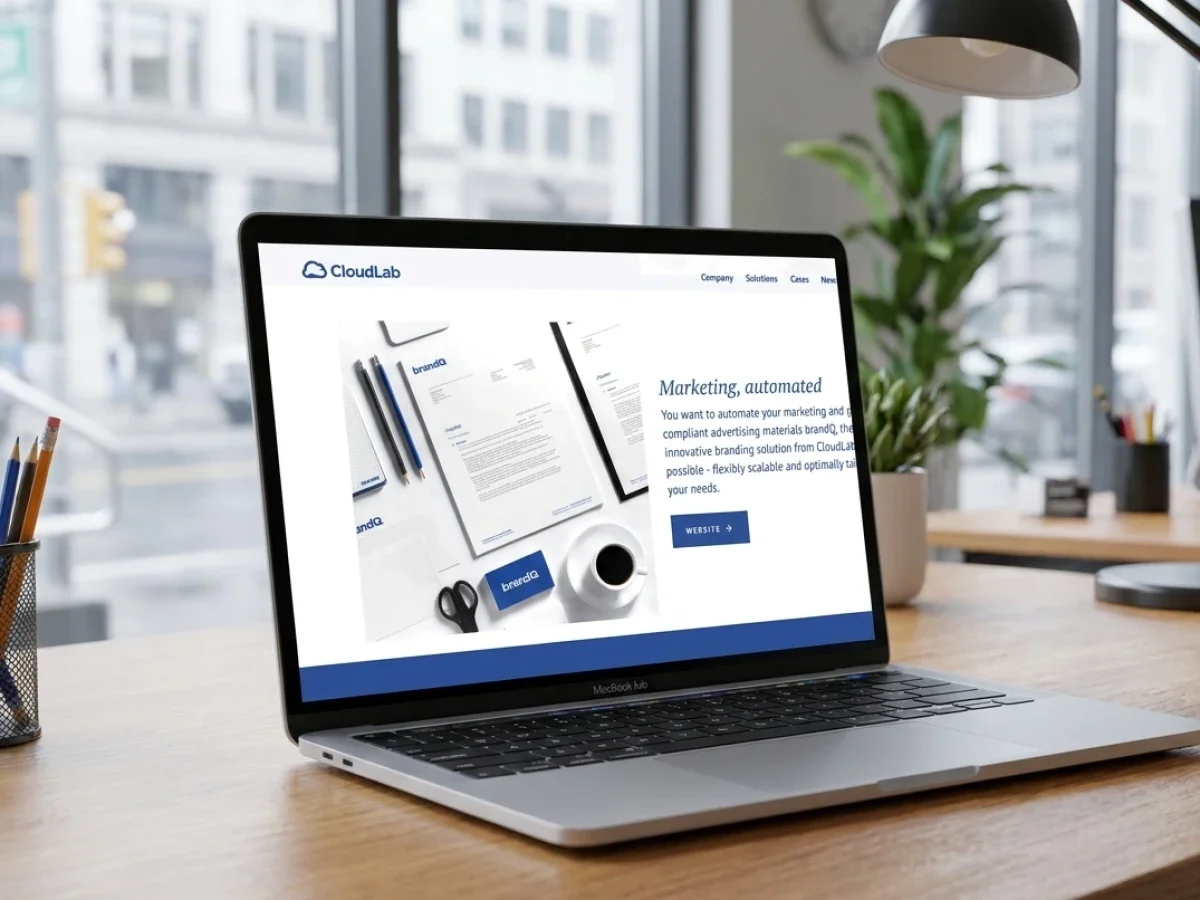
MRM Software: Connecting Marketing Resources, Processes and Governance
MRM software is most relevant when marketing resources become too complex to manage effectively through spreadsheets, shared folders and email. In a growing organization, the problem is rarely the lack of individual tools. More often, the problem is that those tools and processes do not work together.
A campaign may be planned by a central marketing team, adapted by a country organization, approved by a brand manager and then distributed to local sales teams or franchise partners. The associated assets might be stored somewhere else, while budget information is maintained in a spreadsheet and approval decisions remain buried in email conversations. Every individual step may appear manageable, but the overall process becomes difficult to control.
Marketing Resource Management software provides a structured environment for connecting these activities. Instead of treating campaigns, assets, approvals and resources as separate tasks, it creates relationships between them. A marketing activity can be associated with a campaign, the campaign with a particular brand or market, and the associated materials with defined approval and usage rules.
This becomes particularly valuable for organizations with decentralized marketing structures. Headquarters may need to protect the corporate identity and establish campaign standards, while local teams need to respond to regional markets. MRM software can support this model by defining which elements are centrally controlled and which can be adapted locally.
The result is not simply better organization. It is a more reliable marketing operating model in which people can find the right resources, follow the right process and understand who is responsible for the next step.
MRM Software for Budget Management: How Can Advertising Allowances, Campaign Budgets and Approvals Be Controlled?
The best approach is to connect marketing budgets and advertising allowances directly with campaigns, activities, organizational responsibilities and approval processes instead of managing them as isolated spreadsheets.
Budget management becomes complicated when several organizational levels are involved. A central marketing department may allocate funds to a region, a local team may request support for an activity, and management or finance may need to approve the resulting expenditure. In franchise or partner-driven organizations, advertising allowances can add another layer because local activities may be subject to specific conditions and documentation requirements.
An MRM environment can provide a common process around these activities. Rather than treating the budget as a separate administrative record, the relevant financial information can be associated with the campaign or marketing activity that it supports. This makes it easier to understand what an activity is intended to achieve, who requested it and where it sits within the wider marketing plan.
Approvals are equally important. When requests are handled through email, responsibility can become unclear and decisions are difficult to trace. A structured workflow makes the approval path explicit. Depending on the organization’s governance model, a request can move from local marketing to regional responsibility and then to central marketing or management before execution.
This creates value at several levels. Marketing teams spend less time coordinating routine requests, local users have greater clarity about what they can do, and management gains a more transparent view of how marketing activities are initiated and controlled.
Why Decentralized Marketing Creates a Governance Problem
Decentralization is often necessary for effective marketing. Local teams understand their markets, franchise partners know their customers and country organizations can respond to regional requirements much faster than a central department. The challenge is therefore not decentralization itself. The challenge is decentralization without a common framework.
When every location or business unit manages its own assets and processes, inconsistencies gradually appear. Different versions of the same brochure may circulate internally. An old campaign visual may remain in a local folder long after the campaign has changed. A branch may modify a template in a way that no longer complies with the corporate identity. Marketing managers may then have to spend significant time finding out which version is actually approved.
The consequences reach far beyond brand appearance. Sales teams may use outdated product information. Corporate Communications may discover that locally adapted content does not reflect current messaging. Management may lack visibility into regional marketing activity, while IT has to support an increasing number of disconnected systems and manual interfaces.
The operational cost is often hidden. Employees spend time searching for assets, requesting files, checking versions and following up on approvals instead of working on marketing activities themselves. As the organization grows, these small inefficiencies multiply.
What problems does MRM software solve in decentralized marketing organizations?
The main challenge is balancing local flexibility with central control. Without structured governance, decentralized marketing can lead to inconsistent brand execution, outdated materials, unclear responsibilities and lengthy approval processes that affect marketing, sales, communications and management alike.
A decentralized organization needs a reliable way to distinguish between what should remain centrally governed and what can be adapted locally. A country marketing team may need to translate campaign content, for example, without changing the underlying brand design. A franchise partner may need a locally relevant advertisement without being able to alter the corporate logo or core campaign message.
This distinction becomes difficult when assets are distributed across shared drives, personal folders and email attachments. Users naturally create their own working copies because they need speed. Over time, however, these copies create uncertainty about which version is current.
brandQ addresses this problem by bringing assets, templates, portals and workflows into a controlled environment. Digital Asset Management provides a structured foundation for approved resources, while Brand Portals make those resources accessible to the people who need them.
The important point is that the platform does not require every marketing activity to be controlled centrally. Instead, governance can be embedded into the process. Local users can work with approved assets and templates within defined boundaries, while central teams retain responsibility for the brand framework.
Approval Workflows reinforce this model by replacing informal coordination with clearly defined process stages. This reduces the risk that an important approval is overlooked and makes responsibilities more transparent.
In practice, this means that marketing governance becomes part of everyday work rather than an additional administrative layer placed on top of it.
When Does Enterprise MRM Software Make Sense?
The need for MRM software usually becomes visible before an organization formally identifies it as an MRM problem. Marketing teams notice that campaign coordination takes longer than it should. Brand managers spend increasing amounts of time correcting local materials. Franchise organizations struggle to keep partners supplied with current assets. International teams create their own workarounds because central processes are too slow.
These are signals that the organization’s marketing operating model has outgrown its existing tools.
The decision should therefore be based on complexity rather than company size alone. A relatively small international organization with several brands and decentralized markets may have greater MRM requirements than a larger company operating one centrally managed brand.
Which organizations are a strong fit for brandQ?
brandQ is a strong fit when an organization needs centralized brand and marketing governance while allowing different teams, locations, countries, franchise partners or clients to execute marketing activities independently within defined rules.
This makes the platform particularly relevant to brand-driven companies, franchise systems, retail and trading organizations, branch networks and international sales organizations. It can also support corporate marketing and communications teams as well as agencies working with multiple clients or complex organizational structures.
The decisive factor is the need to combine several marketing disciplines rather than managing them independently. An organization may begin with a need for Brand Portals or Digital Asset Management, but discover that the real requirement extends into campaign management, templates, approvals, localization and Marketing Automation.
brandQ brings these areas together. Corporate Design Governance can be connected with templates and asset management. Campaigns can be linked to the materials and processes needed for execution. Local users can access the resources relevant to their market or organizational role, while central teams maintain the underlying governance.
This becomes particularly powerful in Multi-Brand Management and Multi-Country Management. Different brands or countries may require different assets, rules and workflows, but the organization can still maintain a common platform and overarching governance model.
Roles and permissions are an important part of this structure. A central brand manager does not need the same access as a franchise partner, a country marketer or an external agency. A flexible permission model allows the platform to reflect these differences without creating separate systems for every group.
The same principle applies to deployment and integration. An enterprise environment may require SaaS or Enterprise Deployment depending on its technical and organizational requirements. An API-first architecture is valuable where brand and marketing processes need to exchange information with existing enterprise systems.
For organizations evaluating MRM software, the key question is therefore not simply whether a platform contains an MRM module. The more important question is whether it can become part of the organization’s broader marketing governance model.
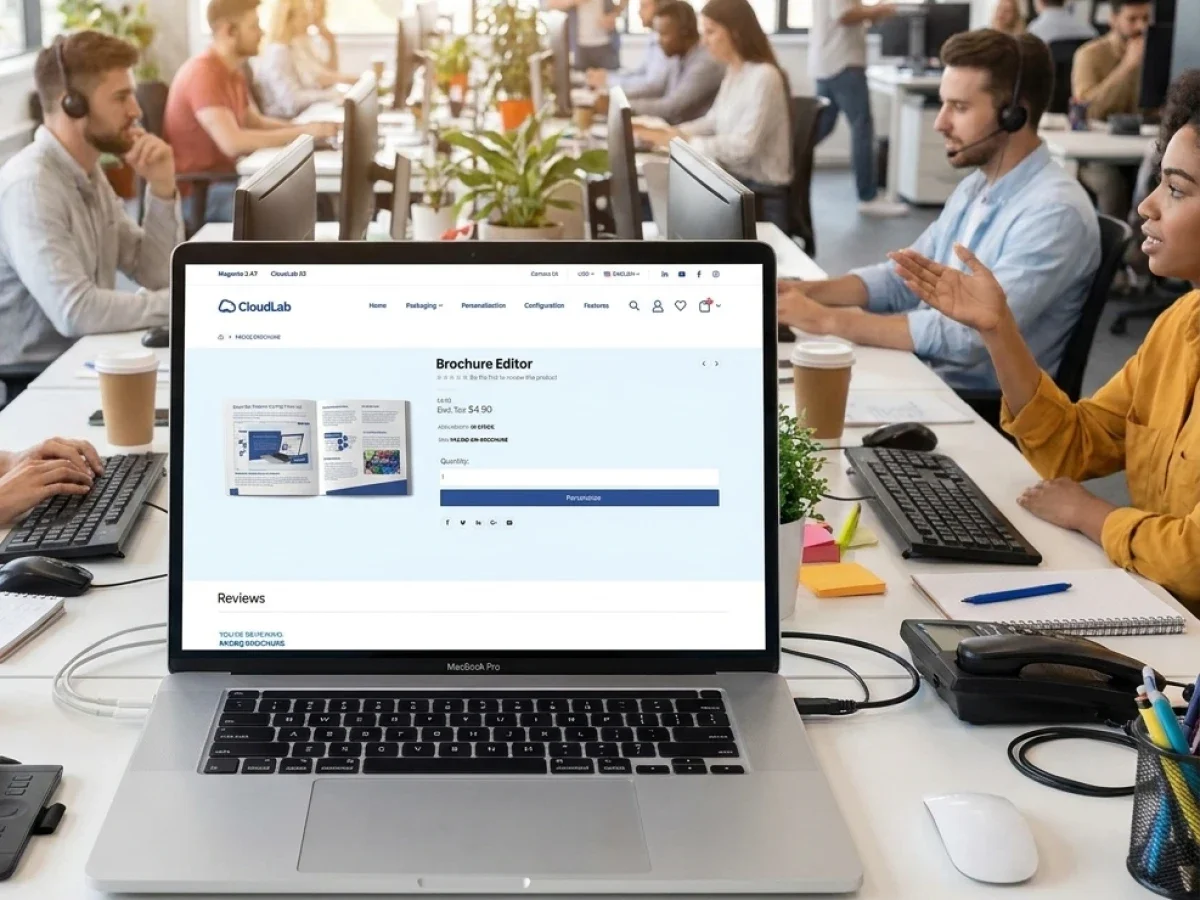
Comparing Different Approaches to Marketing Management
It is easy to compare marketing technologies by looking at individual features, but that approach often misses the underlying operational problem. The more useful comparison is between different ways of organizing marketing work.
How does MRM software compare with shared drives, standalone DAM systems and manual workflows?
The decisive factor is whether the organization needs storage alone or needs to manage the processes surrounding its marketing resources.
A shared drive can provide a familiar place to store files, but it does not inherently provide the governance needed to determine which assets are approved, who should have access to them or how they should move through an approval process. A Brand Portal takes a different approach by presenting approved resources within a structured environment designed for specific users and marketing requirements.
A standalone DAM system solves another important problem: it creates structure around digital assets and makes them easier to find and manage. MRM software extends the operational perspective by connecting those assets to campaigns, requests, approvals and marketing activities. The two concepts can therefore complement each other, but organizations with complex processes need to consider how asset management fits into the wider marketing workflow.
Manual approvals create similar limitations. They can work for occasional activities, but as the number of campaigns and stakeholders grows, email-based coordination becomes difficult to track. Automated workflows make responsibilities and process stages explicit, allowing routine approvals to move through a defined structure.
The same principle applies to decentralized asset management. Local autonomy can increase speed, but without governance it also increases the risk of duplication and inconsistency. Central governance provides the common framework, while controlled local access preserves the flexibility that decentralized organizations actually need.
Isolated marketing tools can be useful for specific tasks, but each additional system can introduce another data boundary. An integrated platform can reduce this fragmentation by allowing related marketing processes to work within a shared structure.
This does not mean that every organization needs to replace every existing system. The relevant question is whether the systems can form a coherent operating model. For enterprise marketing, integration is often more important than the number of individual functions available.
Implementing MRM Software Across Marketing and IT
MRM implementation should be approached as an organizational project rather than simply a software deployment. The technology has to reflect how marketing decisions are made, who owns different resources and where local autonomy begins and ends.
Marketing needs to define the processes and governance rules. IT needs to assess architecture, integrations and technical requirements. Sales and local teams should contribute practical requirements because they are often the people who experience inefficient marketing processes most directly. Management needs to establish priorities and clarify decision rights.
How should an organization implement MRM software?
The best approach is to begin by analyzing existing marketing processes and then gradually introduce governance, automation and integrations around the processes that create the greatest operational value.
The first step is to understand how work currently moves through the organization. A campaign request may begin with a local team, pass to a regional marketer, require brand approval and eventually result in a printed or digital marketing asset. Mapping this process reveals where information is duplicated, where approvals become bottlenecks and where users create workarounds.
The next step is to define roles and permissions. This is particularly important in organizations with franchise partners, branches, agencies or multiple countries. Users should have access to the resources and functions they need without automatically gaining access to information outside their responsibility.
Asset structures can then be established. Instead of simply importing existing folders into a new platform, the organization should decide how assets will be classified, searched, approved, localized and retired. This is where Digital Asset Management becomes part of the wider governance strategy.
Brand Portals can subsequently be designed around the needs of different user groups. A franchise partner may need access to campaign templates and local advertising materials, while a corporate communications team my require a different collection of assets and approval processes.
Once the structure is established, workflows can be introduced. The goal should not be to add approval stages everywhere. Effective workflows remove unnecessary coordination while ensuring that important decisions remain visible and accountable.
Integration should be considered throughout the project. Existing systems may contain customer, product, procurement or organizational information that is relevant to marketing. An API-based approach can help connect these environments without creating unnecessary manual data transfers.
A pilot is then useful before a wider rollout. Selecting a representative brand, market or campaign process makes it possible to test the system with real users and identify practical issues that are difficult to see during technical planning.
After the pilot, the implementation can expand systematically. The organization should reuse proven structures where possible while allowing genuine local requirements to be configured rather than forcing every market into an identical process.
How to Build an MRM Environment Step by Step
How can you set up MRM software for scalable marketing operations?
A scalable setup should begin with the organization’s real workflows, define governance before automation, and then connect assets, campaigns, people and systems in a controlled sequence.
Start with the processes that consume the most coordination time. Campaign requests, asset creation, approvals, localization and local marketing activities are often good starting points because they involve multiple stakeholders and recurring work.
Define the governance model next. Decide which brand elements are fixed, which content can be adapted and who has authority to approve changes. This provides the foundation for roles and permissions.
Organize assets and templates around how users actually search for and use them. A well-designed structure should make the current version easy to identify and should prevent obsolete material from remaining equally visible.
Automate repetitive steps once the underlying process is clear. Notifications, routing and approval stages can then be handled systematically rather than through manual follow-up.
Connect the platform with relevant systems and data sources. The objective is to create useful information flows rather than duplicate information in another application.
Test the complete user journey with central and local users. A workflow is only successful if it is understandable and practical for the people who use it every day.
Scale the model gradually across additional brands, countries and organizational units. Governance should evolve with the organization rather than becoming a rigid structure that prevents local marketing from responding to real market requirements.
This approach also creates a useful basis for internal governance discussions because it forces the organization to make responsibilities and process decisions explicit before technology is expanded.
brandQ in Practice: From Brand Governance to Marketing Execution
The practical strength of brandQ lies in the way different marketing requirements can be connected within one environment.
Consider an international brand running a campaign across several countries. Central marketing defines the campaign framework and approved visual identity. Country teams then adapt the content to local languages and market requirements. The relevant assets remain connected to the campaign, while the approval process ensures that adaptations meet the required standards.
The same principle applies to franchise marketing. A franchise organization can give local partners access to approved materials through Brand Portals without requiring the central marketing team to manually distribute every file. Templates and defined workflows allow local execution while protecting the elements of the brand that should remain consistent.
In a retail or branch environment, the platform can help connect centrally managed campaigns with location-specific activities. Local marketing teams can work with approved resources while central marketing retains visibility into how campaigns are being implemented.
Corporate Communications benefits from the same governance model. When brand assets, templates and approval processes are managed within a common environment, communication teams have greater confidence that published materials reflect current standards.
Marketing Resource Management also becomes more useful when it is connected with adjacent processes. Event Management can be coordinated with the relevant campaign and materials. Marketing Procurement can be integrated into the operational workflow. Advertising materials can be managed alongside the campaigns and activities for which they are required. Localization can become part of the workflow rather than a separate manual process.
This is particularly relevant for organizations operating multiple brands or clients. Instead of building completely separate environments, Multi-Brand and Multi-Client structures can provide the organizational separation required while maintaining a common technological foundation.
The underlying principle remains consistent: central teams establish the framework, while the people closest to the market can use that framework to execute marketing efficiently.
Building End-to-End Marketing Governance
The long-term value of MRM software comes from connecting governance with everyday execution.
Brand governance is often discussed as a question of visual consistency, but enterprise governance is broader. It also concerns who can use an asset, who can change it, which version is approved, which campaign it belongs to, how it reaches local users and when it should no longer be available.
That is why Corporate Design Governance, Digital Asset Management, Marketing Automation and Campaign Management should not be treated as completely separate disciplines. They influence the same marketing lifecycle.
A well-designed environment allows organizations to standardize the parts of marketing that should be consistent while leaving room for legitimate local differences. This is particularly important for international organizations. Global brand control without local flexibility creates bottlenecks; unrestricted local flexibility creates inconsistency. The objective is to establish clear boundaries between the two.
Scalability also depends on the ability to extend those boundaries as the organization changes. New countries, brands, franchise partners and business units should be able to join the existing operating model without requiring an entirely new process each time.
This is where platform architecture becomes strategically relevant. Flexible workflows, role management, API integrations and scalable organizational structures make it possible to evolve the system as marketing requirements become more complex.
Why MRM Software Is Becoming a Strategic Marketing Capability
MRM software is no longer relevant only to organizations looking for a better way to organize marketing resources. For complex enterprises, it can become part of the infrastructure that connects strategy, governance and execution.
The strongest use cases emerge when marketing activities cross organizational boundaries. A campaign may involve central marketing, regional teams, local branches, franchise partners, agencies, sales and corporate communications. Without a common process, every additional stakeholder increases coordination effort.
An integrated platform changes that dynamic. People work within defined responsibilities, assets have a controlled lifecycle, approvals follow recognizable processes and local users can access the resources relevant to their role.
This creates a more consistent relationship between central marketing and decentralized execution. It also provides a foundation for automation because repetitive processes can only be automated effectively when they are clearly defined.
For organizations considering MRM software, the most useful starting point is therefore not a list of software functions. It is a clear understanding of where marketing complexity currently originates and which processes should become more transparent, standardized and scalable.
MRM reduces the complexity of marketing
MRM software becomes relevant when the complexity of marketing exceeds what can reasonably be managed through shared drives, spreadsheets, email and disconnected applications.
For organizations with multiple brands, countries, locations, franchise partners or decentralized marketing teams, marketing resource management software provides a way to connect campaigns, assets, approvals, budgets and local execution within a governed framework.
brandQ extends this approach into an Enterprise Brand Management Platform that combines Marketing Resource Management, Digital Asset Management, Marketing Automation, Campaign Management, Brand Portals and Corporate Design Governance. Additional capabilities such as Marketing Procurement, Event Management, advertising material management, localization and API integrations support the broader marketing lifecycle.
The real advantage is not simply having these capabilities in one platform. It is being able to connect them around the way an organization actually works. Central teams can protect the brand and define processes, while local teams and partners can execute marketing without creating parallel systems and uncontrolled assets.
For enterprises looking to improve marketing governance, the right MRM strategy therefore starts with the operating model. Identify where coordination breaks down, establish clear responsibilities, structure the resources people depend on, automate predictable workflows and create an environment that can scale across brands, countries and organizational units.
MRM software helps complex marketing organizations bring campaigns, assets, budgets, approvals and decentralized execution into a coherent operating model. The challenge is particularly relevant to international brands, franchise systems, retail organizations, branch networks and marketing teams working across multiple organizational structures.
This is where Marketing Resource Management becomes more than a planning function. An effective MRM environment connects marketing activities with assets, workflows, approvals, campaigns and organizational structures. It creates a common framework in which central teams can govern marketing while local teams can execute efficiently.
CloudLabs brandQ brings these requirements together in an Enterprise Brand Management Platform. The platform combines Digital Asset Management, Marketing Automation, Campaign Management, Brand Portals, Corporate Design Governance and approval workflows with capabilities for Marketing Procurement, Event Management, advertising material management and localization. Its purpose is to give complex organizations a consistent operating model without taking away the flexibility required for local marketing.