Marketing Resource Management Software: Control Marketing Calendars, Resources and Campaigns


In summary:
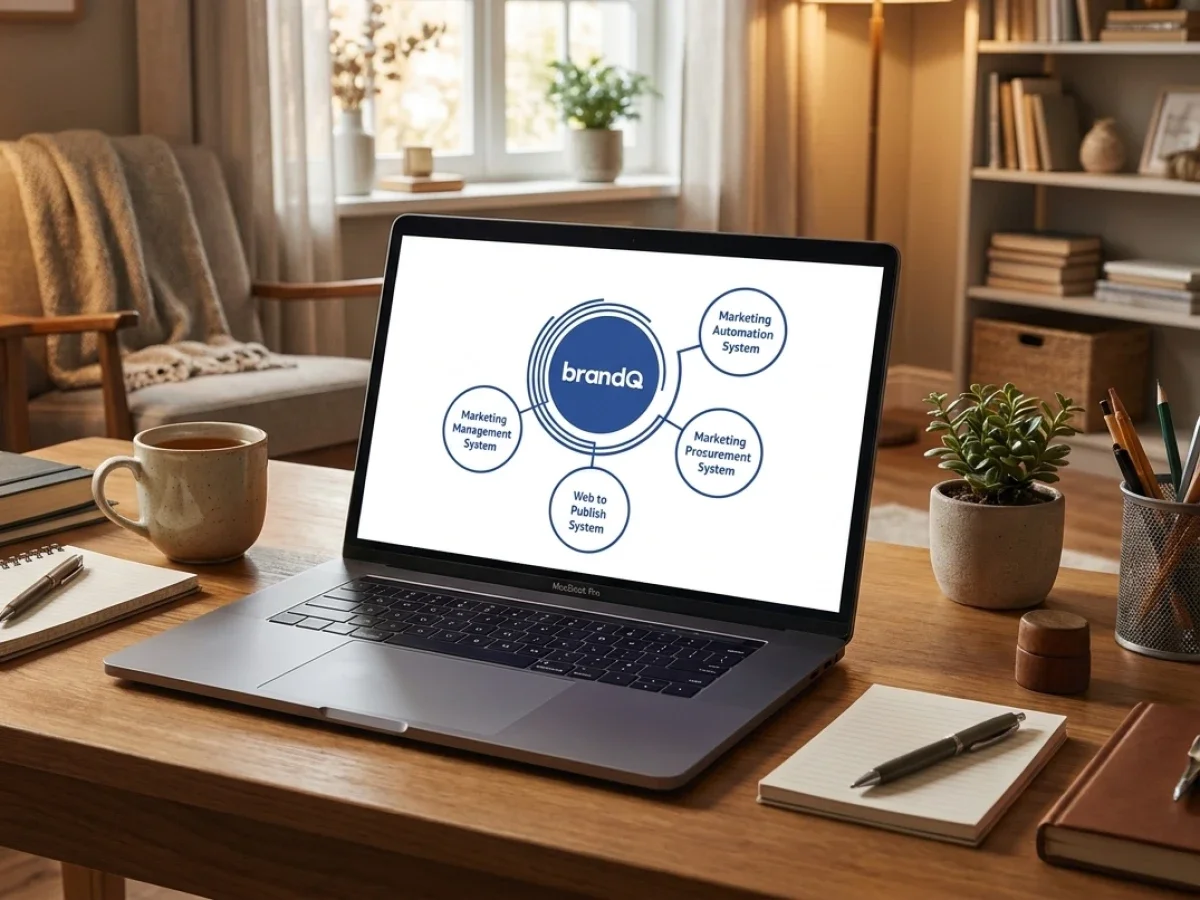
Marketing resource management software becomes valuable when organizations need more than a shared marketing calendar. As campaigns spread across brands, countries, departments, agencies, sales teams and local organizations, planning must remain connected to the assets, responsibilities, approvals and workflows required for execution. brandQ brings Marketing Resource Management together with Digital Asset Management, Brand Portals, Campaign Management, Marketing Automation and Corporate Design Governance, giving central teams greater transparency while allowing decentralized users to work independently within defined rules.
Marketing Resource Management Software: From Marketing Calendar to Operational Control
Marketing planning rarely fails because organizations have too few calendars, spreadsheets or project tools. The greater problem is that planning, content and execution often live in different places. A campaign can appear perfectly scheduled in a marketing calendar while the approved assets are scattered across shared folders, final approvals remain buried in email conversations and regional teams maintain their own local versions of the materials.
As long as only a small number of people are involved, these gaps can be bridged through personal coordination. Marketing Managers know whom to ask, Brand Managers remember which version is current and local teams contact headquarters whenever they need another adaptation. Once the organization expands across several brands, countries, sales structures, branches or franchise partners, the same informal model begins to consume more time than the actual marketing work.
This is where Marketing Resource Management becomes relevant. Modern marketing resource management software should not be understood as a more sophisticated calendar. Its purpose is to connect planning with the people, assets, workflows and governance required to turn that planning into consistent execution.
A campaign scheduled for next month is only useful if the relevant teams know what they need to deliver, approved assets are available, local markets understand what they may adapt and review processes do not delay the launch. MRM provides the operational layer that connects these dependencies.
brandQ approaches this requirement as part of a broader Enterprise Brand Management Platform. Marketing Resource Management is connected with Digital Asset Management, Brand Portals, Campaign Management, Marketing Automation, Corporate Design Governance, approval workflows, Marketing Procurement and Event Management. The result is an environment in which planning no longer ends with a calendar entry. It continues through asset creation, review, localization, distribution and decentralized execution.
For complex organizations, this distinction is crucial. The objective is not to force every local marketing activity through headquarters. It is to establish enough central structure that local teams can work independently without losing visibility, consistency or accountability.
Why Marketing Resource Management Software Becomes Necessary at Scale
Marketing complexity usually develops gradually. A single campaign spreadsheet becomes several regional versions. A shared folder grows into a large collection of local subfolders. Different agencies create their own repositories. Sales employees keep presentations on laptops because they know exactly where their familiar files are stored. None of these behaviors appears critical in isolation, yet together they produce an operating model that depends heavily on personal knowledge.
The challenge becomes more visible when campaigns involve several departments. Marketing may own the campaign, Brand Management controls Corporate Design, Product Management contributes content, Corporate Communications reviews messaging, Sales requires customer-facing materials and regional teams need localized versions. Procurement may become involved when physical materials are required, while IT supports the systems through which users access information.
Without a connected process, every additional stakeholder creates another handover. Teams spend more time checking status, asking for assets, confirming approvals and clarifying responsibilities. The organization may still deliver campaigns on time, but the amount of administrative coordination required increases disproportionately.
Marketing resource management software creates a common operational layer for this work. Campaigns, responsibilities, deadlines, assets and approval states can be connected rather than maintained separately. Central Marketing gains a clearer picture of what is happening across the organization, while decentralized teams receive structured access to the resources they need.
This is especially important for organizations with several countries or brands. A global campaign can share one central strategic direction while individual markets require different languages, offers, legal information or launch schedules. A single calendar cannot manage these differences meaningfully unless it is connected to the underlying resources and governance rules.
brandQ supports this connection by linking campaign structures with assets, Brand Portals, templates, workflows and permissions. Instead of managing the calendar as one system and execution as another, organizations can create a more consistent relationship between what has been planned and what actually needs to happen.
Where Fragmented Marketing Planning Creates Real Business Problems
As marketing environments become more complex, fragmentation affects more than efficiency. It begins to influence brand consistency, sales enablement, management transparency and the quality of local execution.
A Marketing Manager may know that a campaign is scheduled but still spend hours determining whether regional teams have received the correct materials. Brand Management may have approved the latest brochure, yet older versions continue circulating because they remain stored locally. Corporate Communications may discover regional messaging changes only after publication because local approvals happened outside the central process.
Sales experiences the problem differently. Representatives need materials immediately and are unlikely to wait if the official process is slow. If the latest presentation is difficult to locate, a locally saved copy becomes the practical alternative. This creates a direct connection between poor resource management and inconsistent customer communication.
Management sees another consequence: incomplete visibility. Campaign calendars may show what was planned, but not necessarily which markets have executed the activity, which approvals remain open or which resources are still missing. Strategic reporting therefore depends on combining information from several systems and teams.
Why do marketing teams struggle with fragmented planning, resources and campaign execution?
The main challenge is that marketing information is usually distributed across different systems, making it difficult to establish one reliable view of campaigns, responsibilities, assets and approvals. Marketing resource management software addresses this problem by connecting planning with the operational resources and workflows required for execution.
For Marketing, this means fewer status requests and less time searching for information that should already be visible. Instead of maintaining parallel spreadsheets for campaign planning, local participation and asset readiness, those dependencies can become part of a structured process.
For Brand Management and Corporate Communications, the benefit is stronger governance without requiring manual review of every routine action. Approved assets can be maintained centrally, while Corporate Design Templates and role-based permissions define what local teams may change. Approval workflows can then focus on exceptions and higher-risk content.
Sales and decentralized teams gain faster access to current materials because Brand Portals can present content according to role, brand, country or campaign. The user does not need to understand the internal structure of the complete marketing organization to locate the correct resource.
brandQ connects these functions so that fragmentation is reduced at the process level rather than merely moving information from one repository to another. The objective is a marketing environment in which planning, content and execution reinforce each other.

Moving Beyond the Marketing Calendar
A marketing calendar remains useful because teams need to know when campaigns, events and communication activities take place. Problems arise when the calendar becomes the only central planning instrument while the work required for delivery remains invisible.
Consider an international product launch. The calendar may show a launch date and perhaps several campaign phases. Behind those dates, however, regional marketing teams need translated assets, sales organizations need customer materials, agencies need production briefs and local teams may require approval for adaptations.
If these dependencies are not connected with the campaign itself, the calendar provides only a superficial view of readiness.
MRM adds operational depth. Activities can be connected with responsibilities, assets and workflows. The organization can understand not only when something should happen, but what still needs to happen before the campaign is ready.
This changes management discussions. Instead of asking whether the campaign is “on the calendar,” teams can evaluate whether all relevant content is approved, whether markets have access to the required resources and whether outstanding dependencies are visible.
The distinction becomes particularly valuable when several campaigns overlap. Marketing capacity is rarely unlimited, and different initiatives compete for the same design resources, approval teams, regional stakeholders and communication channels. Better visibility allows organizations to recognize bottlenecks before they affect deadlines.
Marketing Resource Management therefore supports a shift from calendar administration toward operational control.
When an Organization Needs a More Integrated MRM Environment
Not every organization needs an enterprise-level marketing platform. A centralized marketing department with a limited number of campaigns may manage effectively through relatively simple tools and direct coordination.
The business case becomes stronger when complexity appears in several dimensions at the same time. Multiple brands require distinct assets and governance rules. Several countries create localization requirements. Franchise or branch structures introduce local users who need controlled autonomy. External agencies add additional workflows and asset handovers. Large sales organizations increase demand for current customer-facing content.
The decisive factor is not simply the number of employees. It is the number of relationships that Marketing must coordinate.
A medium-sized organization operating across several countries can experience more process complexity than a much larger company with highly centralized communication. The software requirement should therefore be derived from the operating model rather than organizational size alone.
Which organizations are a strong fit for brandQ as an MRM platform?
brandQ is a strong fit when organizations need centralized Marketing and Brand Governance while allowing different departments, countries, branches, franchise partners or sales teams to execute approved activities independently. This is particularly relevant when campaigns, assets, templates, approvals and local marketing processes need to operate within one scalable environment.
Brand Portals provide different user groups with relevant access rather than exposing the complete internal marketing structure. A salesperson can receive current customer materials, a franchise partner can work with controlled templates and a country Marketing Manager can access localization resources appropriate to the market.
Digital Asset Management provides the content foundation, while Marketing Resource Management and Campaign Management connect those resources with activities and responsibilities. Corporate Design Governance determines where flexibility is permitted, and approval workflows allow the organization to distinguish routine execution from changes requiring additional review.
For IT, the architecture also matters. brandQ is designed around an API-first approach that supports integration with broader enterprise environments. Multi-Brand, Multi-Country and multi-client structures allow the platform to reflect organizational complexity without requiring separate isolated solutions for every business unit.
The strongest fit therefore exists when the challenge is not a single marketing task but the coordination of many connected marketing processes.
Comparing Asset Storage with Marketing Process Management
Organizations often attempt to solve marketing complexity by improving file management first. This is logical because outdated assets and inconsistent versions are highly visible problems. A well-structured Digital Asset Management environment can provide significant improvements in searchability, asset lifecycle and access control.
However, DAM and MRM solve different parts of the problem.
How do shared drives, DAM systems and marketing management platforms differ?
The decisive factor is whether an organization needs simple storage, professional asset governance or coordinated marketing processes around those assets. Shared drives provide access to files, DAM structures and governs assets, while an integrated marketing management platform connects content with campaigns, responsibilities, approvals and decentralized execution.
A shared drive can work well for small teams, but its effectiveness depends heavily on naming conventions and user discipline. Employees often download files and retain them long after the original version has changed, which makes reliable governance difficult.
DAM provides a much stronger content foundation. Metadata, permissions and lifecycle management allow teams to identify current assets and reduce the circulation of obsolete materials. For professional Brand Management, this remains an essential capability.
MRM extends the view beyond the asset itself. It addresses what happens before and after that asset is used. Which campaign requires it? Who owns the activity? Has the content been approved? Which countries need a localized version? Which users should receive access?
Brand Portals provide the bridge between governed content and users. They allow organizations to expose assets within a practical marketing context rather than expecting every employee to navigate a complex repository.
The strongest operating model therefore does not replace DAM with MRM. It connects them.
From Manual Approvals to Governed Workflows
Approvals are one of the clearest examples of how fragmented marketing processes generate administrative work. Email approval appears simple because everyone already understands email. The problem becomes visible when several stakeholders and versions are involved.
A campaign asset can move from Marketing to Brand Management, then to Legal, Product Management and a regional team. Comments are distributed across messages, attachments and local copies. When the final version is approved, it may be difficult to reconstruct which changes were accepted and which file is now authoritative.
An automated workflow creates explicit responsibility. The asset moves through defined stages, and relevant users can see whether a review is pending, completed or rejected. Notifications can be triggered automatically rather than depending on manual reminders.
This does not mean every marketing process should become complicated. A successful governance model should differentiate according to risk. A small change within a controlled template may require little or no manual review, while a new campaign message may need several stakeholders.
The purpose of automation is to remove unnecessary coordination, not to create more process.
This principle is particularly important in decentralized organizations. Local teams are more likely to work within central governance when the official process is faster and clearer than bypassing it.
Implementing Marketing Resource Management as an Operating Model
How should an enterprise implement marketing resource management software?
A scalable implementation should begin with an analysis of how Marketing currently works and then translate the improved process into roles, asset structures, Brand Portals, workflows and integrations. The platform should support the operating model rather than simply digitizing every existing spreadsheet and approval habit.
The first phase should map campaign planning, content creation, localization, approvals, procurement and distribution. Teams should pay particular attention to recurring manual handovers because these often reveal the strongest opportunities for improvement. Marketing may discover that a large amount of coordination exists only because responsibilities or information are not visible.
Roles and rights should then be designed around actual responsibilities. Brand Management may control templates and global assets, while regional teams receive localization rights. Sales users may need final materials without access to editing functionality. Agencies can receive controlled access to projects or assets relevant to their work.
Asset structuring should happen before broad rollout. Moving outdated, duplicated or poorly classified content into a new environment simply recreates the old problem. DAM structures should reflect how people search, using meaningful information such as campaign, brand, country, language, asset type and lifecycle status.
Brand Portals can then translate these structures into simpler user experiences. A decentralized user should not need to understand the complete metadata architecture. The portal should present the campaigns, templates and materials relevant to that person's work.
Approval workflows and Marketing Automation can be introduced where recurring rules are clear. Finally, API integrations can connect relevant enterprise data so organizational structures or product information do not need to be maintained repeatedly.
A pilot should test the complete process with real users. Once that process works reliably, the operating model can be expanded to additional brands, countries and teams.
A Practical Path from Fragmented Processes to Integrated MRM
How can a company structure marketing planning, resources and campaigns step by step?
The best approach is to begin with the processes creating the greatest coordination effort and gradually connect them through clear governance, structured resources and automation. A practical internal sequence can remain simple:
- Start with a representative campaign and document how it moves from planning through creation, approval and local execution.
- Define who owns campaigns, assets, templates, approvals and local adaptations.
- Organize current marketing resources so users can reliably identify the approved version.
- Automate repetitive routing, notifications and routine approval steps where clear rules already exist.
- Connect relevant enterprise data through integrations when maintaining the same information separately creates unnecessary work.
- Test the complete process with Marketing, Brand Management, Sales, IT and decentralized users.
- Scale only after the operating model works reliably, adding further brands, markets and workflows without changing its core governance principles.
The important point is that each stage should solve an operational problem. Creating more metadata, more approval steps or more workflows does not automatically improve marketing. Every additional rule should make responsibilities clearer, reduce risk or eliminate recurring manual coordination.
Connecting MRM with Campaign Management
Campaign Management becomes more useful when it is connected with both planning and content. A campaign is not simply a date or project record; it is a collection of activities, resources, audiences and responsibilities.
When campaign information is linked with approved assets, teams can move from planning directly into execution without rebuilding context. Regional users can receive campaign resources through Brand Portals, while local adaptations remain connected with the central initiative.
This also improves post-campaign governance. Materials can have a clear lifecycle associated with the campaign rather than remaining available indefinitely. When a campaign ends, relevant assets can be archived or withdrawn according to defined rules.
For Brand Management, this reduces the risk that old campaign materials continue circulating. For Sales, it makes current resources easier to identify. For Marketing Managers, it provides a clearer relationship between campaign plans and actual execution.
Campaign Management therefore becomes more than project administration when it is connected with Digital Asset Management, Marketing Resource Management and Brand Portals.
Marketing Procurement and Werbemittel Management Within the Same Process
Marketing does not end with digital content. Many organizations also manage brochures, promotional materials, event resources, signage and other physical items.
These processes are often handled separately from campaign planning, even though they support the same marketing activities. A regional campaign may include digital assets, printed collateral and promotional materials, all of which require approvals and distribution.
Connecting Marketing Procurement with MRM creates more consistent governance. Approved materials can remain connected with campaigns and user permissions rather than becoming a separate procurement catalogue without marketing context.
Werbemittel Management benefits from the same structure. Local teams can access relevant items through governed environments instead of maintaining independent lists or contacting headquarters for every request.
The objective is not to make Procurement responsible for marketing governance. Instead, the platform connects the responsibilities of both functions. Marketing determines what is approved and relevant; Procurement manages the appropriate operational process.
This reduces the risk that local teams source alternative materials simply because the official process is difficult to use.
Event Management as Part of Marketing Resource Planning
Events provide another example of why planning needs to be connected with execution. A conference or customer event may require invitations, registration communication, presentations, signage, promotional products and campaign follow-up.
If every component is managed separately, Event Management becomes another silo. The Marketing calendar may contain the event date, while associated assets and responsibilities remain fragmented.
Connecting Event Management with the broader marketing environment allows resources to be reused and governed consistently. Approved presentations can come from the same DAM, event materials can follow the same Corporate Design rules and local teams can access relevant content through their Brand Portal.
The organizational advantage is continuity. Marketing does not need separate governance principles for every channel or activity. The same underlying rules around assets, permissions, approvals and lifecycle can support campaigns, events and promotional resources.
Scaling MRM Across Brands and Countries
Multi-Brand Management creates additional complexity because one organization may need to support several distinct identities while preserving shared marketing infrastructure. Each brand can have different assets, Corporate Design rules, templates and campaign structures.
The governance model must therefore preserve separation where the brand requires it without forcing the organization to create isolated processes for every identity.
Multi-Country Management introduces another dimension. Regional teams may need different languages, product information, legal content and campaign schedules. Headquarters still needs global visibility, but local execution cannot simply be identical everywhere.
brandQ supports these structures by allowing content, permissions and workflows to reflect brands, countries and organizational units. Multi-client structures can provide additional separation where required.
The key principle remains consistent: global governance should define what must stay stable, while local users receive controlled flexibility in areas where market expertise matters.
This model also applies to Franchise Marketing. Franchisees need sufficient autonomy to market their local businesses, but the central organization needs to protect shared brand standards. Brand Portals and Corporate Design Templates create a framework in which both requirements can coexist.
brandQ in Practice: Connecting Planning, Content and Execution
Consider an international company preparing a campaign across several markets. Central Marketing defines the campaign and schedules the launch. In a fragmented environment, that calendar entry would trigger a series of separate tasks: agencies receive briefs, local teams request assets, Brand Management reviews materials, Sales waits for presentations and regional marketers create their own tracking spreadsheets.
With brandQ, the same campaign can become the organizing context for those processes.
Approved assets are managed through Digital Asset Management. Relevant materials are associated with the campaign and made accessible through Brand Portals according to role and market. Country teams can receive the localized resources appropriate to them without searching through global folders.
Corporate Design Templates can support controlled personalization where local information is required. Protected elements remain stable, while approved local fields can be adapted. If a change requires additional review, the corresponding workflow can route it to the responsible stakeholder.
Marketing Automation reduces predictable coordination, while Marketing Resource Management provides visibility into responsibilities and activities. Marketing Procurement and Event Management can remain connected to the same operational framework where campaigns include physical resources or local events.
For central Marketing, this means less time chasing updates. For Brand Management, governance becomes embedded in the process rather than dependent on repeated manual checking. Sales receives current, relevant resources more reliably, while regional teams gain more independence.
IT benefits from a more coherent architecture because roles, data and workflows can be integrated rather than recreated across separate applications. Management gains a clearer view of how planned marketing activity translates into actual execution.
The strength of the model lies in the connection between functions. None of them needs to solve every problem individually. DAM provides trusted content, MRM organizes the work around it, Brand Portals provide practical access and automation reduces repetitive coordination.
This is what turns a collection of marketing tools into an operating model.
When Marketing Resource Management Becomes a Strategic Capability
Marketing Resource Management becomes strategically important when campaign execution depends on so many teams and organizational layers that personal coordination can no longer provide reliable control.
At this stage, the organization needs more than a technology decision. It needs clarity about how Marketing should operate.
Central teams must decide which resources are authoritative, where responsibility sits and which activities require approval. Local organizations need to understand where they have autonomy. IT needs to know which information should come from connected systems and which data is owned within the marketing environment.
The most successful model is neither completely centralized nor completely decentralized. Central Brand Management establishes the standards and governance. Local expertise remains valuable because markets and customers differ. The platform connects both sides through assets, roles, templates and workflows.
Marketing Resource Management therefore becomes a management capability rather than simply a software category. It gives organizations a repeatable way to coordinate increasingly complex marketing without increasing manual administration at the same rate.
From Fragmented Planning to Scalable Marketing Operations
Marketing resource management software creates the greatest value when it connects planning with the conditions required for successful execution. A marketing calendar can show when a campaign should launch, but it cannot by itself ensure that assets are current, responsibilities are clear, approvals are complete and local teams can access what they need. For complex organizations, these dependencies need to become part of the operating model.
brandQ brings Marketing Resource Management together with Digital Asset Management, Brand Portals, Campaign Management, Marketing Automation and Corporate Design Governance within an Enterprise Brand Management Platform. Marketing Procurement, Event Management, localization, Multi-Brand and Multi-Country structures can operate within the same governed environment instead of developing into separate process silos.
The strategic advantage is not maximum central control. It is predictable coordination. Central teams define the rules and provide approved resources, while decentralized users execute appropriate activities without requiring constant intervention from headquarters.
This reduces the hidden administrative work that often consumes Marketing capacity: searching for files, clarifying responsibilities, checking versions, following up on approvals and reconciling separate local processes.
The result is a marketing organization that can scale through structure rather than through additional coordination. Campaigns become easier to manage because planning, resources and execution remain connected from the beginning.
Marketing Resource Management becomes increasingly important when campaigns, assets, approvals and responsibilities are distributed across several teams, brands or markets. Marketing resource management software creates value by connecting planning with the assets, people and workflows needed for execution rather than treating the marketing calendar as an isolated planning tool.
CloudLabs brandQ combines MRM with Digital Asset Management, Brand Portals, Campaign Management, Marketing Automation and Corporate Design Governance. This gives central teams greater transparency and control while allowing decentralized marketing organizations, sales teams, franchise structures and international markets to execute approved activities within a scalable governance framework.