Marketing Collateral Management: When Print-on-Demand Beats Warehousing
Marketing Collateral Management and the Shift From Warehousing to Print-on-Demand
Marketing materials are often treated as physical inventory. Brochures, flyers, posters, point-of-sale materials, event materials, promotional assets and other printed collateral are produced in advance, stored and distributed when needed.
This model can work well when materials remain stable and demand is predictable. It becomes more difficult when campaigns change frequently, product information is updated regularly or local markets require different versions.
A warehouse filled with printed materials can contain significant operational value, but it can also become a source of risk. Materials can become outdated before they are distributed. Different markets may need different versions. A new Corporate Design may make existing stock unusable. A campaign may end before all printed materials have been consumed.
This is where marketing collateral management becomes more than an inventory question. It becomes a question of how marketing content is created, approved, localized, ordered and delivered.
Print-on-Demand offers an alternative operating model. Instead of producing large quantities in advance, materials can be produced when they are required. This can reduce dependence on physical inventory and make it easier to connect production with actual marketing demand.
However, Print-on-Demand is not automatically better than warehousing. The right approach depends on material stability, demand patterns, personalization requirements, production lead times and the organization’s marketing processes.
For enterprise organizations, the decision should therefore be evaluated as part of a broader marketing operating model.
brandQ supports this model by connecting Brand Portals, Digital Asset Management, Marketing Resource Management, Marketing Automation, Campaign Management and Corporate Design Governance. This creates a structured environment in which marketing materials can be governed centrally while local users can access and order approved content according to defined rules.
When Does Marketing Collateral Management Become a Strategic Issue?
Marketing collateral management becomes strategically relevant when an organization has enough marketing materials, markets, brands or local users that manual control becomes difficult.
A small organization may be able to manage printed materials through a simple ordering process. Larger organizations often face a different reality. They may maintain thousands of assets across multiple brands and countries while supporting dealers, branches, franchisees, sales teams and external agencies.
At that scale, physical inventory is only one part of the problem.
The organization must know which materials exist, which versions are approved, which materials are still valid, who can order them and how requests should be processed.
Digital Asset Management provides the digital foundation for this structure. It can organize approved assets and help distinguish current materials from outdated versions.
Brand Portals provide a controlled interface for users. Instead of asking local teams to navigate internal storage systems, the organization can provide access to the relevant materials and processes through defined portals.
Marketing Resource Management adds another dimension by connecting marketing resources and activities with structured processes.
This combination makes it possible to treat collateral as part of an end-to-end marketing process rather than as isolated inventory.
When should companies consider Print-on-Demand instead of warehousing marketing materials?
The best approach is to use Print-on-Demand when marketing materials have variable demand, frequent content changes, strong localization requirements or a high risk of becoming outdated before they are used.
Warehousing remains useful for stable materials with predictable demand and a sufficiently long period of validity. High-volume standard materials may also be suitable for planned production when rapid availability is essential.
Print-on-Demand becomes particularly attractive when demand is difficult to forecast. A company may launch a campaign across multiple markets but have little certainty about how many brochures, posters or localized materials each location will require.
Producing large quantities in advance can create unnecessary stock. Producing closer to actual demand can align physical output more closely with real marketing activity.
The same logic applies to personalization. If local teams require market-specific information, contact details, languages or campaign elements, producing materials only when needed can make the process more flexible.
The decision should therefore be based on the characteristics of the collateral rather than on a general preference for one production model.
The Pain Point: Why Traditional Marketing Collateral Processes Become Inefficient
The main challenge is that physical marketing materials are often managed separately from the digital processes that control their content.
A brochure may be designed centrally, approved by Brand Management, stored digitally, printed in large quantities and placed in a warehouse. Months later, a local sales team may discover that product information has changed.
The physical stock still exists, but its marketing value has changed.
The same problem can occur after a rebranding process, campaign update, legal change or market-specific adjustment.
Decentralized organizations face additional difficulties. Local teams may store their own files, create unofficial adaptations or order materials through informal processes.
This can lead to inconsistent brand appearances, outdated collateral and limited visibility into what is actually being used.
How can marketing collateral management reduce outdated materials and unnecessary inventory?
For most organizations, the most effective solution is to connect approved digital assets with controlled ordering and production workflows.
A centralized Digital Asset Management structure can establish which materials are current. Corporate Design Governance can define which elements must remain controlled. Templates can reduce the need for local teams to create materials independently.
Brand Portals can then make approved materials available to authorized users.
Marketing Automation can support repetitive tasks such as request routing, notifications and approval steps. Approval Workflows can ensure that customized or sensitive materials are reviewed before production.
This creates a direct connection between digital governance and physical output.
When a campaign changes, the organization can update the approved asset environment rather than relying on every local team to identify which warehouse materials should no longer be used.
For Marketing, this reduces manual coordination. For Sales, it improves access to current materials. For Corporate Communications, it strengthens message consistency. For management, it creates greater transparency around the marketing collateral process.
Why Print-on-Demand Can Be More Effective Than Warehousing
Print-on-Demand changes the point at which a physical marketing asset is produced.
With warehousing, production happens before demand is fully known. With Print-on-Demand, production is triggered closer to the moment of actual use.
This can be valuable for materials with uncertain demand or short validity periods.
Campaign-specific collateral is a good example. A campaign may be active for only a few months. If materials are produced in large quantities at the beginning, demand may not match the forecast.
Local marketing introduces another variable. One region may require significantly more materials than another. A centralized warehouse can make distribution possible, but it does not necessarily solve the problem of demand variation.
Print-on-Demand can allow the process to follow actual requirements more closely.
Which marketing materials are particularly suitable for Print-on-Demand?
The decisive factor is the relationship between demand predictability, material validity and personalization requirements.
Print-on-Demand is particularly suitable for marketing collateral that changes frequently or is difficult to forecast. This can include localized campaign materials, market-specific sales materials, event-related collateral, materials with variable contact information and assets that require regular updates.
Materials with stable content and consistently high demand may be better suited to planned production and warehousing.
The organization should also consider urgency. If a material must be available immediately, warehousing may offer an operational advantage.
A mixed model is therefore often more practical than replacing warehousing completely. Stable, high-demand materials can remain available through planned production, while variable or frequently changing collateral can move toward Print-on-Demand.
This approach makes marketing collateral management a process decision rather than a binary production decision.

Who Benefits From a Structured Marketing Collateral Management Platform?
Complex organizations need to coordinate more than production.
They need to manage brands, campaigns, assets, local adaptations, approvals, ordering rights and distribution.
This is particularly relevant for branded companies, franchise systems, retail organizations, branch networks and international sales organizations.
Which organizations are best suited to brandQ for marketing collateral management?
brandQ is a strong fit when an organization needs to connect centralized brand governance with decentralized access, customization and ordering of marketing materials.
The platform is designed for complex marketing organizations that need Brand Portals, Digital Asset Management, Marketing Resource Management, Marketing Automation and Campaign Management within one enterprise environment.
For franchise systems, Franchise Marketing can be structured around approved materials and local execution.
For organizations operating several brands, Multi-Brand Management provides a framework for managing different brand environments and requirements.
For international organizations, Multi-Country Management and localization support the distribution of market-specific materials while preserving central brand standards.
Roles and rights determine who can access assets, customize templates, submit requests or approve materials.
This is important because not every user should have the same ability to modify or order collateral.
Central Marketing may control master assets and Corporate Design Templates. Regional teams may manage localized materials. Dealers, franchisees or branches may have access to predefined templates and approved ordering processes.
The result is controlled decentralization rather than uncontrolled local production.
Print Procurement as Part of the Marketing Process
Print procurement is often treated as a separate operational function. In complex marketing organizations, it can be more effective when connected with asset management, campaign processes and user requests.
A local marketing user may need a specific campaign poster. The request begins with a digital asset, moves through personalization or localization, passes through approval and results in a physical order.
If every step is managed independently, the organization must coordinate the process manually.
When these activities are connected, the organization can define how approved materials become production requests.
Marketing Resource Management provides context around the resource. Digital Asset Management provides the approved content. Brand Portals provide access. Approval Workflows manage review. Marketing Automation supports repetitive process steps.
This creates a clearer relationship between the digital marketing asset and its physical execution.
How should print procurement be connected to marketing collateral management?
A scalable setup should include a governed asset structure, defined ordering permissions, standardized templates, approval rules and a clear process from marketing request to production.
The first requirement is visibility. Users need to know which materials are available and which version should be used.
The second is control. The organization should define who can personalize content, who must approve changes and which materials can be ordered directly.
The third is process consistency. Ordering should follow a predictable path rather than depending on individual emails or spreadsheets.
The fourth is integration. Where relevant, API integrations can connect marketing processes with enterprise systems involved in organizational data, product information, procurement or order handling.
This creates a more reliable bridge between Marketing and operational procurement activities.
Comparing Warehousing, Print-on-Demand and Marketing Process Models
The decisive factor is not whether one model is universally superior. It is whether the model matches the organization’s demand, content and governance requirements.
Warehousing vs. Print-on-Demand
Warehousing produces materials in advance and makes them available from existing stock.
Print-on-Demand produces materials closer to actual demand.
Warehousing can be advantageous when demand is predictable and materials remain valid for a long period. Print-on-Demand can be advantageous when demand fluctuates, content changes frequently or localization is important.
The best enterprise approach may combine both models according to material type.
Shared Drives vs. Brand Portals
Shared Drives primarily provide access to stored files.
Brand Portals can connect assets with permissions, templates, campaigns and workflows.
For marketing collateral, this difference matters because users need more than file access. They need to know which material is approved, what they can change and how they can request or order it.
DAM Systems vs. Marketing Management Platforms
Digital Asset Management provides structured control of digital assets.
A broader Marketing Management Platform connects those assets with Marketing Resource Management, Campaign Management, Marketing Automation and decentralized processes.
For physical collateral, the broader context can be important because the digital asset often represents the starting point of a production and procurement workflow.
Manual Processes vs. Automated Workflows
Manual processes rely heavily on individual coordination.
Automated workflows create defined process stages, responsibilities and status information.
Automation is particularly valuable for repetitive activities such as routing requests, notifying responsible users and managing standard aprovals.
Human decisions remain important where content or brand compliance requires judgment.
Decentralized Asset Management vs. Central Governance
Decentralized asset storage can make local execution flexible but increases the risk of outdated or inconsistent materials.
Central governance establishes a common source for approved content, versions, templates and rules.
A controlled local model allows users to work independently while remaining within those defined boundaries.
Isolated Tools vs. Integrated Marketing Operations
When asset management, campaign planning, procurement and ordering are separated, users often have to transfer information manually.
An integrated platform can connect these activities.
For complex organizations, the objective is not simply to centralize every function. It is to connect the functions that depend on one another.
Implementing Marketing Collateral Management for Print-on-Demand
A transition toward Print-on-Demand should be managed as a process transformation.
The organization should first understand its existing collateral portfolio.
Some materials may be suitable for immediate migration to Print-on-Demand. Others may remain in a warehouse because demand is high and stable.
The next step is to establish governance around the digital source materials.
How should companies implement Print-on-Demand within marketing collateral management?
A scalable setup should include process analysis, asset classification, role definition, portal design, workflow configuration, integration, pilot operation, rollout and continuous optimization.
Start with a detailed analysis of existing collateral. Identify what is produced, who uses it, how often it changes and how demand is currently forecast.
Then classify materials according to stability, demand predictability, localization requirements and urgency.
Define roles and rights across Marketing, Brand Management, Sales, Procurement and local organizations. Determine which users can order standard materials and which requests require review.
Structure the digital assets in the appropriate Brand Portals. Connect each asset with the relevant campaign, brand, market and usage rules.
Define approval workflows for localized or personalized materials. Standard requests should remain efficient, while higher-risk changes should receive the appropriate review.
Integrate relevant enterprise systems through API integrations where data needs to move between marketing, procurement, product information, organizational structures or order processes.
Run a pilot with a representative set of materials and users. Measure whether the process improves speed, transparency and content control.
Then expand the model across additional brands, countries, dealer networks and business units.
A Practical How-to for Print-on-Demand Marketing
How do you decide which marketing collateral should move from warehousing to Print-on-Demand?
The best approach is to evaluate every material against a small set of operational criteria rather than moving all collateral to one production model.
Start with the current collateral portfolio. Identify all major material types, their owners, target users, production methods and storage locations.
Define the business rules. Establish how long each material remains valid, how often it changes, which elements can be localized and which users are permitted to order it.
Organize the digital master assets. Use Digital Asset Management and Brand Portals to establish a controlled source for current materials and templates.
Automate repetitive activities. Use Marketing Automation and flexible workflows for request routing, approval notifications, status changes and standard production processes.
Connect marketing activity with procurement and ordering processes. API integrations can help connect relevant enterprise information and reduce manual re-entry.
Test the model with a limited portfolio. Choose materials where demand variability or frequent changes make the benefits of Print-on-Demand easy to evaluate.
Scale after the process has been validated. Extend Print-on-Demand to additional collateral categories, markets, brands, dealers and organizational units according to their requirements.
This approach also makes it easier to maintain a mixed production model. Not every marketing asset has to follow the same path.
brandQ in Practice: Connecting Assets, Campaigns and Physical Marketing
brandQ provides the infrastructure for connecting the digital and operational sides of marketing collateral management.
Brand Portals give local users access to approved marketing resources. Digital Asset Management provides structured asset control. Corporate Design Governance establishes brand rules. Corporate Design Templates provide controlled personalization.
Campaign Management connects collateral with campaign activity. Marketing Resource Management adds structure around marketing resources. Marketing Automation supports repetitive workflows.
This can create a clear path from central campaign planning to local execution.
A central marketing team can publish an approved campaign. Local users can access the relevant assets through their Brand Portal. Where permitted, they can personalize a template for their market. If approval is required, the material follows the defined workflow.
Once approved, the material can proceed through the relevant production or ordering process.
This approach is particularly useful for Franchise Marketing, dealer organizations and branch networks because local users can execute marketing without creating completely independent processes.
Event Management can also be connected with collateral workflows. Events often require time-sensitive materials, localized information and specific quantities. A structured process can help coordinate these requirements.
Werbemittelmanagement provides another application area. Promotional materials often involve many variations, local demand and recurring orders. Central governance can help ensure that the correct materials remain available.
Multi-Brand and Multi-Country Marketing Collateral
Marketing collateral becomes significantly more complex when organizations operate multiple brands and countries.
A single material may exist in several languages, formats, markets and brand variations.
Without structured governance, this can result in confusion over which version is current.
Multi-Brand Management allows organizations to maintain different brand structures while keeping them within an enterprise framework.
Multi-Country Management adds localization requirements. Local markets may need different legal information, languages, contact details or campaign elements.
The key is to distinguish between controlled and flexible content.
Core brand elements can remain centrally governed. Local information can be managed within defined parameters.
Roles and rights ensure that the appropriate users can access the correct assets and workflows.
This creates a scalable structure for international marketing without requiring every market to operate as a completely independent marketing organization.
Marketing Automation and Approval Workflows for Collateral
Automation becomes particularly valuable when the same process occurs repeatedly.
A dealer requests a brochure. A local team personalizes a flyer. A franchise location orders event materials. A regional manager submits a campaign adaptation.
These activities may appear small individually, but across hundreds or thousands of users they create significant coordination requirements.
Marketing Automation can support notifications, routing, status changes and repeatable process steps.
Approval Workflows ensure that human review remains part of the process where necessary.
The important distinction is between automating administration and automating judgment.
A system can automatically route a request to the appropriate Brand Manager. It should not replace the Brand Manager’s decision when a non-standard brand adaptation requires professional assessment.
This balance makes workflows both efficient and controlled.
Governance, Compliance and the Digital Source of Truth
The success of Print-on-Demand depends heavily on the quality of the digital assets behind it.
If outdated files remain available, faster production simply makes outdated materials easier to produce.
This is why Digital Asset Management and Corporate Design Governance are fundamental components of a broader marketing collateral process.
The organization needs a clear source for approved materials.
Versioning, permissions and defined workflows help ensure that users work from current assets. Templates can reduce uncontrolled adaptations. Brand Portals can make approved resources easier to discover.
This also supports Corporate Design Compliance.
Instead of relying on users to understand every design rule, the system can embed many of those rules into the assets, templates, permissions and workflows themselves.
The result is practical governance: users can work efficiently because the correct options are easier to select.
Scaling Marketing Collateral Management Across the Enterprise
International scaling introduces more than additional users.
It introduces additional brands, markets, languages, workflows, organizational units and integration requirements.
An enterprise architecture therefore needs to support Multi-Brand Management, Multi-Country Management and Multi-Client structures without losing process consistency.
brandQ’s API-first architecture supports integration with existing enterprise environments. This can be important where marketing processes depend on information managed in other systems.
SaaS or Enterprise Deployment can support different organizational and technical requirements.
The platform approach also supports international scaling because new users and organizational structures can be incorporated into an existing governance model rather than creating completely separate marketing processes.
This is especially relevant for large dealer networks, franchise organizations and international sales structures.
When Print-on-Demand Is Not the Right Choice
Print-on-Demand should not be treated as an automatic replacement for warehousing.
Materials with stable content, predictable high demand and immediate availability requirements may still benefit from planned production and physical stock.
The important question is whether the production model fits the operational characteristics of the material.
A mixed model can often provide the best balance.
Stable materials can be produced and stored according to predictable demand. Frequently changing or highly localized materials can be produced on demand.
This reduces the risk of applying one process to every collateral category.
The same principle applies to marketing technology. Not every process needs to be automated to the same degree. The goal is to automate where repetition creates administrative effort while preserving human control where judgment is required.
Building a More Responsive Marketing Collateral Process
The broader objective is not simply to reduce physical inventory.
It is to create a marketing process that responds more effectively to actual demand while maintaining brand control.
A well-structured system connects central strategy with local execution.
Marketing defines campaigns. Brand Management governs assets. Local users access approved materials. Workflows control adaptations. Procurement and production processes respond to actual requirements.
This creates a continuous process rather than a series of disconnected tasks.
For Marketing Managers, the benefit is better control over collateral operations. For Brand Managers, it is stronger Corporate Design Compliance. For Sales, it is faster access to relevant materials. For Procurement, it is a clearer connection between demand and production. For IT, it is a structured architecture for integration and access management.
For management, it provides a more scalable marketing operating model.
Expanding through bandQs Marketing collateral management
Marketing collateral management becomes increasingly important as organizations expand across brands, countries, dealers, branches and franchise structures. Warehousing can remain effective for stable, predictable materials, but Print-on-Demand can provide significant operational advantages when demand fluctuates, content changes frequently or local personalization is required.
The key is not to choose one production model universally. It is to classify materials according to demand, validity, localization and urgency, then assign the appropriate process.
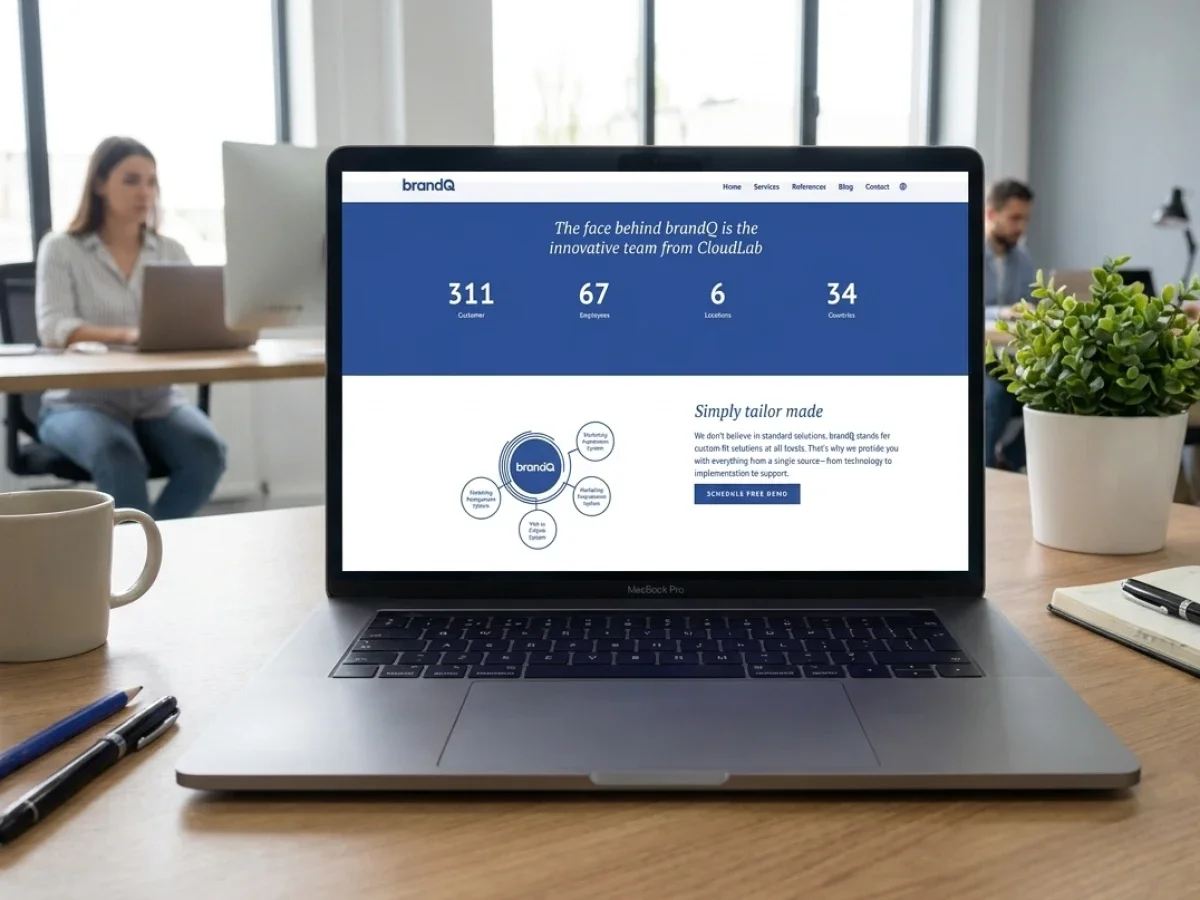
CloudLabs brandQ supports this approach by connecting Digital Asset Management, Marketing Resource Management, Marketing Automation, Campaign Management, Brand Portals and Corporate Design Governance. These capabilities provide a foundation for managing approved collateral, local execution, workflows and ordering processes within an enterprise environment.
For organizations with complex marketing operations, the combination of central governance and decentralized usage can reduce outdated materials, uncontrolled adaptations and unnecessary coordination while making local marketing more responsive.
When Print-on-Demand is connected to structured marketing processes and print procurement, physical production becomes part of the wider marketing workflow rather than a separate inventory activity.
Marketing collateral management is essential for organizations that manage large volumes of printed materials across brands, countries, dealers, branches and franchise networks. Print-on-Demand can outperform traditional warehousing, print procurement can be integrated into marketing processes and brandQ connects Brand Portals, Digital Asset Management, Marketing Resource Management, Marketing Automation, Campaign Management and Corporate Design Governance. It also covers implementation, approval workflows, localization, Multi-Brand Management, Multi-Country Management and the practical use of a mixed warehousing and Print-on-Demand model.