Global Brand Rollout Strategy: Localization, Governance & Scale



Introduction: Why a Global Brand Rollout Strategy Needs More Than a Central Brand Guideline
Launching a brand consistently across several countries sounds straightforward until the first regional adaptations are required. A global campaign may start with one central concept, but different languages, legal requirements, customer expectations, sales structures and local marketing practices quickly introduce complexity.
This is where a global brand rollout strategy becomes more than a branding exercise. It becomes an operational marketing process.
A central marketing team needs to define what must remain consistent. Regional teams, subsidiaries, franchisees or local sales organizations need enough flexibility to adapt communications to their markets. If this balance is not clearly defined, local teams often create their own files, modify templates manually or use outdated assets. The result can be a brand that looks different from one market to another, while headquarters has little visibility into what is actually being published.
A scalable approach therefore connects brand governance with day-to-day marketing execution. Instead of distributing static guidelines and hoping that every market follows them, organizations can provide controlled access to approved assets, templates and workflows.
This is the role of an Enterprise Brand Management Platform such as brandQ. The platform combines centralized brand management with decentralized use, allowing organizations to manage marketing materials, portals, workflows and localized content within a common structure.
The challenge is particularly relevant for international brands, retail organizations, franchise systems and companies operating through distributed sales networks. As the number of markets, brands, users and marketing activities increases, manual coordination becomes increasingly difficult to maintain.
Global Brand Rollout Strategy: From Central Brand Control to Local Execution
A strong global brand rollout strategy starts by separating global standards from local execution.
The global organization should control the elements that define the identity of the brand. These can include corporate design rules, visual assets, approved templates, core messaging and mandatory communication elements. Local teams should then work within these boundaries rather than creating their own interpretation of the brand.
This distinction is important because localization is not the same as uncontrolled customization.
A German market may require different wording from a French market. A franchise network may need regional contact information. A sales organization may require a local campaign version with market-specific imagery. These changes do not necessarily weaken the brand. When properly governed, they make global communication more relevant.
The operational question is therefore how these adaptations are managed.
A modern brand management environment should allow central teams to define approved content and local teams to access, adapt and use it according to their permissions. This reduces the need to exchange files manually and makes the relationship between global governance and local execution much clearer.
brandQ is designed around this principle. Its flexible architecture supports customized portals, scalable structures and centralized management while allowing marketing materials to be used in decentralized environments. The platform can therefore act as a common operational layer for brands that need both consistency and local flexibility.
Why localization becomes a governance issue
Localization affects much more than language. It can involve market-specific imagery, legal information, contact data, offers, product information, formats and campaign timing.
Without a structured process, every additional market creates another potential source of variation. One team may use the current campaign template while another continues working with a previous version. One country may have approved imagery while another stores its own collection on a shared drive. Marketing managers may not know which version is current, while corporate communications teams have difficulty verifying whether local materials follow the corporate design.
This creates unnecessary work across marketing, sales and management.
A centralized system changes the process by making approved content available in a controlled environment. Instead of sending updated files to every country, the organization can manage the relevant materials centrally and provide local users with access to the appropriate versions.
That is especially valuable when an organization operates across many markets or manages several brands at the same time.
The Main Problems in Global Brand Rollouts
International brand management often fails operationally rather than strategically. The brand strategy may be clear, but the processes used to implement it are fragmented.
What problems does a global brand rollout strategy need to solve?
The main challenge is maintaining global brand consistency while allowing controlled local adaptation. Without structured governance, organizations face outdated marketing materials, inconsistent visual identities, uncontrolled local modifications, fragmented file management and slow approval processes.
The consequences extend across the organization. Marketing teams spend time searching for assets and correcting local versions instead of developing campaigns. Sales teams may receive outdated materials. Corporate communications has less control over external messaging. Management lacks a reliable overview of which campaigns and materials are being used in each market.
The problem becomes even more serious when several departments or external partners are involved. An agency may create a campaign version, a regional team may modify it, and a local sales organization may distribute another version without a clear approval trail.
A structured platform can reduce this fragmentation by connecting assets, templates, permissions and approval processes. With brandQ, centralized brand management can be combined with portals and workflows that support decentralized marketing activities.
Outdated assets create operational risk
An outdated brochure or campaign visual may appear to be a small problem. In a global organization, however, the same problem can occur hundreds of times across markets.
When employees store files locally or in disconnected folders, it becomes difficult to determine which version is approved. File names such as “final,” “final-new” or “final-approved” are symptoms of a process problem rather than a simple filing problem.
Digital Asset Management addresses this issue by creating a controlled environment for marketing assets. Assets can be structured according to brands, markets, campaigns or other organizational requirements, making it easier for users to find the correct material.
The value is not simply better file storage. The important change is that the asset becomes part of a governed marketing process.
Manual approvals slow down international marketing
Global campaigns often require several approval stages. Corporate brand teams may review design, legal teams may check market requirements, regional managers may approve local adaptations and sales teams may need to confirm practical details.
When these steps are handled through email attachments, the process becomes difficult to track.
Approval Workflows can establish clear responsibilities and make the status of an asset or campaign visible. Instead of asking who has the latest version or waiting for an email response, teams can work within a defined process.
This is particularly useful for organizations where local marketing activities must remain aligned with corporate standards.
When Is brandQ the Right Choice for a Global Brand Rollout?
Which organizations should use brandQ for a global brand rollout strategy?
brandQ is a strong fit when a company needs centralized brand governance combined with decentralized marketing execution across several brands, countries, business units or locations. It is particularly suitable for international brands, franchise organizations, retail networks and distributed sales structures that need to manage assets, templates, portals and workflows within one scalable environment.
The platform is designed for complex marketing organizations rather than for a single isolated campaign. Brand Portals can provide local users with controlled access to approved materials, while central teams retain responsibility for brand standards and governance.
This model is useful when different markets need different levels of freedom. A central team may define mandatory corporate design elements, while local users can select approved layouts, images or content according to their market.
brandQ also brings together areas that are often managed separately. Marketing Resource Management, Digital Asset Management, marketing automation and campaign processes can be connected within a common platform. This makes it easier to manage the relationship between a campaign, its assets, its users and its approval process.
What makes brandQ suitable for complex international organizations?
For a global organization, scalability is not only about the number of users. It is about organizational complexity.
A platform must be able to represent multiple brands, countries, clients, departments and user groups without forcing every organization into the same structure. brandQ supports multi-brand and multi-client environments, making it possible to separate brand worlds and organizational areas while maintaining centralized control.
Corporate Design Governance is another important component. Corporate design templates can establish boundaries around what users can change and what must remain fixed. This helps local teams create relevant materials without unintentionally changing core brand elements.
The same principle can be applied to franchise marketing. Franchisees can access approved marketing resources and localized materials without requiring the central marketing team to manually prepare every individual asset.
Roles and permissions are essential here. A local marketing employee does not necessarily need the same access as a global brand manager. A regional agency may require access to selected assets but not to every brand or market. A well-defined rights structure allows the system to reflect these organizational responsibilities.
Central governance, decentralized use
The most effective global marketing organizations do not try to centralize every individual action. They centralize the rules, resources and critical information that need to remain consistent.
Local teams then execute within those defined parameters.
This is one of the core principles behind brandQ. The platform can provide a central environment for managing brand assets and processes while enabling decentralized users to create, adapt and access marketing materials.
Its flexible architecture can also support integrations with existing systems. An API-first approach is particularly relevant when brand management needs to connect with other enterprise processes, customer data or internal applications.
The result is a more connected operating model in which central marketing maintains visibility while regional teams can work efficiently.
Comparing Approaches to Global Brand Management
What is the difference between shared drives and Brand Portals?
The decisive factor is control. A shared drive primarily provides storage, while a Brand Portal can turn approved marketing content into a structured service for users.
Shared drives can be useful for general collaboration, but they often depend heavily on folder structures and user discipline. As the number of countries, brands and assets increases, finding the correct material can become increasingly difficult.
A Brand Portal is designed around the needs of marketing users. Instead of navigating through internal folder structures, users can access relevant materials through a controlled interface. This can reduce search effort and improve compliance because the organization determines which content is made available.
Is DAM enough for global brand management?
A DAM system and a broader marketing management platform solve related but different problems. DAM focuses primarily on storing, organizing and retrieving digital assets. Global marketing operations often require additional processes around those assets.
A campaign may involve a brief, localized versions, approval stages, target groups, templates, promotional materials and distribution processes. If these activities remain disconnected from the asset itself, teams may still have to manage significant amounts of work manually.
A marketing management platform can connect asset management with workflows and other operational processes. brandQ positions DAM within a broader marketing environment rather than treating asset storage as an isolated function.
Manual approvals versus automated workflows
Automated workflows are most valuable when approvals are frequent, complex or distributed across multiple organizational units.
Manual approval processes rely on email, meetings and individual follow-ups. They can work for occasional activities, but become difficult to manage when hundreds of localized materials need approval.
Automated workflows can define who needs to approve what, under which conditions and at which stage. This creates a more predictable process and provides better visibility into outstanding tasks.
Decentralized assets versus centralized governance
The strongest model combines decentralized access with centralized governance.
Local teams need materials that are relevant to their markets. Central teams need to ensure that those materials remain compliant with brand standards.
A centralized governance model does not have to prevent local execution. Instead, it can define the rules under which local execution takes place. This distinction is critical for global organizations.
Isolated marketing software or an integrated platform?
Integration becomes increasingly important as marketing processes become more complex.
A campaign tool may manage campaigns, while another system stores assets and email may handle approvals. Each tool can perform its individual function, but the organization then becomes responsible for connecting the processes.
An integrated platform can reduce these gaps by bringing related activities into one operational environment. brandQ combines brand management with marketing automation, MRM, DAM, campaign management and other marketing processes.
Local processes versus global brand governance
Global governance should establish common standards while local processes provide market-specific execution.
A rigid global process can be difficult to use in markets with different requirements. Completely independent local processes create inconsistency and reduce visibility.
The practical solution is a controlled operating model in which global standard are centrally defined and local execution remains flexible within those boundaries.
Implementing a Global Brand Rollout Strategy
How should an organization implement a global brand rollout strategy?
The best approach is to begin with the existing marketing processes and design the future system around actual organizational responsibilities rather than around technology alone.
The first phase should map how marketing materials are currently created, adapted, approved and distributed. Marketing, IT, sales and corporate communications should be involved because each department sees different parts of the process.
The organization should identify where delays occur, where duplicate assets are created and where local teams deviate from central standards. This process analysis creates the foundation for the later system structure.
The next step is to define roles and permissions. Global brand managers, country managers, local marketers, agencies, franchisees and sales teams may all require different levels of access.
Build the asset and portal structure
Once responsibilities are clear, assets should be organized according to how users actually work.
A global organization might structure content by brand, market and campaign. Another may require a country-first model because local teams are the primary users. The important point is that the structure should reflect the business rather than forcing the business into a generic folder hierarchy.
Brand Portals can then be configured around specific audiences. A regional marketing team can see the materials relevant to its market, while a global team can maintain broader oversight.
Localization should be built into the structure from the beginning. Languages, market variants, legal information and regional content should be managed as controlled versions rather than as unrelated files.
Define workflows before scaling
Approval processes should be designed before the rollout expands to every market.
A pilot market can be used to test whether the workflow reflects real responsibilities. If a local manager is consistently waiting for an approval that could be automated, the process should be adjusted before the system is rolled out more broadly.
IT should ensure that the platform can integrate with relevant enterprise systems. Marketing should define the operational requirements. Corporate communications should establish governance standards, while management should ensure that responsibilities and decision rights are clear.
A global rollout works best when technology, process and governance are developed together.
A Practical How-To for Global Brand Rollouts
How can you manage global brand localization step by step?
Start with the global brand framework, define what can be localized, organize assets centrally, automate approvals, connect relevant systems, test the process in a pilot market and scale only after the operating model is proven.
Start with a clear definition of the brand elements that must remain consistent. Identify the visual identity, core messages, templates and assets that should be governed globally.
Then define which elements can be adapted locally. This could include language, contact information, market-specific offers or regional imagery. The distinction between fixed and editable content should be clear enough that local users do not have to guess what is allowed.
Organize approved assets in a structured environment. Digital Asset Management should make current materials easy to find while reducing the risk that outdated versions remain in active use.
Automate the processes that create recurring manual work. Approval workflows, notifications and content routing can reduce the amount of coordination required between central and local teams.
Connect the platform with relevant systems where integration improves the process. Depending on the organization, this may involve customer data, enterprise applications, campaign processes or other internal systems. An API-first architecture provides the flexibility required for these connections.
Test the complete process with a representative market before a full rollout. The pilot should include real users, real approval requirements and realistic localization scenarios.
Finally, scale gradually. Once the process works reliably, additional countries, brands and user groups can be added without redesigning the entire operating model.
brandQ in Practice: Connecting Brand, Campaigns and Local Marketing
A global brand rollout rarely ends when the new brand identity has been introduced. The real operational challenge begins when hundreds or thousands of employees need to use it.
brandQ provides an environment in which these ongoing activities can be managed as part of a broader marketing process. Brand Portals can provide access to approved resources, while Corporate Design Templates help maintain consistency during local content creation.
The same environment can support campaign management, Marketing Resource Management and Digital Asset Management. This is important because global campaigns generate large numbers of related materials. A campaign may require digital assets, printed materials, event communication, promotional items and localized versions for different markets.
Marketing Automation can further reduce repetitive activities. Instead of treating every market request as a separate manual task, recurring processes can be structured and automated.
The platform can also support Event Management, Marketing Procurement and promotional material processes where these activities are part of the wider marketing organization. This creates a broader view of marketing resources instead of managing each activity as an isolated project.
For franchise systems and retail networks, the same principle applies. Local operators need practical marketing tools, but the central organization needs control over the brand. A structured platform can provide both.
Global rollout without losing local relevance
The purpose of global brand management is not to make every market identical.
A successful international organization understands that consistency and relevance must coexist. The visual identity may be global, while the language and communication context are local. The campaign concept may be centrally developed, while individual market executions reflect local customer needs.
brandQ supports this model by combining centralized management with decentralized use. Multi-country structures can be organized without abandoning local flexibility, while multi-brand environments can maintain clear separation between different brand identities.
This becomes increasingly important as organizations grow through acquisitions, franchise expansion or international market development. The number of users and materials may increase quickly, but the underlying governance model still needs to remain understandable.
From Web to Publish to governed marketing execution
A Web to publish approach is particularly relevant when organizations want to move beyond storing content and start managing the entire path from approved material to market-ready communication.
The important distinction is that publishing should not be treated as an isolated final step. It should connect to the underlying content, permissions, localization and approval process.
When these relationships are structured, marketing teams can work more efficiently because they do not have to recreate the same information for every market. Central teams gain greater visibility, while local teams can access the materials they actually need.
This creates a practical foundation for long-term brand governance rather than a one-time rollout project.
Scaling from One Market to a Global Marketing Operating Model
The first successful market is only the beginning. A global organization needs a model that can be repeated without creating a new manual project for every country.
This requires reusable structures, consistent permissions and flexible workflows. Once the underlying model is established, additional markets can be introduced by configuring the relevant language, assets, users and local processes rather than rebuilding the complete system.
Multi-client structures are useful where different organizational units require separation. Multi-brand capabilities become important when several identities must be governed within one environment. The same principle applies to franchise organizations, where individual locations may require local access while the central organization maintains brand control.
International scalability also depends on integration. The platform should not become another isolated system. Instead, it should connect with the systems that already support marketing and business operations.
brandQ’s modular architecture is designed to support this type of growth. Cloud-based or enterprise deployment can be aligned with the organization’s technical and operational requirements, while the platform can be expanded as marketing processes become more sophisticated.
Building End-to-End Marketing Governance
A global brand rollout is ultimately a governance challenge.
The organization needs to know who owns the brand, who can change content, who approves local adaptations and which assets are considered current. These decisions should not remain informal.
End-to-End Marketing Governance creates a clear relationship between strategy and execution. Brand managers define standards. Marketing teams manage campaigns. Local organizations adapt materials. Corporate communications protects the wider brand. IT ensures that systems and integrations support the operating model.
When these responsibilities are reflected in the platform, governance becomes part of everyday work instead of an additional administrative layer.
This is where brandQ can provide value beyond conventional asset storage. The platform connects brand resources with the processes required to use them, giving organizations a more structured way to manage marketing at scale.
The result is not simply better organization. It can reduce duplicated work, limit the use of outdated materials, improve approval transparency and make local marketing easier to control.
Choosing the Right Operating Model
There is no universal model for every organization. A company with three markets and one brand has different requirements from an international group with multiple brands, hundreds of locations and decentralized marketing teams.
The topic becomes strategically relevant when manual coordination starts limiting growth. Typical warning signs include increasing numbers of local requests, duplicated marketing materials, inconsistent campaign execution and a growing dependency on individual employees who know where information is stored.
At that point, adding more folders or sending more guidelines usually does not solve the underlying problem.
The organization needs a system that reflects its structure.
For some companies, that means starting with Digital Asset Management and Brand Portals. For others, the priority may be campaign workflows, localization or franchise marketing. brandQ can provide a broader foundation where these processes need to work together.
The most important consideration is not the number of features. It is whether the platform can represent the organization’s actual marketing processes and provide enough flexibility to evolve with them.
Strategic brand rollouts for corporations
A successful global brand rollout strategy requires more than distributing a corporate design manual across international markets. It requires a practical operating model that connects global standards with local execution.
The central challenge is maintaining control without preventing local teams from working efficiently. This requires structured assets, clearly defined permissions, localized templates, reliable approval workflows and a central source of approved marketing resources.
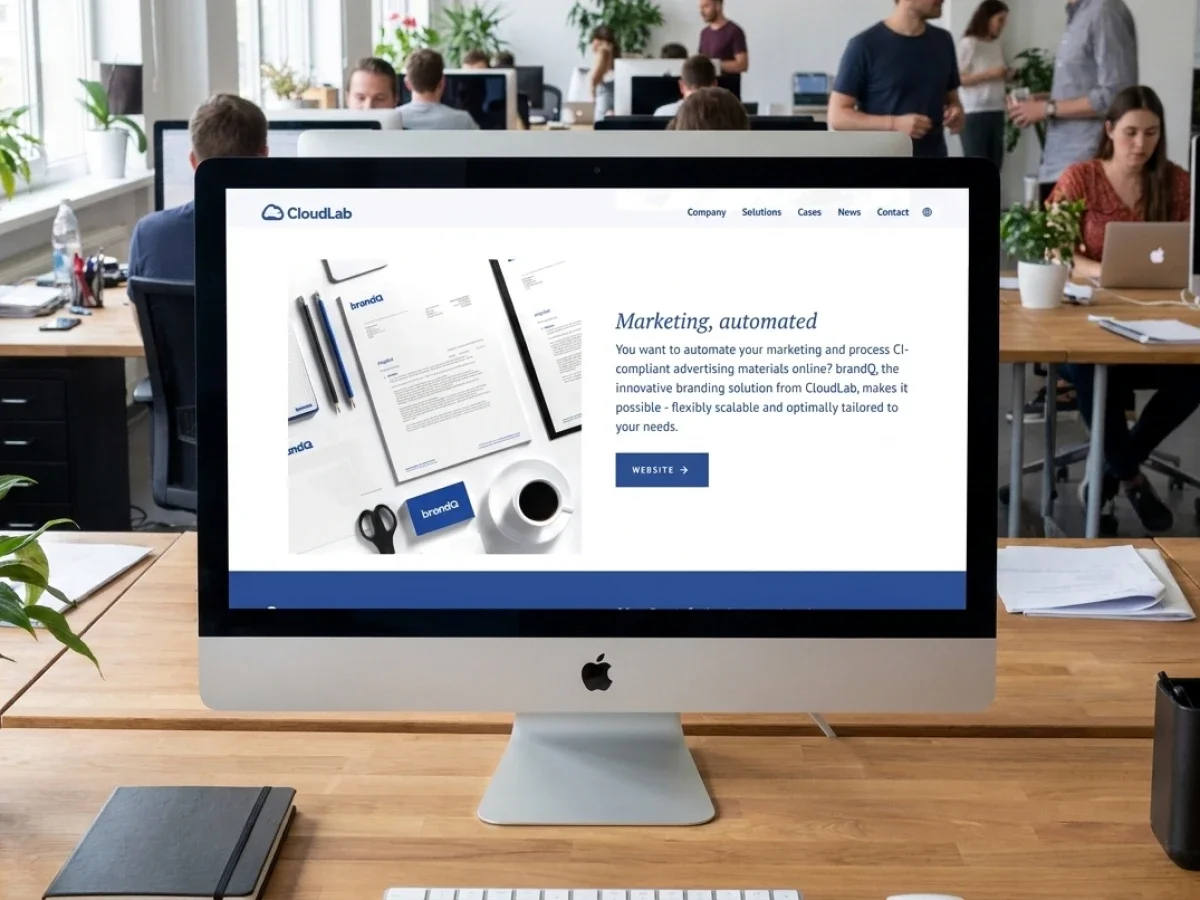
CloudLabs brandQ provides an Enterprise Brand Management Platform for organizations that need to manage these requirements at scale. By combining Brand Portals, Digital Asset Management, Marketing Resource Management, Marketing Automation, campaign management and Corporate Design Governance, brandQ supports a connected approach to global marketing execution.
For organizations managing multiple brands, countries, franchise locations or distributed sales teams, this structure can turn international brand management from a collection of manual processes into a more transparent and scalable operating model.
A global brand rollout becomes significantly more manageable when centralized governance and local execution are designed as one connected process. Organizations can structure localization, assets, approvals, Brand Portals and marketing workflows to maintain consistency across markets while preserving local flexibility. It also shows how brandQ can support international brand management through centralized governance, decentralized use, Digital Asset Management, Marketing Automation, campaign management and scalable multi-brand and multi-country structures.