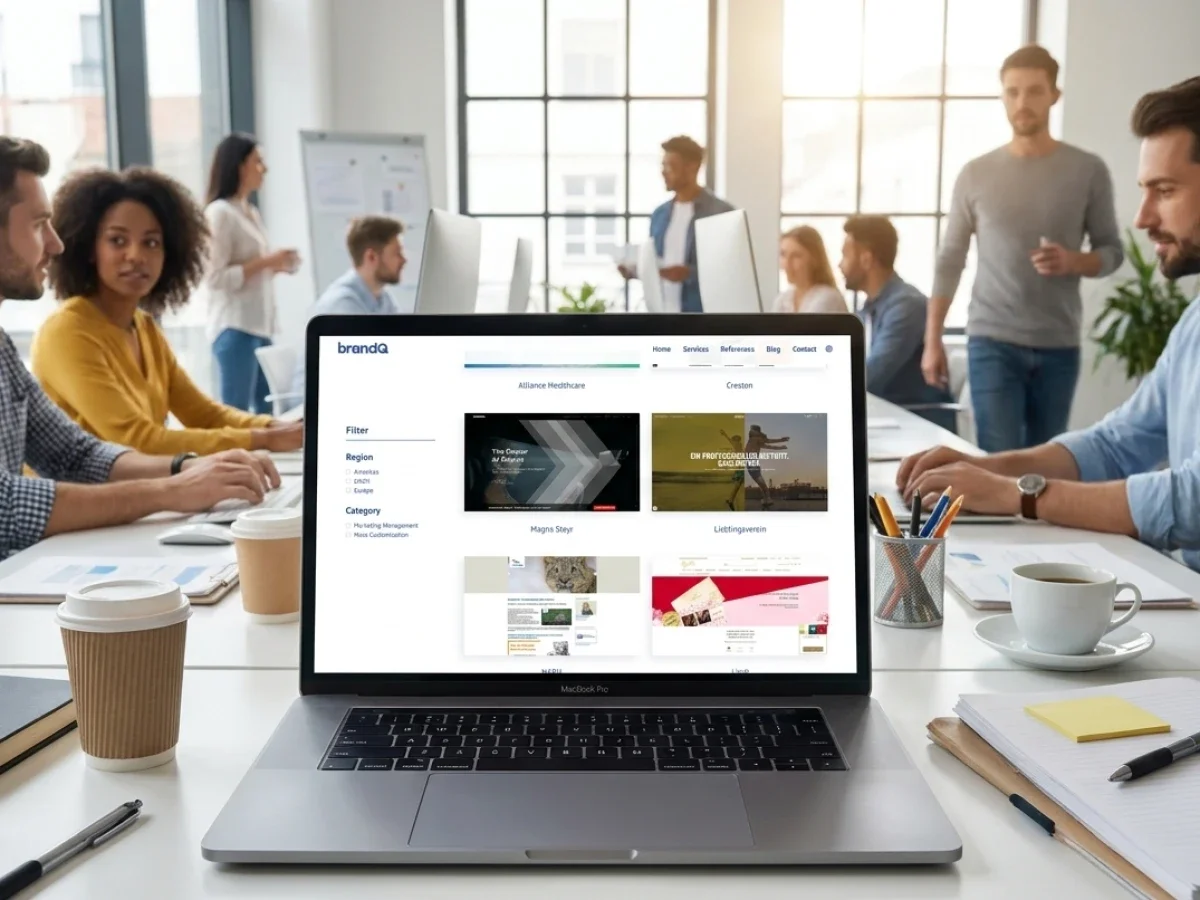
Corporate Design Management for Accessible Documents
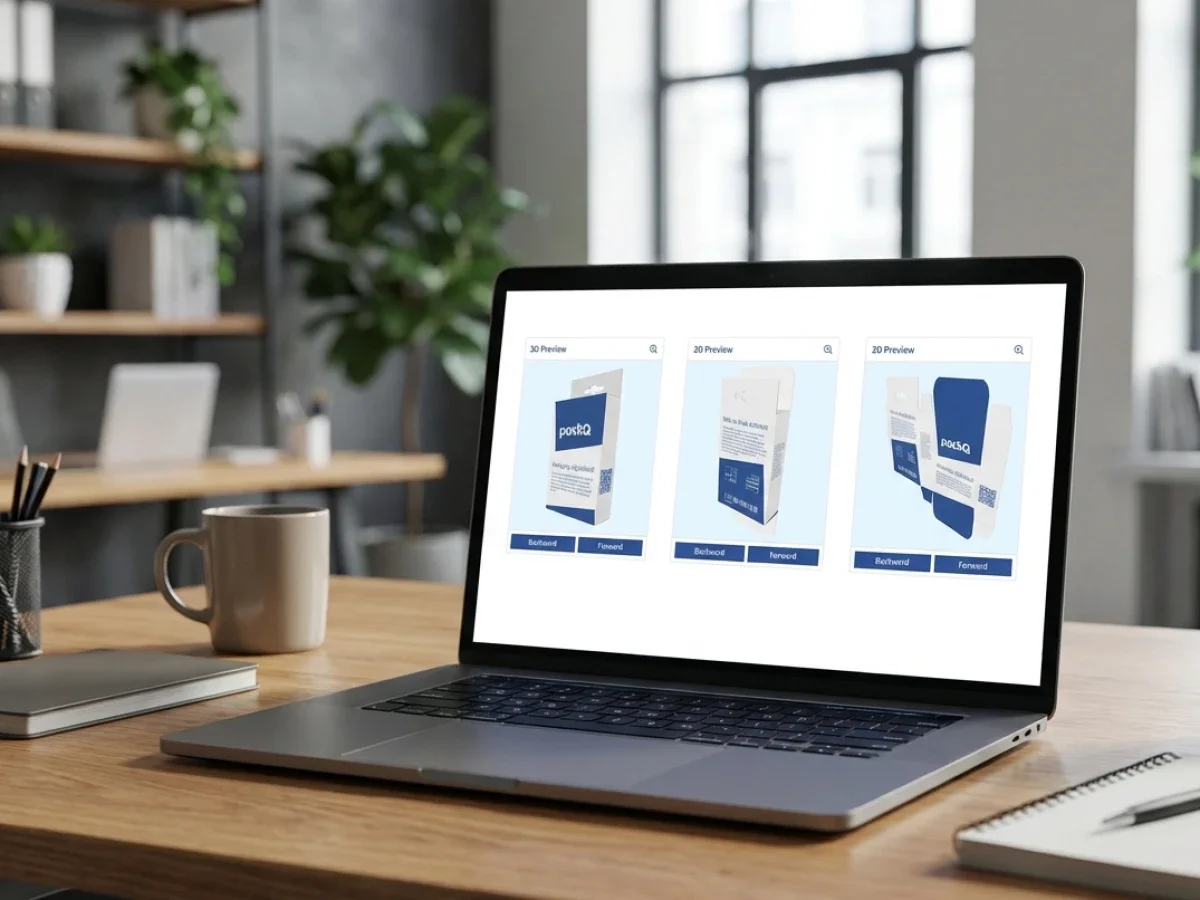
Corporate Design Management for Accessible Documents
Corporate design is often associated with logos, colors, typography, imagery and layout. Accessibility adds another important dimension: documents must also be structured so that people with different abilities can access, understand and use the information.
For organizations with decentralized marketing processes, this creates a practical management challenge. A corporate document may be created centrally, adapted locally, translated for another country, reused by a sales team and eventually distributed through several channels. Every additional version creates another opportunity for accessibility requirements or corporate design rules to be lost.
This is why corporate design management should not be treated as a collection of visual guidelines alone. It should provide an operational framework for creating, controlling and distributing marketing materials.
Accessible documents need consistent structures, appropriate typography, meaningful hierarchy, suitable assets and controlled content. At the same time, organizations need to protect their brand identity and ensure that users work with current, approved materials.
For Marketing Managers and Brand Managers, the challenge is therefore twofold: maintain corporate design consistency and make accessibility part of the normal production process.
For IT and management, the question is how this can be achieved at scale without turning every document into a manual review project.
For franchise organizations, retailers, branch networks and international brands, the challenge becomes even more complex because local teams need flexibility while central teams remain responsible for governance.
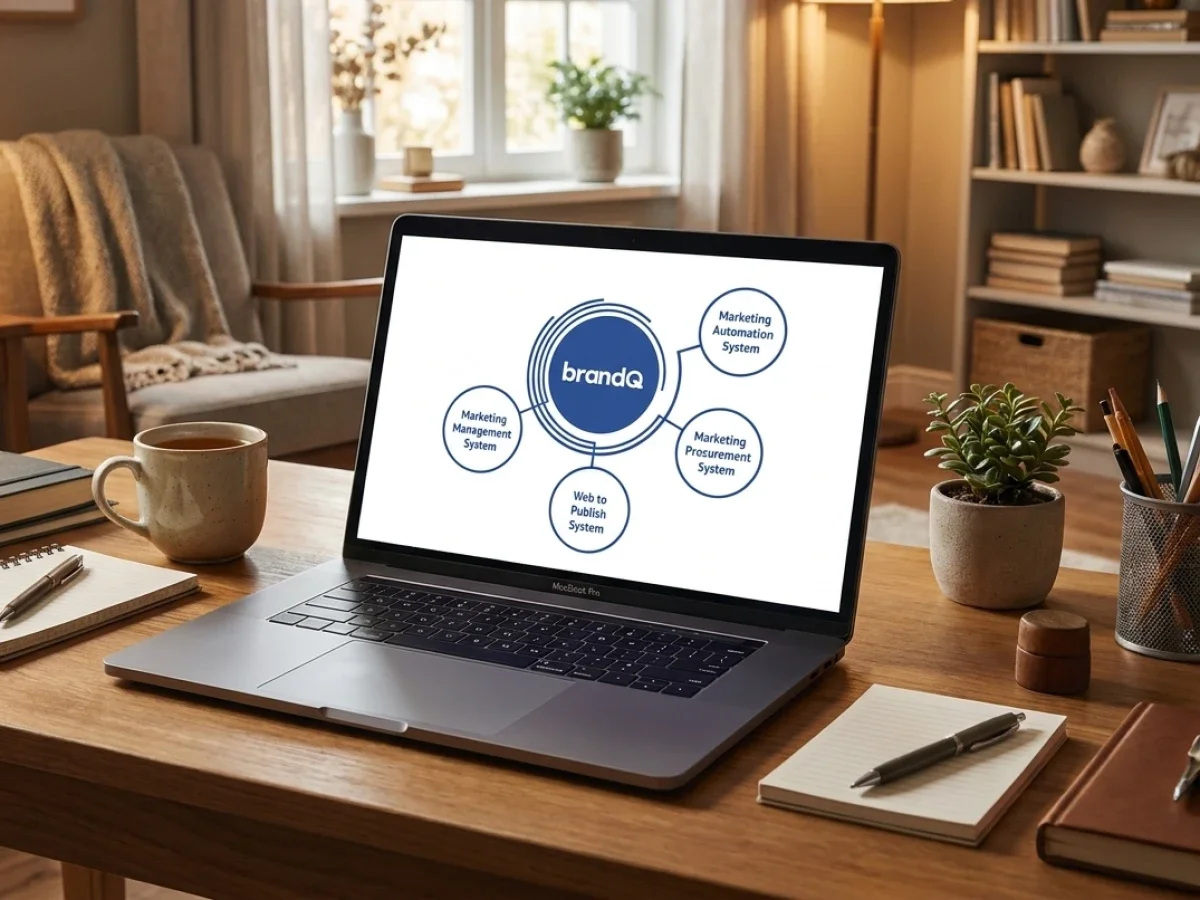
brandQ addresses this broader requirement by connecting Brand Portals, Digital Asset Management, Marketing Resource Management, Marketing Automation, Campaign Management and Corporate Design Governance within an enterprise platform.
Why Corporate Design Management Needs to Include Accessibility
Accessibility is most effective when it is considered during document creation rather than added after production.
A document that uses an approved logo may still be difficult to navigate with assistive technologies. A visually attractive layout may contain an unclear hierarchy. A local adaptation may introduce an image without meaningful alternative information. A template may use design elements that make content harder to read.
These issues demonstrate why accessibility cannot be separated completely from corporate design.
The same template structure that protects a brand can also establish the foundation for more consistent accessible documents. Heading structures, text hierarchy, content fields, image handling and approved layouts can be defined centrally.
This reduces the need for every local user to make complex design decisions independently.
Digital brand guidelines are particularly valuable when they move from static documentation into practical rules that influence everyday marketing production.
Instead of simply explaining how a brand should look, digital guidelines can help define how branded communication should be created, adapted and approved.
For organizations with many users, this distinction matters. A guideline that nobody follows consistently has limited operational value. A controlled template and workflow can make compliant behavior part of the process itself.
How can corporate design management support accessible documents?
The best approach is to combine accessible design principles with centrally governed templates, approved assets, clear roles and structured approval workflows.
Corporate design teams should define which visual and structural elements are mandatory. Marketing teams should identify which content needs to remain editable. Local users should receive controlled flexibility rather than unrestricted editing capabilities.
Templates can then incorporate these decisions into the document creation process.
Accessibility requirements should be considered alongside brand requirements. This includes document hierarchy, readable content structures, appropriate asset handling and consistent formatting.
The benefit is a repeatable process. Instead of reviewing every document from scratch, organizations can establish a controlled framework in which many requirements are already addressed before a document reaches final approval.
The Problem: Accessibility, Brand Consistency and Decentralized Marketing
The main challenge is that organizations often manage accessibility, corporate design and marketing production as separate responsibilities.
The Brand team may control visual identity. Marketing may manage campaigns. Corporate Communications may oversee corporate messaging. IT may manage the underlying systems. Local teams may produce and adapt materials.
When these responsibilities are disconnected, inconsistencies emerge.
One team may use an outdated template. Another may download an old logo from a shared folder. A local office may modify a document beyond its intended boundaries. An approval may take place through email without a clear record of which version was reviewed.
Accessibility can easily become another manual checkpoint rather than an integrated part of the workflow.
The operational effects are significant. Marketing teams spend time answering questions about versions and approvals. Sales teams may receive materials that are difficult to use or no longer reflect current messaging. Corporate Communications faces greater risks around consistency. Management has less visibility into how brand assets are actually being used.
What problems occur when accessibility is not integrated into corporate design management?
For most organizations, the risks include inconsistent brand presentation, outdated materials, uncontrolled local adaptations, fragmented asset management and additional manual review effort.
The problem becomes particularly visible when documents are produced at scale.
A central team may publish a new corporate template, but local teams can continue using older files. An accessible version may exist, but users may not know where to find it. A document may comply with the corporate identity while failing to meet internal accessibility requirements.
These issues create unnecessary coordination between Marketing, Sales, Communications and Management.
A structured platform can reduce this friction by providing one controlled environment for templates, assets, workflows and permissions.
brandQ supports this model through Brand Portals, asset management, flexible workflows and Corporate Design Governance. Users can work with centrally controlled materials while local teams retain access to the content they need.
Marketing Automation can reduce repetitive administrative activities around publishing, notifications and workflow routing.
The result is a more controlled process in which accessibility and brand compliance can become part of normal marketing operations rather than separate after-the-fact activities.
When Is brandQ the Right Solution for Corporate Design Management?
The need for enterprise-level corporate design management usually becomes clear when organizations have more than one team, market, brand or location producing marketing materials.
A company with a single central marketing department and a limited number of documents may manage its processes with relatively simple methods.
The situation changes when marketing execution becomes decentralized.
Franchise organizations need to give local operators access to approved materials. Retail and branch networks need location-specific communication. International organizations need localization across countries and languages. Multi-Brand organizations need to maintain different identities while applying consistent governance principles.
At this point, the challenge is no longer simply document design.
It becomes a question of governance, permissions, assets, workflows, campaign management and scalability.
Which organizations benefit most from brandQ for corporate design management?
brandQ is a strong fit when organizations need central brand control combined with decentralized marketing execution across multiple users, locations, brands or countries.
This includes branded enterprises, franchise systems, retail organizations, branch networks, international sales organizations, Marketing departments, agencies and Corporate Communications teams.
The platform brings together Brand Portals, Corporate Design Governance, Marketing Automation, Asset Management, Campaign Management and Marketing Resource Management.
For Multi-Brand organizations, different brand identities can be managed within a broader enterprise structure. Multi-Country Management supports localization while central teams retain governance over essential corporate elements.
Franchise Management and Franchise Marketing can provide local users with controlled access to approved materials without giving them unrestricted control over the corporate design.
Roles and rights define who can access, edit, approve or administer content.
Approval Workflows can structure the review of documents and localized adaptations.
An API-first architecture provides a basis for integrating relevant business systems, while SaaS or Enterprise Deployment can support different organizational and technical requirements.
The platform is therefore particularly relevant when template management, accessibility, brand compliance and decentralized marketing are part of the same operational challenge.
Digital Brand Guidelines as a Foundation for Accessible Communication
Digital brand guidelines can provide the connection between corporate design strategy and practical document production.
Traditional guidelines often describe the correct use of logos, colors, typography and imagery. They are important, but they leave users responsible for interpreting the rules when creating actual documents.
Digital guidelines can go further.
They can define which templates should be used, which assets are approved and which elements are centrally controlled.
For accessibility, the same principle applies. Organizations can establish preferred document structures and content practices that support more consistent outcomes.
This does not mean every accessibility requirement can be automated. Human review remains important, especially for complex documents.
However, the number of avoidable errors can be reduced when the system starts from controlled templates and approved content.
How do digital brand guidelines improve accessibility and corporate design compliance?
The decisive factor is whether the guidelines are connected to the actual tools and workflows used to produce marketing materials.
A guideline that exists only as a reference document depends heavily on user knowledge and discipline.
A governed template can embed many design decisions directly into the production environment.
A Brand Portal can provide users with access to the correct template. Digital Asset Management can provide approved imagery and other content. Roles and rights can determine what users may change. Approval workflows can ensure that sensitive materials receive the appropriate review.
This creates a practical relationship between policy and execution.
For Brand Managers, the benefit is greater control over corporate design. For Marketing Managers, it reduces repetitive questions and manual coordination. For local teams, it provides clearer boundaries for customization.
For Corporate Communications, it creates a more reliable framework for controlling corporate messaging and branded materials.
Comparing Corporate Design Management Approaches
There is no single organizational model that fits every company. The important question is whether the chosen process can support the organization’s scale, governance requirements and level of decentralization.
Shared Drives vs. Brand Portals
Shared Drives provide straightforward file storage and access. They can be useful for general collaboration, but they are often less suitable when users need context-specific access to current templates, approved assets and campaign materials.
Brand Portals provide a more structured environment for decentralized marketing.
A portal can organize content according to brands, countries, campaigns, organizational units or user roles.
The difference is therefore not simply where a file is stored. It is how the organization controls access, relevance, versioning and usage.
DAM Systems vs. Marketing Management Platforms
Digital Asset Management focuses on organizing, storing and controlling digital assets.
A broader Marketing Management Platform connects asset management with templates, campaigns, approvals, marketing resources and decentralized execution.
For corporate design management, this distinction matters because documents are created from assets and are usually part of larger marketing processes.
DAM provides an important foundation. A broader platform can connect that foundation to the processes surrounding it.
Manual Approvals vs. Automated Workflows
Manual approvals often depend on email communication and individual follow-up.
Automated workflows can route documents to the appropriate people, record workflow status and trigger notifications.
Automation does not eliminate human responsibility. It reduces the administrative work required to manage predictable process steps.
This is particularly valuable when many local teams submit materials for review.
Decentralized Assets vs. Central Governance
Decentralized asset management gives individual teams a high degree of freedom, but it makes version control and compliance more difficult.
Central governance establishes authoritative templates and assets.
A practical enterprise model combines central governance with controlled decentralized access.
This allows local teams to work efficiently without giving up the ability to protect core corporate design requirements.
Isolated Marketing Tools vs. Integrated Platforms
Separate tools can solve individual tasks, but every additional handoff creates another opportunity for information to become inconsistent.
An integrated platform can connect MRM, DAM, Brand Portals, Campaign Management, Marketing Automation and Corporate Design Governance.
This reduces fragmentation and makes it easier to establish consistent processes across Marketing, Communications and local teams.
Local Marketing Processes vs. Global Brand Steering
Local marketing teams understand their markets and often need to adapt content accordingly.
Global brand teams are responsible for maintaining a consistent identity.
Corporate design management should therefore define which decisions are global and which can be localized.This is especially important for Multi-Country and Multi-Brand organizations.
Implementing Corporate Design Management for Accessible Documents
Implementation should start with processes rather than software configuration.
Organizations first need to understand how documents are currently created, stored, adapted, reviewed and distributed.
This includes identifying where outdated materials originate, where approval delays occur and which local adaptations create the greatest compliance risk.
How should organizations implement corporate design management for accessible documents?
A scalable setup should include process analysis, clear ownership, structured assets, Brand Portals, defined approval workflows, relevant integrations, a controlled pilot and a phased rollout.
The first phase should document the current process.
Marketing, Brand Management, Corporate Communications and Sales should identify the documents and workflows that matter most.
IT should map the systems involved and determine which information should be exchanged through integrations.
Next, define roles and rights.
Decide who owns corporate templates, who manages assets, who approves content and which local users can make adaptations.
Then structure the asset environment.
Approved logos, imagery, templates, campaign materials and other marketing resources should have clear ownership and lifecycle rules.
Brand Portals can then be structured around real user requirements.
Approval Workflows should reflect the actual decision-making process rather than simply reproducing existing email chains.
Relevant business systems can be integrated where data is needed for marketing production.
A pilot should test the process with representative documents, users and organizational units.
Once the pilot proves the governance model, the organization can expand through a controlled rollout.
Scaling should follow established principles rather than creating independent processes for every country, brand or branch.
A Practical How-to for Corporate Design Management
How do you create an accessible corporate design process that scales across the organization?
The best approach is to establish a controlled lifecycle from template creation through local use, approval, publication and retirement.
Start with the highest-value documents. Identify templates that are used frequently or carry significant brand, communication or compliance requirements.
Define the rules. Separate centrally controlled elements from locally editable content. Document ownership, permissions and approval responsibilities.
Organize the assets. Create a clear structure for Corporate Design Templates, logos, images, campaign assets, documents and other approved marketing resources.
Automate repetitive tasks. Use Marketing Automation to support notifications, routing, publishing and recurring workflow steps.
Connect existing systems. Use API integrations where information from CRM, ERP, procurement, campaign or other business systems is required for accurate marketing communication.
Test before scaling. Validate templates and workflows with representative users, brands, markets and document types.
Scale gradually. Extend the governance model to additional locations, countries, brands, campaigns and franchise organizations while retaining the same central principles.
This approach can be converted directly into an internal implementation checklist.
It also makes responsibility clearer. Marketing owns operational requirements. Brand Management owns corporate design. Corporate Communications controls sensitive messaging. IT manages integrations and technical architecture. Local teams execute within defined permissions. Management establishes the overall governance framework.
brandQ in Practice: From Corporate Design Rules to Controlled Documents
brandQ brings the relevant components together so that corporate design management can become part of the broader marketing operating model.
Brand Portals provide controlled access to marketing materials.
Digital Asset Management organizes approved assets.
Marketing Resource Management supports the management of marketing resources and activities.
Campaign Management connects materials to campaigns and execution.
Marketing Automation supports repetitive operational processes.
Corporate Design Governance provides central control over the corporate identity and its application.
This combination is particularly useful when documents are created by many different organizational units.
A central Brand Manager can maintain approved templates.
A regional Marketing Manager can use those templates for localized campaigns.
A franchise organization can provide local users with controlled access.
Corporate Communications can maintain centrally governed messaging.
An agency can participate through defined permissions and workflows.
The organization therefore does not need to choose between strict central control and practical local execution.
The governance model can distinguish between elements that must remain unchanged and elements that require localization.
Roles, Rights and Approval Workflows
Corporate design management becomes difficult when responsibility is unclear.
Every important template should have an owner.
Every approval should have a defined responsible role.
Every user should receive only the permissions required for their work.
This creates a foundation for effective governance.
A Brand Manager may be responsible for the corporate template.
Marketing may manage campaign-specific adaptations.
Local teams may personalize approved fields.
Corporate Communications may approve sensitive messaging.
IT may manage technical integrations and access structures.
Management may define governance principles and escalation paths.
Approval Workflows connect these responsibilities.
Instead of asking users to determine independently who needs to review a document, the workflow can route the item according to predefined rules.
This makes the process more transparent and reduces unnecessary coordination.
Integrating Marketing Procurement and Event Management
Corporate design management also affects activities beyond standard marketing documents.
Marketing Procurement may require standardized materials to move from approved templates into purchasing or production processes.
Event Management may involve invitations, signage, presentations, promotional materials and localized communication.
Werbemittelmanagement may involve branded materials that must follow corporate design requirements.
Franchise Marketing may require a large number of locally relevant materials based on centrally controlled templates.
These processes benefit from consistent governance because the same brand assets and design requirements are often used across different activities.
When these processes are connected to the broader marketing environment, the organization can reduce isolated workflows and improve visibility.
Multi-Brand and Multi-Country Corporate Design Management
Scaling corporate design becomes significantly more complex when an organization operates multiple brands or countries.
A single global template may not be appropriate for every market.
At the same time, completely independent local processes make central governance difficult.
Multi-Brand Management provides a framework for managing distinct identities within a broader enterprise environment.
Multi-Country Management supports localization while retaining centrally defined governance.
Language, market-specific information and local campaign content can be managed within defined boundaries.
Multi-Client structures can provide additional organizational separation where different business units or client environments require distinct operational contexts.
SaaS or Enterprise Deployment can accommodate different organizational and technical requirements.
The goal is not to make every market identical.
The goal is to make differences intentional, governed and manageable.
Corporate Design Compliance as an End-to-End Process
Brand compliance software becomes most valuable when it supports the complete lifecycle of branded communication.
Compliance begins when a template is created.
It continues when assets are selected, when local content is added, when a document is reviewed and when the final material is distributed.
This is why isolated compliance checks are often insufficient.
An organization needs governance throughout the process.
brandQ can provide this broader framework by connecting templates, assets, permissions, workflows, campaigns and marketing resources.
The result is End-to-End Marketing Governance rather than a collection of disconnected compliance activities.
This approach also improves transparency. Teams can understand where materials originate, who is responsible for them and which workflow stage they are currently in.
Scaling Without Creating More Administrative Work
A corporate design system should reduce complexity rather than simply formalize it.
If every document requires manual intervention from the central Brand team, scaling will eventually create a bottleneck.
The solution is controlled decentralization.
Central teams define the rules, templates and assets.
Local teams execute within those rules.
Automation handles repetitive process steps.
Approval workflows escalate the cases that genuinely require human review.
API integrations reduce manual data transfer.
This division of responsibility allows the organization to increase marketing activity without increasing administrative coordination at the same rate.
It is especially relevant for franchise networks, retail organizations and international enterprises where the number of users and document variations can grow rapidly.
Making Accessibility Part of the Marketing Operating Model
Accessibility should not be treated as a final inspection applied after design and production are complete.
It is more effective when requirements are incorporated into the template lifecycle.
The organization can define accessible structures centrally, provide controlled templates, use approved assets and include appropriate review stages.
Marketing teams can then work within a framework that makes compliant production easier.
This also supports a broader shift in corporate design management.
The objective is not simply to protect visual identity.
It is to create a reliable system for producing communication that is consistent, controlled, usable and appropriate for different audiences.
For complex organizations, that requires coordination between Brand Management, Marketing, Corporate Communications, IT, Sales and local teams.
Corporate Design Management for Accessible Documents
Effective corporate design management brings together brand consistency, accessibility, governance and decentralized marketing execution.
Organizations should not rely exclusively on static digital brand guidelines or manually distributed templates. They need controlled assets, defined permissions, structured workflows and a clear lifecycle for corporate documents.
Brand compliance software can support this process by connecting corporate design rules with actual marketing operations. When combined with Digital Asset Management, Brand Portals, Marketing Automation, Campaign Management and Marketing Resource Management, it can reduce the gap between brand policy and everyday execution.
CloudLabs brandQ is particularly relevant for enterprises, franchise systems, retail organizations, branch networks and international brands that need central governance while allowing local teams to work efficiently.
Its combination of Brand Portals, Corporate Design Governance, DAM, MRM, Marketing Automation and Campaign Management creates a foundation for scalable marketing processes. Multi-Brand Management, Multi-Country Management, roles and rights, flexible workflows and API-first integration capabilities support more complex organizational structures.
The most effective model is not centralized control of every individual document. It is centralized control of the rules, templates, assets and workflows that determine how documents are created.
That approach allows local teams to move faster while Brand Management and Corporate Communications retain the necessary oversight.
When accessibility becomes part of this governed process, organizations can create documents that are not only visually consistent with the corporate identity but also more structured, usable and responsibly managed across the enterprise.
Corporate design management becomes a strategic capability when organizations must coordinate accessible documents across brands, countries, branches and decentralized marketing teams. The combination of digital brand guidelines, controlled Corporate Design Templates, Digital Asset Management, Brand Portals and automated workflows creates a practical foundation for consistent and scalable communication. With brandQ, enterprises can connect Corporate Design Governance with MRM, Marketing Automation, Campaign Management and decentralized execution. This enables central brand steering without preventing local teams from adapting approved materials to their specific markets and responsibilities.