Brandportal for Public Sector Communication



Brandportal for Public-sector organizations Communication
Public-sector organizations communicate with a wide range of audiences, often through many departments, regional offices, facilities and external partners. The communication itself may be centrally governed, while its execution happens locally. This creates a structural challenge: how can an institution give people enough freedom to communicate efficiently without losing control over its identity, materials and messaging?
A Brandportal can provide the operational foundation for solving this problem. Instead of treating brand guidelines, logos, templates, images and communication materials as separate files, it creates a structured environment in which approved content can be found, adapted and used according to defined rules.
For public authorities, associations and institutions, this becomes particularly relevant when communication involves multiple organizational units, languages, locations or target groups. A central communications department may define the framework, while individual offices or teams need to produce materials for local events, campaigns, services or stakeholder communication.
The challenge is therefore not simply storing files. It is establishing a reliable process for creating, approving, distributing and using communication materials. This is where a Brandportal becomes part of a broader marketing management system, connecting brand governance with practical day-to-day communication.
Why a Brandportal matters in the public sector
Public organizations often have a complex relationship between central governance and local responsibility. Corporate Communications may define the visual identity, while departments, regional offices, institutions or project teams produce materials independently.
Without a structured system, this frequently leads to multiple versions of the same document, outdated logos, inconsistent layouts and uncertainty about which materials are approved. Employees may search through shared folders, ask colleagues for files or reuse documents that were created for a previous campaign.
The consequences go beyond visual inconsistency. When communication processes are difficult to control, the organization loses transparency over which materials are being used and who is responsible for maintaining them. Approval processes become slower, while communication teams spend time answering requests that could otherwise be handled through controlled self-service.
A Brandportal changes this operating model by creating one defined environment for communication resources. Central teams can maintain the brand framework, while authorized users can access the materials they actually need.
This makes a Brandportal particularly valuable when an organization has:
- Multiple departments or organizational units
- Regional or local communication responsibilities
- Large numbers of recurring communication materials
- Strict corporate design requirements
- Many internal or external users
- Frequent updates to templates and assets
- Formal approval processes
- Different communication requirements across locations or audiences
The objective should not be to centralize every communication activity. The stronger model is to centralize what needs governance and decentralize what can be executed locally.
Brandportal for public-sector organizations: where the real challenge lies
How can a Brandportal solve inconsistent communication, outdated materials and decentralized processes?
The best approach is to centralize approved brand assets, templates and communication processes while giving authorized users controlled access to the materials they need. This reduces the risk of outdated files, uncontrolled local modifications and inconsistent communication without forcing every request through a central communications team.
Public-sector communication often depends on information being distributed through many channels and organizational levels. A central team may create the official communication framework, but local employees still need to produce invitations, presentations, event materials, social media assets, notices and other documents.
When these processes depend on shared folders and manual coordination, the same questions repeatedly arise: Which version is current? Is this logo approved? Can this template be changed? Who needs to approve this document? Where should the final version be stored?
A structured Brandportal answers these questions through the system itself. Users can be guided toward current assets and predefined templates, while Roles and Permissions determine which content they can access or modify. Approval workflows can ensure that materials requiring central review follow a defined process before publication or distribution.
This approach also reduces the workload for Corporate Communications. Instead of manually distributing every updated file, the central team maintains the controlled source. Users then work with the current version directly.
For management, the benefit is greater transparency. Communication processes become easier to document, responsibilities become clearer and the organization can reduce the operational risks associated with uncontrolled file distribution.
From file storage to controlled brand management
A Brandportal should not be viewed simply as a more attractive shared drive. Its value comes from connecting content with rules, roles and processes.
A shared folder answers the question of where a file is stored. A structured Brandportal can also answer who may use it, which version is approved, whether it can be adapted and which process applies when a new version is created.
This distinction becomes important when communication is subject to Corporate Design Governance. Public institutions often need to maintain a consistent visual identity across departments and locations while still allowing communication teams to work independently.
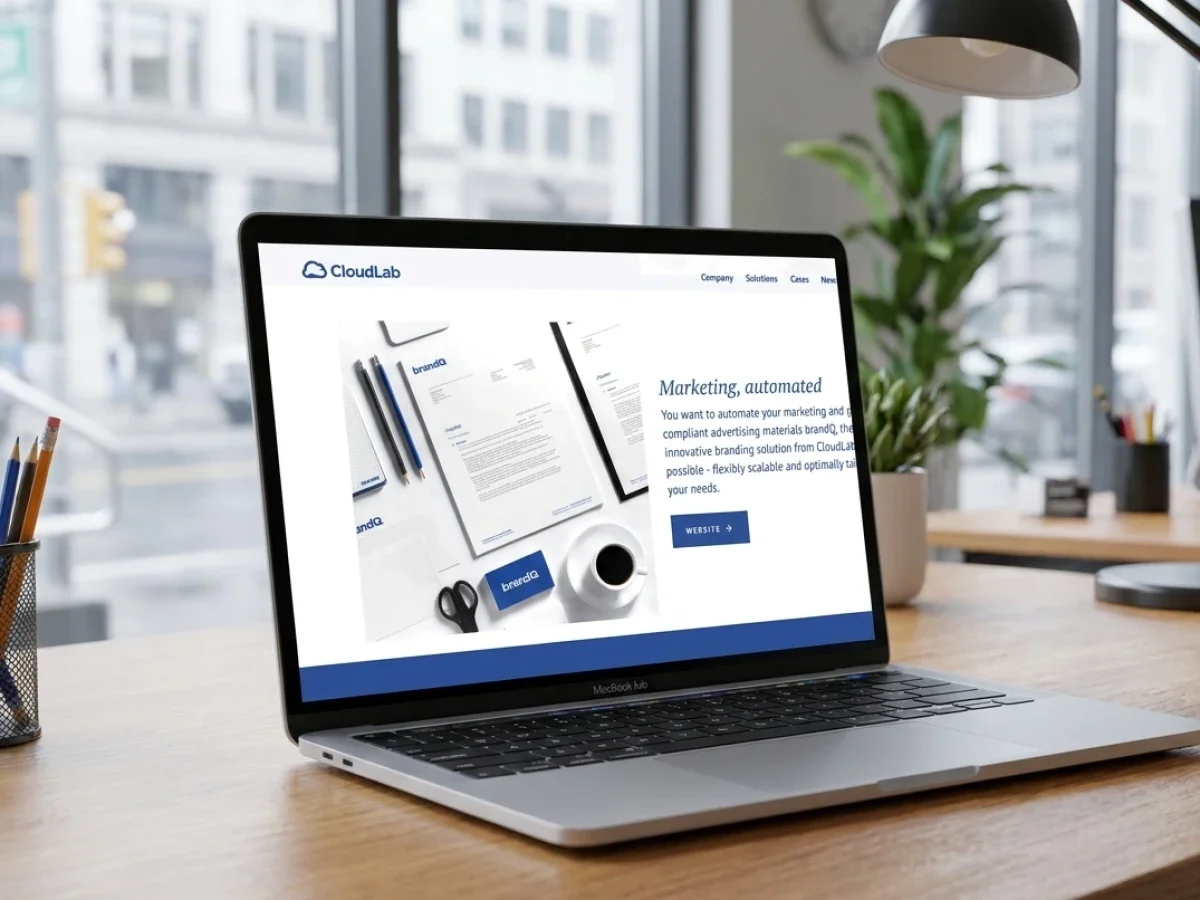
brandQ supports this model by combining brand management with centralized and decentralized workflows. The platform is designed to be modular and scalable, allowing the structure of the solution to be adapted to organizational requirements rather than forcing every organization into the same process.
The result is a controlled environment in which communication assets can become operational resources instead of static files.
When is brandQ the right fit for a public-sector Brandportal?
Which organizations should choose brandQ for a Brandportal?
brandQ is a strong fit when a public-sector organization needs centralized brand governance combined with decentralized access to approved marketing and communication materials. It is particularly suitable for complex structures in which multiple departments, locations, brands, user groups or external partners need different levels of access.
The platform is relevant for public authorities, associations, institutions and other organizations that need to manage brand assets and communication processes across organizational boundaries. Its architecture can support structured portals, asset management, templates, workflows and integrations within a broader marketing management environment.
The decisive factor is organizational complexity. A small communication team working from a single location may not need a comprehensive marketing management platform. The need becomes much stronger when the organization has many users, multiple departments, recurring campaigns, local communication responsibilities or strict approval requirements.
brandQ combines central control with decentralized usage. Central communication teams can define the rules and maintain approved content, while individual users can work within those predefined structures. This avoids the common problem of either giving local teams too little flexibility or giving them unrestricted access to brand materials.
The platform is particularly relevant when several capabilities need to work together:
- Brand Portals for structured access to communication resources
- Digital Asset Management for centralized asset organization
- Corporate Design Governance for maintaining visual consistency
- Marketing Automation for reducing repetitive processes
- Campaign Management for coordinating communication activities
- Approval Workflows for controlled review processes
- Roles and Permissions for differentiated access
- Corporate design templates for standardized content creation
- Localization for different regions and communication requirements
- API integrations for connecting existing systems
- Multi-client structures for complex organizational environments
For organizations with several brands or legally and operationally distinct entities, Multi-Brand Management and multi-client capabilities can also become important. The same principle applies to organizations operating across multiple countries or regions.
Why public-sector communication needs stronger governance
The more decentralized an organization becomes, the more difficult it is to maintain consistency through manual control alone.
A central communication department can publish guidelines, but guidelines do not automatically prevent outdated assets from being reused. Employees may understand the rules but still work with documents stored locally on their computers or in old folders.
A more effective governance model puts the rules into the operational process.
For example, a communications team could maintain approved logos, presentation templates, campaign assets and event materials in a central environment. Users would then access these materials through the relevant portal rather than searching across disconnected storage locations.
When a corporate design element changes, the central team updates the controlled resource. The organization no longer has to rely on every department finding and replacing an outdated file manually.
This is particularly valuable for organizations with high employee turnover, many locations or frequent external collaboration. The system becomes part of the governance structure rather than relying entirely on individual knowledge.
Brandportal vs. traditional tools: which approach is better?
What is the difference between a shared drive and a Brandportal?
The best choice depends on the complexity of the communication process. A shared drive is primarily designed for file storage and collaboration, while a Brandportal can combine controlled access, brand governance, assets, templates and communication workflows.
A shared drive can work well when users simply need to exchange files. It becomes less suitable when an organization must control versions, permissions, approvals and the use of branded materials across many organizational units.
A Brandportal can provide a more structured user experience. Instead of presenting users with a large collection of folders, it can organize resources around their communication needs and permissions.
When is a DAM system enough, and when is a marketing management platform needed?
The decisive factor is whether the organization primarily needs asset storage or also needs to manage marketing processes around those assets. Digital Asset Management focuses on organizing, finding and controlling digital assets. A broader marketing management platform can connect assets with templates, campaigns, workflows, portals and other operational processes.
For a public-sector organization, this distinction matters because communication rarely consists only of storing images and documents. Materials need to be created, adapted, reviewed, approved, distributed and sometimes localized.
brandQ positions brand management within this wider process environment, allowing asset management to become part of an integrated marketing workflow.
What is the difference between manual approvals and automated workflows?
Manual approvals depend heavily on email, personal follow-ups and individual knowledge. Automated workflows define who reviews which content and what happens after each approval step.
Automation does not mean removing human responsibility. It means making responsibilities explicit and ensuring that content moves through the required process consistently.
For regulated or highly structured organizations, this can improve accountability while reducing unnecessary coordination.
Is decentralized asset management or central governance better?
The best model is usually a combination of both. Central governance should control the elements that must remain consistent, while local teams should have enough flexibility to respond to their specific communication requirements.
A Brandportal makes this distinction operational. Central teams maintain the framework, while authorized users work within the available resources.
Why integrate marketing processes instead of using isolated tools?
Isolated tools can solve individual problems, but they often create additional handovers. A communication team might store assets in one system, manage approvals by email and coordinate campaigns in another environment.
An integrated platform reduces these process breaks. brandQ is positioned as an enterprise solution that brings brand management, marketing processes, portals, assets and automation together in a scalable architecture.
How does local communication fit into global or central brand governance?
Local communication should not mean independent brand management. A scalable governance model defines what is mandatory centrally and where local adaptation is permitted.
This is particularly important for organizations operating across multiple regions, languages or institutional units. Localization can be managed without losing the common visual and organizational framework.
How should a public-sector Brandportal be implemented?
What are the key steps for implementing a Brandportal in a public-sector organization?
A scalable setup should begin with an analysis of existing communication processes and then define governance, roles, assets and workflows before technology is configured. The implementation should progress from process analysis through pilot operation to controlled rollout and later expansion.
The first phase should involve Marketing or Corporate Communications, IT, relevant department representatives and management. Each group contributes a different perspective. Communications defines brand and content requirements, IT evaluates integrations and security requirements, departments explain practical user needs and management establishes organizational priorities.
The implementation should then follow a structured sequence:
- Analyze existing marketing and communication processes. Identify where assets ar stored, how materials are created, who approves them and where delays occur.
- Define roles and permissions. Separate central administrators, communication teams, local users, approvers and external partners where necessary.
- Structure the asset environment. Define how logos, images, templates, campaign materials and documents should be categorized and maintained.
- Build Brand Portals. Organize access around departments, regions, brands, user groups or communication requirements.
- Define approval workflows. Determine which materials require review and which can be used directly from approved templates.
- Integrate existing systems. Connect relevant data sources and business systems through suitable API integrations.
- Run a pilot. Test the process with a defined department or user group before expanding it.
- Roll out gradually. Introduce additional departments, locations and communication processes in manageable stages.
- Scale the governance model. Add new portals, assets, workflows and organizational structures as requirements evolve.
The pilot phase is particularly important. It should test not only whether the platform works technically, but whether employees can actually complete their communication tasks more efficiently.
A successful rollout therefore measures practical outcomes such as search effort, approval times, asset reuse, user adoption and the number of outdated materials still being used.
A practical framework for building a Brandportal
How do you set up a Brandportal step by step?
The best approach is to start with governance rather than technology: define what must be controlled centrally, what users may adapt locally and which processes require approval. Then organize the assets, automate repetitive workflows, connect relevant systems, test the setup with real users and scale it gradually.
Start with the communication process. Document how a typical communication request moves from idea to finished material. This reveals unnecessary manual steps and unclear responsibilities.
Define governance. Establish which logos, colors, templates, images and communication elements are mandatory. Also define who can create, modify, approve and publish materials.
Organize the assets. Create a logical structure for documents, images, campaign materials, event resources and templates. The structure should reflect how users search for information, not merely how the central team stores it.
Automate repetitive processes. Approval requests, notifications, recurring campaign steps and other predictable tasks are suitable candidates for automation. This allows employees to focus on communication rather than administration.
Connect existing systems. Determine which information should flow into or out of the Brandportal. API integrations can connect the platform with relevant organizational systems and reduce duplicate data entry.
Test with real users. Include people from different departments and levels of technical expertise. A system is only effective when users can understand it without extensive manual support.
Scale deliberately. Once the pilot works, expand the portal structure, user groups, assets and workflows. Governance should evolve alongside the organization rather than becoming a fixed rulebook.
This approach creates a practical internal checklist while avoiding one of the most common implementation mistakes: attempting to digitize every process at once.
brandQ in practical public-sector communication
brandQ can serve as the central layer for organizations that want to connect brand governance with everyday marketing and communication processes.
A public institution might use Brand Portals to provide departments with current materials while maintaining central control over corporate design. A communications team could organize digital assets, templates and campaign resources in one environment and define permissions according to organizational responsibilities.
The same infrastructure can support Marketing Resource Management by connecting resources, workflows and operational responsibilities. This becomes useful when communication involves recurring campaigns, event management, marketing procurement or the distribution of promotional materials.
For institutions with multiple locations, the platform can support decentralized use without creating independent brand environments for every department. For organizations with multiple brands or organizational units, multi-brand and multi-client structures can provide further separation while maintaining centralized governance.
The same principle can also support Franchise Marketing, retail networks or international organizations, even though their organizational requirements differ from those of public institutions. The underlying challenge is similar: central standards must coexist with decentralized execution.
brandQ is also designed as a modular and scalable solution. CloudLab describes its architecture as customizable in hosting, features and layout, with the ability to adapt the system to different organizational requirements. This makes the platform suitable for environments where the initial Brandportal may later expand into broader marketing management processes.
For example, a project can begin with asset management and brand portals and later incorporate campaign management, marketing automation, event management or more complex workflows. This reduces the need to redesign the organizational process every time the scope grows.
Governance is the foundation of sustainable communication
Technology alone cannot solve inconsistent communication. The organization must first decide who owns the brand, who manages assets and who is responsible for approvals.
A sustainable governance structure normally includes clear responsibility for:
- Corporate design standards
- Asset maintenance
- Template management
- User permissions
- Content approvals
- Campaign processes
- Local adaptations
- Data and system integrations
- Portal administration
The important principle is to distinguish governance from execution. Central teams should not become a bottleneck for every local communication request. Instead, they should define the framework in which local teams can work safely.
This is where Marketing Automation and flexible workflows become valuable. Routine processes can be handled systematically, while exceptions remain subject to human review.
For management, this creates a more transparent operating model. For IT, it provides a defined system architecture and integration layer. For communications teams, it reduces repetitive administrative work. For local users, it provides easier access to approved materials.
From Brandportal to an integrated marketing management system
A Brandportal can be the starting point for a much broader transformation of marketing and communication processes.
Once assets, permissions and workflows are structured, the organization has a foundation for additional capabilities. Campaign management can be connected to the same resources. Event management can use approved communication materials. Marketing procurement can be integrated into controlled processes. Marketing Resource Management can provide a wider operational framework for planning and managing resources.
This is particularly relevant for larger institutions where communication is not handled by one central team but distributed across many organizational units.
The value comes from connecting these processes rather than treating each as a separate project. A campaign should be able to use approved assets. An event team should be able to access the correct templates. A local department should be able to adapt permitted materials without recreating them from scratch.
The result is a more consistent end-to-end process from central governance to local execution.
Choosing the right level of centralization
A public-sector Brandportal should not attempt to control every communication decision.
The most effective governance models establish clear boundaries. Central teams control the elements that affect organizational identity and compliance. Local teams control activities where regional knowledge or operational flexibility is important.
For example, a central communications team might control logos, typography, templates and core campaign assets. A regional office could then select the relevant template, add approved local information and submit the resulting material for approval if required.
This model provides both consistency and flexibility. It also scales better than a purely centralized approach because the communications team does not have to manually create every local asset.
Why scalability matters
Public organizations rarely remain static. Departments change, responsibilities move, new locations are added and communication requirements evolve.
A Brandportal therefore needs to accommodate organizational growth without creating unnecessary administrative complexity. This is where modular architecture, differentiated permissions and reusable workflows become important.
brandQ can support different organizational models, from a focused local portal to a broader environment serving complex structures. The same platform approach can accommodate additional portals, user groups, assets and workflows as requirements increase.
For international or multi-entity organizations, the model can also be extended to localization, Multi-Country Management and Multi-Brand Management while maintaining central governance principles.
The goal is not to build the largest possible system from the beginning. The goal is to establish a reliable foundation that can grow with the organization.
The business value of a governed Brandportal
For public-sector organizations, the value of a Brandportal is ultimately measured by how much easier and safer communication becomes.
A well-structured portal can reduce the time employees spend searching for files, waiting for approvals or recreating existing materials. It can reduce the risk of outdated content being reused and make responsibilities easier to understand.
For Corporate Communications, the system creates a controlled environment for maintaining the brand. For departments, it provides faster access to usable resources. For management, it creates greater visibility into communication processes. For IT, it provides a structured platform that can integrate with existing systems.
This makes the Brandportal more than a repository. It becomes an operational component of End-to-End Marketing Governance.
Brandportals for maximizing communal Organizations
A Brandportal is particularly valuable for public authorities, associations and institutions when communication is distributed across multiple departments, locations or user groups. The central challenge is to maintain consistent brand standards without turning the central communications team into a bottleneck.
The right solution combines central governance with decentralized execution. Approved assets, templates, permissions and workflows provide the necessary control, while local teams retain the flexibility to handle their communication responsibilities.
brandQ is designed for this type of structured environment. As an enterprise marketing management platform, it combines Brand Portals, Digital Asset Management, Marketing Resource Management, marketing automation, campaign management, workflows and scalable organizational structures.
For organizations that need to professionalize decentralized communication, a Brandportal can therefore become the foundation for a more transparent, efficient and governed marketing operation.
A Brandportal gives public authorities, associations and institutions a structured way to manage brand assets, templates, communication materials and approval processes. Instead of relying on disconnected folders and manual coordination, organizations can combine central Brand Governance with decentralized execution.
With CloudLabs brandQ, Brand Portals can form part of a broader marketing management environment that includes Digital Asset Management, Marketing Resource Management, campaign management, marketing automation, workflows, permissions and integrations. This enables organizations to keep communication consistent while allowing departments and local teams to work efficiently within clearly defined governance rules.