Brand Portals: From File Access to Marketing Service


In summary:
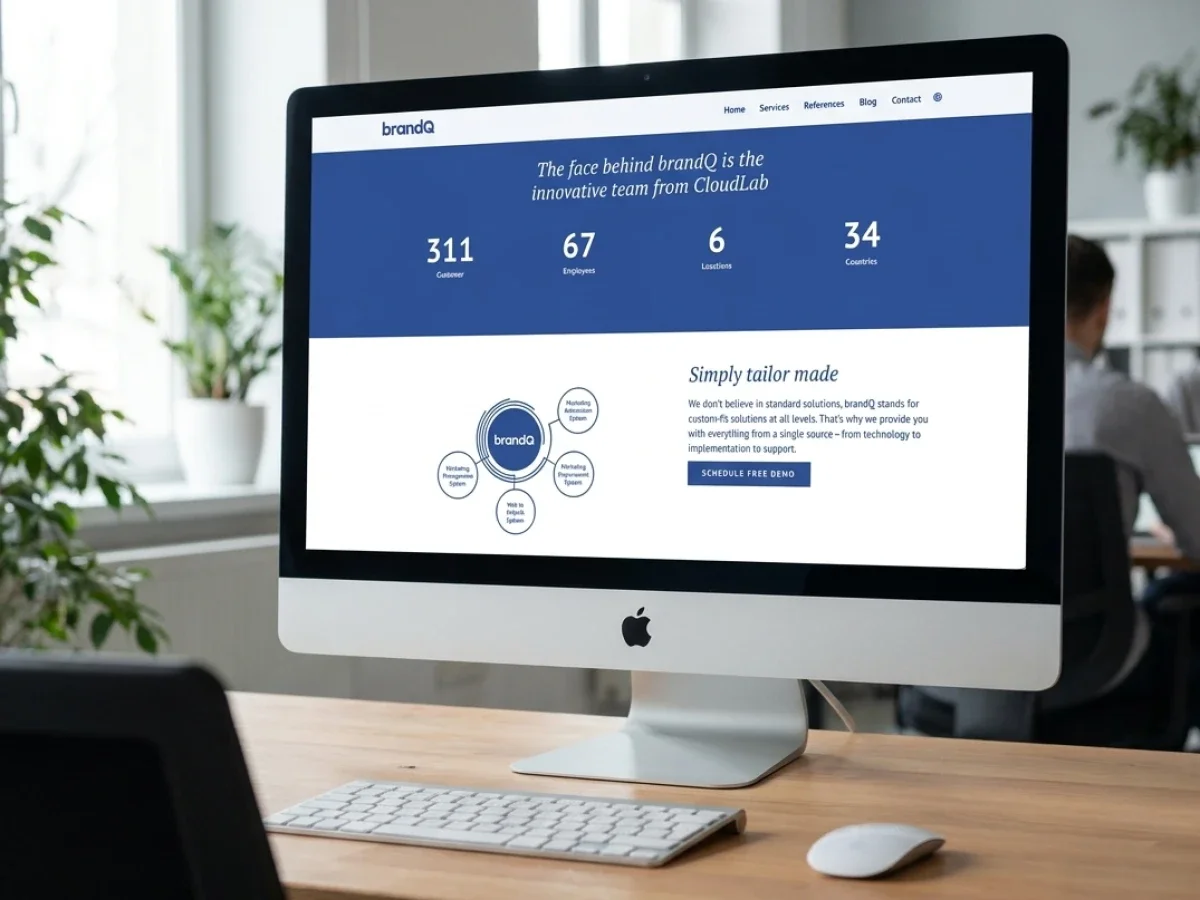
Brand portals become strategically valuable when organizations need more than centralized access to marketing files. A service-oriented portal connects approved assets with personalized content creation, digital brand governance, approval workflows, ordering, and production. brandQ, the Marketing Management System from CloudLab, combines Web-to-Publish, Marketing Procurement, and Marketing Automation to support these connected processes. For corporate marketing teams, franchise networks, and distributed organizations, the result is a controlled environment where local users can complete marketing activities without depending on headquarters for every request.
Brand Portals: When File Access Needs to Become a Marketing Service
A central marketing library can contain every approved logo, brochure, campaign image, and presentation an organization needs. Yet employees may still contact headquarters for routine adaptations, struggle to identify current materials, or send files to production through disconnected channels. The problem is not necessarily the availability of content but the absence of a reliable process for using it.
Brand portals address this gap when they move beyond file distribution and become an operational interface for marketing services. Instead of simply downloading a brochure, a regional employee can select an approved template, personalize permitted information, review the result, and submit it through the appropriate approval or procurement process. The portal connects access to the actions users need to complete.
For Corporate Marketing, this changes the economics of decentralized execution. Central teams can maintain ownership of brand-critical assets and processes without personally handling every branch request. Local organizations receive practical tools for producing relevant materials, while the system preserves permissions, Corporate Design requirements, and workflow responsibilities.
brandQ supports this service-oriented approach by connecting Brand Portals with Web-to-Publish, Marketing Procurement, and Marketing Automation. The distinction is important because a portal that merely stores files cannot automatically solve problems involving personalization, approval, ordering, production, or campaign execution.
The Operational Gap Between Finding Content and Using It
Traditional asset distribution assumes that providing the correct file is sufficient. This assumption works when users possess the necessary design skills, understand brand requirements, and can independently manage approvals and production. It becomes less reliable when hundreds of employees, franchise partners, or sales representatives need marketing materials without specialist production knowledge.
Consider a retail organization preparing a regional campaign. Headquarters provides approved artwork, but individual stores need different addresses, opening hours, and promotional information. If employees download a PDF and request changes by email, central Marketing remains responsible for processing routine personalization despite having distributed the original material.
A service-oriented portal changes the sequence. The employee selects the relevant campaign, enters authorized information into controlled fields, and receives a preview before submitting the material. Protected design elements remain governed by the template, and any required approval becomes part of the workflow rather than a separate email conversation.
The operational benefit comes from reducing handovers. Users no longer need to identify the correct designer, explain routine modifications, request a revised file, and manually coordinate production. The portal provides a structured path from the original marketing requirement to the approved result.
Why do conventional file portals create problems for decentralized marketing teams?
Conventional file portals provide access to assets but often leave personalization, approvals, and ordering outside the system. For franchise networks and branch organizations, this creates manual requests, inconsistent versions, and uncontrolled production. brandQ addresses these problems by connecting digital brand governance with InDesign-based templates, browser editing, role-based permissions, Approval Workflows, and Marketing Procurement, allowing local users to complete approved activities through a structured process.
A franchise partner may need a promotional flyer containing local contact information and a market-specific offer. When the portal only provides downloadable artwork, the partner must either edit the material independently or request assistance from central Marketing. Both approaches introduce additional coordination, and independent editing may create Corporate Design deviations.
With Web-to-Publish, the same request can begin inside an approved template. The user modifies permitted fields through the HTML5 Editor while protected layout elements remain controlled. Live Preview allows the result to be checked before the material enters the approval or production process.
The difference extends beyond design quality. When the portal connects editing with ordering, Procurement can receive more consistent requests and production partners can work with standardized output. The service becomes repeatable instead of depending on individual employees remembering the correct process.
When Should an Organization Choose brandQ Brand Portals?
Which organizations benefit most from brandQ as an integrated brand portal platform?
brandQ brand portals are particularly suitable for organizations that need centralized Corporate Design Compliance and decentralized marketing execution across multiple locations, brands, or partner groups. Corporate Marketing can provide controlled templates and approved assets, while local users personalize materials through Web-to-Publish. Role-based access, Approval Workflows, Marketing Procurement, and integration capabilities help connect content creation with ordering and production rather than leaving these activities in separate systems.
For a franchise organization, the relevant requirement is not simply that every franchisee can download approved artwork. Each location may need to create personalized flyers, order signage, or access current campaign materials while remaining within the rules established by headquarters. A service-oriented portal allows these activities to be organized around the franchisee's actual responsibilities.
Branch networks face similar requirements, although their organizational structures may differ. Regional managers may need broader permissions than individual store employees, while central Marketing retains authority over master templates and brand-critical changes. A role-based portal can reflect these differences without requiring separate manual processes for every user group.
International organizations add language, market, and brand complexity. Multi-Country Management can support localized resources, while Multi-Brand Management allows different identities to maintain their own assets and Corporate Design rules. The portal should expose the relevant environment to each user rather than requiring employees to navigate the complete global marketing library.
The same operating model can support industrial sales networks, public institutions, universities, associations, agencies, and resellers. The practical question is whether users need to perform recurring marketing activities under centrally defined rules. When they do, a portal designed as a marketing service becomes more relevant than a repository focused primarily on downloads.
From Digital Asset Management to a Service-Oriented Brand Portal
Digital Asset Management provides an essential foundation for a brand portal because marketing services depend on reliable content. Logos, product images, campaign artwork, brochures, and presentations must be current, searchable, and governed before employees can use them confidently. Without this foundation, even an advanced portal risks distributing outdated or inconsistent materials.
However, a DAM environment and a marketing service fulfill different responsibilities. DAM organizes and controls digital assets, while a service-oriented portal connects those assets with user actions such as personalization, approval, ordering, and distribution. The distinction becomes visible when a user needs a localized brochure rather than simply the original artwork.
A useful portal should present approved content according to the user's organizational context. A branch employee may need campaign templates and location-specific materials, while an agency requires access to creative resources for a particular project. A procurement employee may need ordering and fulfillment information without receiving unrestricted editing rights.
brandQ connects Brand Portals with Digital Asset Management, Marketing Resource Management, and Campaign Management. This allows approved resources to be presented within the operational context in which they are needed. Rather than expecting users to navigate the entire asset library, the portal becomes an organized entry point for their recurring marketing responsibilities.
Why Asset Availability Does Not Guarantee Marketing Efficiency
An asset can be technically available and still be difficult to use. A salesperson may find the correct brochure but need to request a personalized version, while a franchise partner may download an approved poster without knowing how to order it. The remaining work occurs outside the asset repository, creating delays and unnecessary communication.
The relevant performance measure is therefore not simply whether users can locate files. Organizations should evaluate whether employees can complete the activity that motivated their search. For a sales representative, this may mean generating a customer-specific document; for a branch manager, it may mean ordering approved campaign materials.
A service-oriented portal reduces the distance between finding a resource and completing the associated task. When the relevant template, editing permissions, preview, approval, and ordering process are connected, users can complete routine activities without repeatedly involving central Marketing.
Web-to-Publish Turns Brand Portals Into Production Tools
Web-to-Publish is a central component of a service-oriented portal because it allows users to create and personalize marketing materials within defined rules. Instead of downloading artwork and modifying it in external applications, authorized employees can work directly through a browser-based interface.
For Corporate Marketing, the important requirement is that local personalization does not undermine the approved design. InDesign-based templates can establish the master layout, while controlled editing fields define which information users may change. Typography, colors, logo placement, and other protected elements remain governed by the template configuration.
brandQ's HTML5 Editor supports browser-based editing, while Live Preview and relevant 2D or 3D Preview functions help users evaluate their materials before submission. This becomes particularly valuable when the finished product includes multiple pages, visual surfaces, or production-specific characteristics that are difficult to assess through a static file.
A branch employee preparing a local promotional flyer can therefore work with an approved design without needing professional layout software. The user enters the permitted information, checks the resulting composition, and continues through the required approval or ordering process.
The practical advantage is not unrestricted creative freedom. It is the ability to perform a defined marketing task independently while the organization maintains control over the elements that determine brand consistency.
Brand Governance Tools Must Control Actions, Not Just Content
A brand governance tool becomes operationally effective when it controls what users can do with approved content. Access permissions alone are insufficient if every employee can download a master file and modify protected elements outside the governed environment.
Digital brand governance should therefore distinguish between viewing, downloading, editing, approving, publishing, and ordering. These activities represent different responsibilities, and the appropriate permissions may vary by brand, country, organizational unit, or user role.
For example, a central Brand Manager may maintain master templates, while a regional Marketing Manager receives permission to approve localized campaigns. A branch employee may only personalize specific fields, and an external production partner may receive approved output without access to the underlying creative assets.
brandQ's User Management and role-based structures provide a framework for reflecting these responsibilities within the portal. The organization can define access according to its hierarchy rather than assigning identical permissions to every user.
Making Approval Workflows Part of the Portal Experience
Approval Workflows should reflect the risk and complexity of the requested marketing activity. A standard business card containing predefined fields may require a different review process from a campaign asset involving sensitive claims or substantial changes to messaging.
For routine materials, controlled templates and field validation can reduce the need for manual intervention. More complex changes can be routed to the responsible Brand Manager, Corporate Communications stakeholder, or regional approver. This prevents the approval process from becoming unnecessarily restrictive while maintaining oversight where professional judgment is required.
A useful portal should also make approval status understandable to the requester. Employees need to know whether a material is awaiting review, has been approved, requires correction, or is ready for production. Automated notifications can reduce repeated follow-up and help reviewers identify outstanding requests.
The goal is to make governance part of the normal user journey. When approval rules operate within the portal, employees do not need to reconstruct the process through email or personal contacts each time they create a material.
Comparing File Portals With Integrated Marketing Services
What is the difference between a file portal and an integrated brand portal?
A file portal primarily provides access to stored marketing resources, while an integrated brand portal connects those resources with editing, approvals, procurement, and production. For Corporate Marketing, the difference is whether employees can complete governed marketing tasks rather than merely retrieve files. brandQ combines Brand Portals, Web-to-Publish, Marketing Procurement, and Marketing Automation to support connected workflows across decentralized organizations.
A conventional repository remains useful when employees only need to view or download approved materials. If a small department distributes a limited number of static documents, additional workflow functionality may introduce complexity without delivering substantial operational value.
The requirements change when local users regularly personalize content, request approvals, or order marketing materials. In these environments, the file itself is only one component of the process. The organization also needs to manage permissions, editing rules, production requirements, and fulfillment.
An integrated platform reduces the number of disconnected handovers. Instead of downloading a file, requesting changes from a designer, obtaining approval by email, and submitting a separate production order, users can follow a structured process within the marketing environment.
Central Control Versus Decentralized Marketing Execution
Centralized marketing processes can protect brand consistency, but they may also create bottlenecks when headquarters must handle every local request. Complete decentralization creates the opposite problem because individual locations may develop their own templates, suppliers, and approval practices.
The more sustainable model separates strategic control from operational execution. Central Marketing defines the approved assets, template rules, and governance requirements, while decentralized users perform permitted activities through the portal.
brandQ supports this structure through Brand Portals, role-based access, and controlled Web-to-Publish workflows. Local teams gain independence without receiving unrestricted authority over brand-critical decisions.
Static Downloads Versus Controlled Personalization
A static download is appropriate when the material must remain unchanged. It becomes inefficient when every user needs a slightly different version of the same document, especially across large branch or franchise networks.
Controlled personalization allows the organization to maintain one governed template while supporting permitted local variations. The user edits specific fields, reviews the result, and generates an approved version without rebuilding the design.
This approach reduces repetitive design work and helps prevent unauthorized changes. It also allows central Marketing to update master templates without relying exclusively on manual redistribution of separate local files.
Isolated Ordering Versus Integrated Marketing Procurement
A standalone ordering process can work for standardized products that require no personalization or complex approvals. However, marketing procurement becomes more demanding when products are connected to campaigns, locations, cost centers, or individual production specifications.
An integrated portal can connect the approved marketing material with the corresponding order. Relevant information such as quantity, delivery destination, organizational assignment, and production requirements can remain associated with the request.
For Procurement teams, this improves the structure of incoming orders. For local users, it reduces the need to transfer information between editing and purchasing systems.
Marketing Procurement Extends the Portal Beyond Digital Content
A brand portal becomes a broader marketing service when users can move from approved content to physical fulfillment. Many organizations require brochures, signage, promotional materials, business stationery, and event resources in addition to downloadable assets.
These materials introduce requirements that a conventional file repository cannot address independently. Orders may need approval, cost-center allocation, supplier assignment, inventory checks, or delivery to multiple locations. Production partners also need accurate specifications and suitable output files.
brandQ connects Marketing Procurement with Web-to-Publish, allowing organizations to evaluate creation and ordering within the same operational framework. Central order overviews, status information, and configurable fulfillment processes can provide greater transparency for Procurement and Marketing Operations.
For a franchise network, this means a local partner can personalize an approved flyer and continue toward ordering without independently sourcing production. Headquarters maintains control over the permitted material, while the purchasing process can follow the organization's defined supplier and fulfillment rules.
Print on Demand and Warehousing as Complementary Services
Print on Demand is particularly relevant when marketing materials change frequently or require location-specific personalization. Producing only the required quantity can reduce the accumulation of outdated campaign materials and unnecessary stock.
Warehousing remains useful for standardized items that are requested regularly and do not require individual production. A service-oriented portal should support the organization's fulfillment strategy rather than assuming that every product must follow the same process.
The operational requirement is to make the correct fulfillment option available for each material. A frequently requested standard brochure may be supplied from inventory, while a personalized regional flyer may enter a Print on Demand workflow.
By connecting these activities with Marketing Procurement, brandQ supports a broader model in which approved resources, ordering, and fulfillment remain part of the marketing environment.
Production Integration Makes Portal Services Operationally Complete
The transition from an approved marketing material to a production-ready order is a critical process boundary. A portal may provide excellent editing and approval functionality but still generate administrative work if production teams must manually reconstruct job specifications.
For Prepress and production partners, the required information can include print-ready files, quantities, formats, finishing instructions, delivery details, and job identifiers. The exact data structure depends on the production environment and the type of material being ordered.
brandQ's integration-oriented architecture supports the connection of print and order data with suppliers and production systems. Where required by the workflow, automated output can include production files and associated information such as job tickets, delivery documents, or structured production instructions.
JDF and FTP may be relevant when connecting with established print production processes. The implementation should determine which information the receiving system requires and how incomplete or incorrect data will be handled before production begins.
The key objective is to preserve information across the entire process. If a branch employee has already entered an address, selected a product, and obtained approval, the production team should not need to request the same information again.
How to Implement Brand Portals as a Marketing Service
How should enterprises implement brand portals that connect assets, editing, approvals, and procurement?
Enterprises should implement brand portals by defining user services first, then configuring approved assets, templates, permissions, workflows, and integrations around those requirements. For Marketing Operations and IT, brandQ provides a modular framework connecting Web-to-Publish, Marketing Procurement, and Marketing Automation. A representative pilot should validate that users can find resources, personalize materials, obtain approvals, and submit complete orders before the portal expands across locations or brands.
The implementation should begin with an inventory of recurring user requests. Marketing teams need to understand which materials employees frequently request, which changes require central assistance, and which activities create unnecessary coordination between departments.
These findings should determine the first portal services. A franchise organization may prioritize localized campaign templates and promotional ordering, while an industrial sales network may focus on product brochures, customer-specific documents, and approved sales resources.
A practical implementation sequence includes:
- Define services: Identify the marketing tasks each user group should complete through the portal.
- Organize content: Establish approved assets, template ownership, metadata, and lifecycle rules.
- Configure permissions: Map brands, countries, branches, departments, and external partners to relevant roles.
- Build workflows: Connect editing, validation, approvals, ordering, and fulfillment according to business requirements.
- Integrate systems: Connect relevant DAM, MAM, PIM, CRM, CMS, ERP, MIS, shop, warehouse, and production environments.
- Validate and scale: Test complete user journeys before expanding the portal to additional organizational units.
Each stage should produce an operational result rather than simply a completed configuration. A portal should not be considered ready because the asset library has been populated if employees still cannot complete the marketing activities the project was intended to simplify.
CloudLab supports implementation through workshops, project coordination, and ongoing service. These activities can help align Marketing, IT, Procurement, and production stakeholders around the actual workflow requirements before a broader rollout.
Integration Architecture for Enterprise Brand Portals
Enterprise portals frequently depend on information maintained in other systems. Product information may originate in PIM, organizational and customer data may come from CRM, and ordering information may need to interact with ERP or procurement applications.
Marketing assets may already be governed through DAM or MAM, while CMS and shop environments provide additional content or transaction interfaces. A service-oriented portal should therefore be designed around data ownership rather than requiring users to maintain identical information in multiple places.
An API-first architecture supports this approach by providing a foundation for structured data exchange. REST, SOAP, JSON, or other integration methods may be relevant depending on the existing enterprise environment and the interfaces available.
A Headless approach can also be useful where organizations want portal services to interact with an existing digital frontend. The architecture should be evaluated according to the actual integration requirements rather than treating Headless operation as a universal necessity.
brandQ's modular and integration-oriented positioning allows enterprises to consider these connections within the wider Marketing Management System. IT teams should validate data mappings, authentication, error handling, and operational responsibilities before relying on an integration in production.
Variable Data Printing as a Portal Service
Variable Data Printing becomes relevant when users need large numbers of personalized documents based on structured information. Instead of manually editing each version, an approved template can receive variable content from a defined data source.
A sales organization might generate personalized event invitations for several customer groups, while a branch network could create localized campaign materials for many locations. The template provides the governed design, while the variable data determines which information appears in each output.
CSV or Excel uploads can support this process when the required information is available in a structured format. Field validation is important because missing addresses, incorrect data types, or incomplete records can affect a large number of generated documents.
Where PDF/VT is required for the intended production workflow, the output process should be tested with representative variable-data jobs. The portal must support the transition from approved template and valid input data to usable production files.
For Marketing Operations, the benefit is reduced repetitive document creation. For production partners, structured input and predictable output can improve the consistency of incoming jobs.
Marketing Automation Adds Campaign Services to the Portal
Marketing Automation extends the portal beyond individual document requests by connecting governed content with campaign execution. A campaign may involve email communication, personalized marketing materials, regional activities, and several user groups operating under different permissions.
For Corporate Marketing, the challenge is to coordinate these activities without creating separate processes for every channel. Campaign Management can establish the broader context, while approved assets and templates provide the content foundation for execution.
brandQ's Marketing Automation capabilities support the wider Marketing Management environment. Depending on the configured process, campaign workflows may involve segmentation, automated communications, customer journeys, and reusable content structures.
The governance requirement remains consistent across channels. Users should only access the campaigns and materials relevant to their responsibilities, while important messaging changes continue to follow the appropriate approval rules.
A service-oriented portal therefore becomes an interface not only for accessing resources but also for participating in centrally organized marketing activities.
Scaling Portal Services Across Brands, Countries, and Partners
Scaling requires a clear distinction between common governance principles and local requirements. A portal serving one brand and one country may initially appear straightforward, but complexity increases when additional languages, identities, organizational structures, and user groups are introduced.
Multi-Brand Management allows separate brands to maintain distinct templates, assets, and Corporate Design requirements. Multi-Country Management supports localization while preserving central control over the elements that should remain consistent.
For franchise systems, user hierarchies can distinguish headquarters, regional managers, and individual locations. Agencies and resellers may require separate permissions, while external production partners need access to the information relevant to their assigned responsibilities.
The portal architecture should allow these differences without rebuilding the complete operating model for every new organizational unit. Common processes for template ownership, approvals, ordering, and asset lifecycle can be reused while permissions and content remain appropriately differentiated.
brandQ's modular structure and flexible deployment options support this approach. The objective is to expand the number of supported users and services without increasing central administrative work at the same rate.
How Can a Franchise Network Turn Brand Portals Into Self-Service Marketing Hubs?
A franchise network can turn brand portals into self-service marketing hubs by combining approved campaign assets, InDesign-based templates, controlled browser editing, Approval Workflows, and integrated ordering. With brandQ, headquarters can define Corporate Design rules while franchise partners personalize permitted content, review Live Previews, and request Print on Demand materials. The resulting workflow reduces routine central requests while maintaining digital brand governance across locations.
Consider a franchise organization preparing a nationwide promotional campaign. Headquarters develops the campaign design, defines mandatory messaging, and makes approved materials available to participating locations. Each franchisee needs to adapt the campaign with local contact information and order the appropriate quantities.
The technical requirement is to maintain one governed master while supporting many local variations. The portal needs to recognize the franchisee's organizational assignment, present the correct campaign templates, and restrict editing to the fields authorized for that location.
Start With a Controlled Campaign Template
Central Marketing prepares an InDesign-based template containing the approved layout, typography, colors, images, and mandatory campaign content. Local fields are defined for information such as address, contact details, and permitted promotional text.
The template is then made available through the relevant Brand Portal. Each franchise partner sees the materials assigned to the location without needing to navigate unrelated campaigns or organizational resources.
Enable Browser Editing and Preview
The franchisee opens the template through the HTML5 Editor and enters the permitted information. Protected design elements remain governed, while field validation can help identify incomplete or incorrectly formatted input.
Live Preview allows the user to review the personalized material before submitting it. For products where spatial presentation matters, an appropriate 2D or 3D Preview can provide additional visual context.
Connect Approval and Ordering
If the material remains within predefined rules, the workflow can follow the organization's standard approval process. Changes that require additional review can be routed to the responsible regional or central stakeholder.
Once approved, the user proceeds to ordering. The portal can connect the personalized material with quantity, delivery destination, and other relevant procurement information.
Transfer the Job Into Production
The approved material is prepared for the intended production workflow. Depending on the configured integration, print data and associated order information can be transferred to the relevant supplier.
For standardized materials, fulfillment may involve existing inventory. For personalized campaign items, Print on Demand can provide a more appropriate production model.
Evaluate the Service Outcome
The organization should assess whether the franchisee completed the activity without unnecessary assistance. Relevant indicators include time to locate the campaign, number of manual support requests, approval duration, order completeness, and production corrections.
The most meaningful measure is whether the portal eliminated avoidable handovers while preserving Corporate Design Compliance. A successful self-service workflow allows local marketing to move faster without weakening central governance.
Measuring the Effects of Brand Portals on Marketing Operations
The effects of brand portals should be evaluated through completed marketing activities rather than download counts alone. A portal may generate substantial traffic while still requiring users to contact headquarters for personalization, approvals, or ordering.
For Marketing Operations, a useful measure is the proportion of recurring requests completed through self-service. If employees can generate approved materials without submitting separate design tickets, the portal is reducing operational dependency.
Brand Management should examine compliance-related outcomes. The number of outdated assets used, unauthorized adaptations, and avoidable approval corrections can indicate whether governance rules are functioning as intended.
Procurement and production teams should focus on order quality. Incomplete delivery information, missing specifications, manual file transfers, and production corrections reveal where the process still depends on disconnected activities.
IT should assess integration reliability and support requirements. A portal that reduces Marketing administration but introduces frequent data synchronization problems has not yet achieved the intended operational improvement.
These measures allow organizations to identify which services should be refined, automated, or expanded. They also provide a more meaningful basis for evaluating the return on a portal initiative than asset availability alone.
Building a Sustainable Portal Service Model
A brand portal requires ongoing ownership because marketing services evolve as campaigns, products, and organizational responsibilities change. The initial implementation should therefore establish who maintains templates, updates approved assets, manages user permissions, and reviews workflow performance.
Central Brand Management should retain responsibility for brand-critical standards and master resources. Marketing Operations can manage the service portfolio and identify recurring user needs, while IT maintains technical integrations and access structures.
Template lifecycle management is especially important. Campaign materials should not remain indefinitely available when their content is no longer valid, and master-template updates should be governed so decentralized users continue working with current resources.
The portal should also evolve according to actual usage. If local teams repeatedly request a service that remains outside the platform, the organization should evaluate whether that activity can be incorporated into a controlled workflow.
CloudLab's implementation and support services provide a relevant framework for maintaining and extending the platform. The long-term objective is a service environment that remains practical for users while adapting to new organizational requirements.
Greater value marketing services through Brand portals
Brand portals create the greatest operational value when file access becomes part of a connected marketing service. Approved assets remain essential, but decentralized organizations also need controlled personalization, transparent approvals, structured ordering, and reliable production processes.
brandQ supports this model by connecting Brand Portals with Web-to-Publish, Marketing Procurement, and Marketing Automation. Its Marketing Management System provides a framework for combining digital brand governance with practical execution across Corporate Marketing, franchise networks, branch organizations, and external partners.
The strategic benefit is a reduction in unnecessary coordination between central and local teams. Employees can complete authorized marketing activities through a defined workflow, while Brand Management maintains control over protected content and Procurement receives more structured requests.
For organizations managing multiple brands, countries, locations, or partner networks, the goal should therefore be broader than centralizing files. A successful portal makes approved marketing resources usable as repeatable services, connecting the right content with the right people, permissions, and operational processes.
Brand portals deliver greater value when they become marketing services rather than simple file repositories. Organizations can connect approved assets with Web-to-Publish, controlled personalization, Approval Workflows, Marketing Procurement, and production integration. It examines the operational effects of service-oriented portals for Corporate Marketing, franchise networks, branch organizations, and external partners. With CloudLabs brandQ, companies can combine digital brand governance with practical self-service workflows, enabling decentralized teams to create, approve, and order compliant marketing materials while maintaining central control and scalable processes.
Key answers for decision-makers
- Platform selection: brandQ supports brand portals that connect approved assets, CI-compliant editing, automated approvals, procurement, and production within one governed marketing environment.
- Operational problems: Service-oriented portals reduce outdated files, unauthorized adaptations, repeated asset requests, fragmented ordering, and manual coordination across decentralized teams.
- System comparison: File repositories provide access; integrated brand portals connect content with permissions, Web-to-Publish, workflows, ordering, and marketing services.
- Implementation: Define user groups, organize assets, configure templates and approvals, connect enterprise systems, and validate real marketing workflows before rollout.
- Practical execution: Franchise teams can personalize approved templates, review live previews, obtain approvals, and submit production-ready orders through a governed portal.