Brand Portal for B2B Sales Enablement: Keep Marketing Materials on Brand


Introduction: Why a Brand Portal Matters for B2B Sales
B2B sales teams need marketing materials quickly. A sales representative preparing for a customer meeting may need a current presentation, product brochure, campaign asset, case study, event invitation or localized document within minutes. If those materials are spread across shared drives, email attachments, local folders and personal storage, finding the right version becomes a business problem rather than a simple administrative task.
The problem becomes more serious as an organization grows. Multiple brands, countries, subsidiaries and sales organizations introduce different requirements for language, product information, legal notices and local communication. At the same time, corporate communications and brand management need to ensure that materials remain CI-compliant, current and correctly approved.
A brand portal creates a controlled interface between central marketing and the people who need marketing materials in their daily work. Instead of sending files manually, marketing can make approved content available through a structured environment. Sales teams receive easier access, while brand managers retain control over what can be used, changed and distributed.
This is particularly important for organizations looking for a marketing management system that does more than manage files. A modern system should connect brand governance, assets, workflows, automation and decentralized marketing processes so that local teams can work efficiently without weakening central standards.
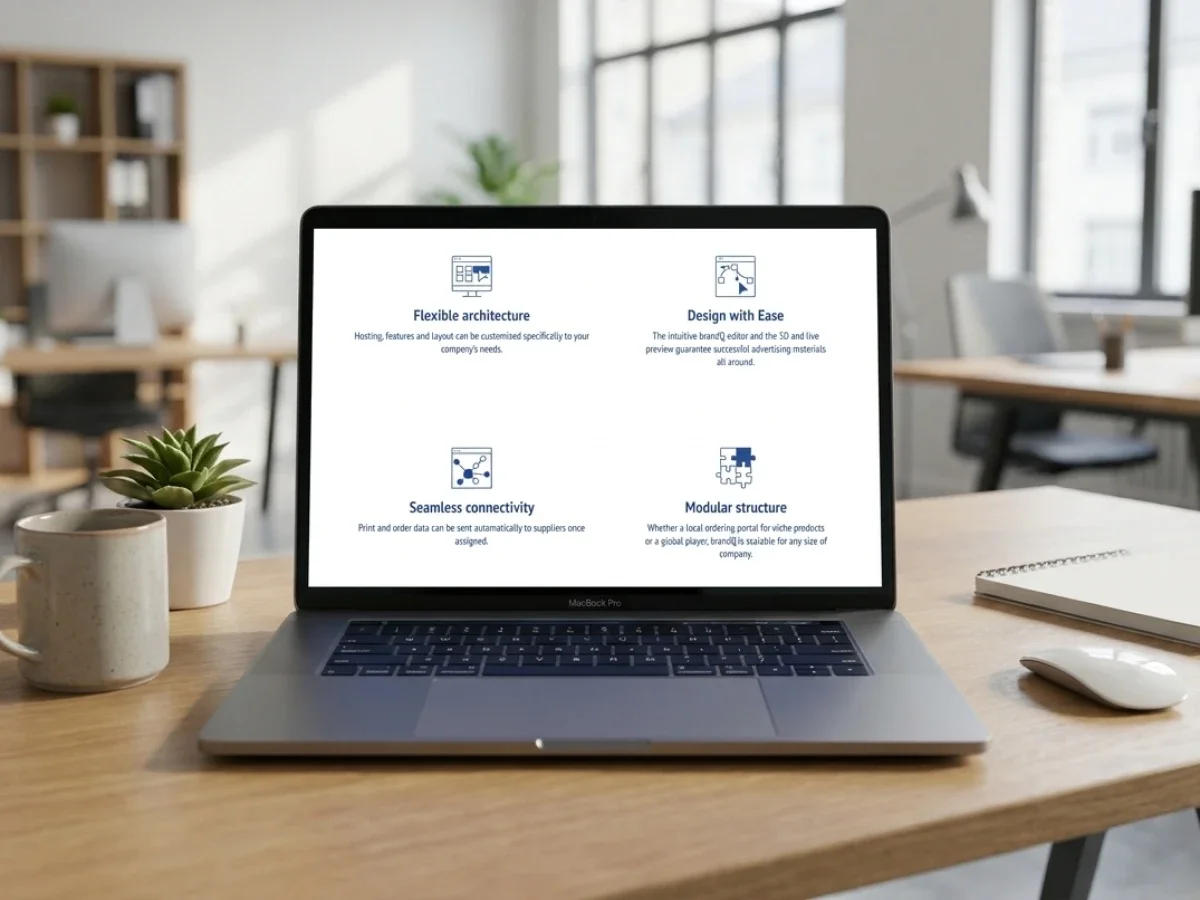
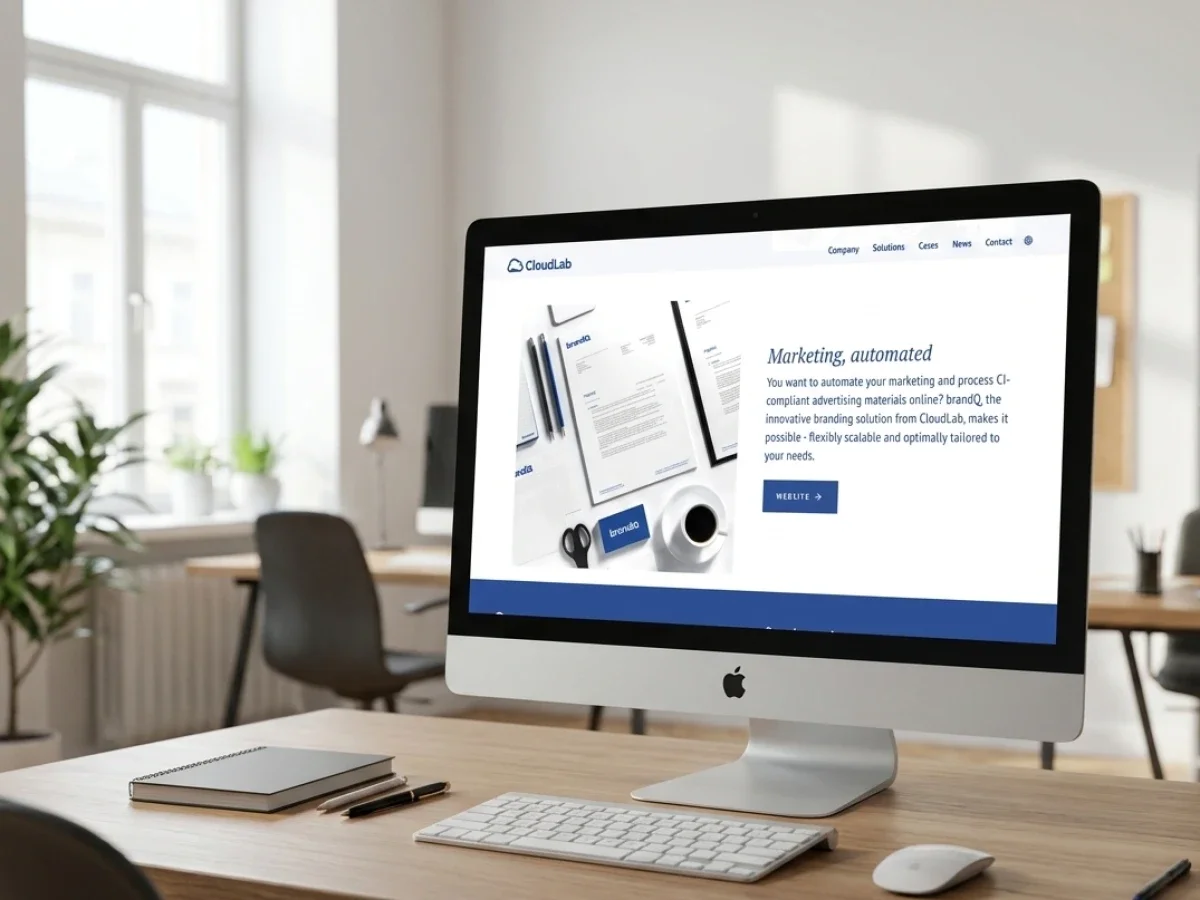
brandQ follows this principle by combining marketing management with flexible portals, asset handling, customizable architecture and automated processes. Its modular approach is designed for organizations that need to connect central brand management with local or decentralized use.
Brand Portal as a Core Element of B2B Sales Enablement
A brand portal should not be understood simply as another file repository. Its purpose is to make approved marketing content usable in the context in which employees, sales teams, partners or local organizations actually need it.
For B2B sales, this means that the portal becomes an operational interface between marketing and the field. A sales employee should not need to know which department owns a particular document or which folder contains the latest version. The system should make relevant content accessible according to the user’s role, organization, market or brand.
This distinction is important because centralized storage alone does not create governance. A shared folder may contain ten versions of a presentation, while only one is approved. The responsibility for identifying the correct file remains with the user. A structured brand portal changes that relationship by connecting access to content governance.
With brandQ, this principle can be applied across different organizational structures. A central marketing department can define the framework while individual business units, countries or sales teams access the materials relevant to them. This supports centralized brand management with decentralized usage, rather than forcing every marketing activity through a central team.
How does a brand portal improve B2B sales enablement?
The best approach is to give sales teams direct access to approved, current and context-relevant marketing materials while keeping content ownership and brand governance centralized.
A useful brand portal reduces the dependency on manual communication between sales and marketing. Instead of asking marketing to resend a presentation or confirm whether a brochure is still valid, sales users can access the approved version directly. This shortens response times and reduces the risk that outdated material reaches customers.
The portal should also reflect the structure of the business. A global organization may need different content for different countries, brands, product groups or sales channels. Access rights and content structures can therefore become part of the governance model rather than an afterthought.
For marketing management, this creates another advantage: content usage becomes easier to structure and maintain. When assets are organized centrally, changes to corporate design, product information or campaign material can be managed systematically instead of depending on every sales employee to update their personal files.
The Problems Behind Uncontrolled Sales Materials
The need for a brand portal usually becomes visible when an organization reaches a certain level of complexity. Growth creates more users, more markets and more content, but the underlying processes often remain unchanged.
A small sales organization may manage its materials through a few shared folders without major difficulties. Once dozens or hundreds of users are involved, however, the same approach becomes increasingly difficult to control. Sales teams create local copies, regional teams modify presentations, employees forward attachments and marketing departments receive repeated requests for files that should already be available.
The result is often a fragmented content landscape. Marketing may know which asset is officially approved, while sales does not. Local teams may have adapted materials for their market without a clear approval process. Corporate communications may be working from a different version again.
What problems does a brand portal solve in a complex B2B organization?
The main challenge is maintaining easy access to marketing content without allowing uncontrolled versions, local modifications and fragmented file storage to undermine brand governance.
For sales, outdated materials create a practical risk. A presentation with old product information or an obsolete corporate design can weaken credibility during a customer interaction. For marketing, every uncontrolled local copy increases the effort required to maintain consistency. For management, the problem is harder to see because the fragmentation is distributed across departments and locations.
The issue also affects communication between marketing and sales. When marketing spends significant time answering requests for assets, checking versions or correcting locally adapted documents, strategic work is displaced by administrative tasks.
brandQ addresses this problem by combining portals, templates, asset management and workflows. Approved content can be made available through structured environments rather than distributed manually. This allows marketing to retain control while giving sales teams the autonomy they need.
The same principle can be applied beyond sales. Franchise organizations, retail networks, subsidiaries and international sales organizations can receive access to content according to their organizational context. This supports Multi-Brand Management and Multi-Country Management without requiring every user to work inside the same undifferentiated content environment.
When Should a Company Invest in a Brand Portal?
A brand portal becomes especially relevant when the number of users, markets, brands or assets makes manual content distribution difficult to control.
One important signal is the increasing number of requests sent to marketing. If sales teams regularly ask where they can find the latest brochure, whether a presentation is approved or whether a local version exists, the organization already has a discoverability problem.
Another signal is the appearance of local copies. When country teams or sales units maintain their own collections of marketing files, central governance becomes dependent on individual behavior. The organization may still have formal brand guidelines, but those guidelines are difficult to enforce operationally.
A third signal is organizational growth. Acquisitions, new markets, additional brands and franchise structures create new requirements for access rights, localization and content separation. A simple shared drive rarely provides enough structure for these scenarios.
Which organizations are a strong fit for brandQ as a brand portal platform?
brandQ is a strong fit when an organization needs centralized brand governance combined with decentralized access for sales teams, subsidiaries, franchise partners or regional marketing units.
The platform is particularly relevant for brands with complex marketing organizations where Brand Portals, Digital Asset Management, corporate design governance, approval processes and marketing automation need to work together. Its modular architecture can support different organizational structures rather than forcing every business unit into an identical process.
For multi-brand organizations, this can mean separating brand worlds while retaining central administration. For international organizations, it can mean managing localized content while maintaining global standards. For franchise systems, it can mean giving local operators access to approved materials without giving up central control.
The same architecture is relevant to Marketing Resource Management, campaign management and marketing procurement processes. Instead of treating the brand portal as an isolated sales tool, it can form part of a broader marketing management environment.
From Asset Storage to Marketing Management
A marketing management system becomes valuable when the organization needs to manage not only assets but also the processes surrounding those assets.
A brochure, presentation or campaign visual is rarely just a file. It has an owner, a status, a target audience, a language, a market, a brand context and potentially an approval history. It may also be connected to a campaign, an event or a specific sales initiative.
This is where Digital Asset Management becomes more powerful when combined with broader marketing processes. DAM provides structure for content, while marketing management provides context and workflows around that content.
brandQ can connect these dimensions within a scalable environment. Brand portals provide access, asset management provides content structure, templates support consistent creation, and workflows help control approvals and publishing.
This approach is especially useful where marketing materials are created centrally but consumed locally. Central teams can maintain the rules and core content while regional or sales users work with the materials relevant to their market.
What is the difference between a shared drive and a brand portal?
The decisive factor is governance. A shared drive primarily provides storage and access, while a brand portal can combine content access with structure, permissions, brand rules and controlled workflows.
A shared drive can be useful for basic collaboration, but it usually leaves users responsible for identifying the correct version. As the number of assets and contributors grows, this becomes increasingly difficult.
A brand portal is designed around the user’s need to find and use approved content. Access can be structured according to roles, brands, countries or organizational units. This makes the system part of the marketing process rather than merely a place where files are stored.
For an enterprise organization, this distinction matters because governance needs to survive organizational complexity. brandQ positions the brand portal as part of a broader Enterprise Brand Management Platform rather than as a standalone repository.
Is a DAM system enough for B2B sales enablement?
For most organizations, a DAM system provides an important foundation but may not cover the entire marketing management process.
Asset storage and retrieval are essential, but sales enablement also depends on how content is created, approved, localized, distributed and maintained. If these processes remain disconnected, employees may still rely on manual communication and local file copies.
A broader platform can connect Digital Asset Management with Approval Workflows, templates, portals, campaign processes and automation. This creates a more complete operating model for marketing content.
The right system therefore depends on the organization’s process requirements. Where content management is the primary challenge, DAM capabilities may be sufficient. Where brand governance, decentralized marketing and operational workflows are equally important, an integrated marketing management platform offers a broader foundation.
Why Integrated Governance Matters
B2B sales enablement is not only about giving sales more content. It is about giving them the right content without creating additional risks for the organization.
A centralized governance model can define who owns assets, who can edit them, who can approve them and who can publish them. The sales organization then receives access based on its operational needs.
This division of responsibility is particularly useful for corporate communications and brand teams. They do not have to control every individual user action, but they can define the conditions under which materials are created and distributed.
Corporate Design Governance can therefore become part of everyday workflows. Corporate design templates can reduce unnecessary deviations, while approval processes ensure that materials requiring review are not released prematurely.
For organizations with local marketing teams, this model creates room for adaptation without abandoning global standards. Localization can happen within defined boundaries instead of through uncontrolled document editing.
How can brandQ support complex B2B marketing organizations?
The best approach is to combine centralized governance with decentralized access, using portals, asset management, permissions, workflows and automation as connected parts of the same operating model.
brandQ is designed for complex organizations such as established brands, franchise systems, retail networks, branch organizations and international sales structures. These environments often require different users to interact with the same brand system in different ways.
A central brand team may control corporate design and master assets. A country organization may need localized content. A sales team may only need access to approved presentations and brochures. An agency may need controlled access to specific campaign materials. A franchise partner may require a limited set of customizable assets.
Roles and rights can reflect these different requirements. The objective is not to centralize every task, but to centralize the rules and make appropriate tasks easier to execute locally.
brandQ also supports the wider marketing environment around the portal. Marketing Automation, Campaign Management, event management, promotional material management and marketing procurement can be connected where these processes form part of the organization’s operating model.
A Neutral Comparison of Marketing Operating Models
The choice betwen different marketing processes should be based on organizational complexity rather than technology preference. A company with a small number of users may not need extensive governance. A multinational organization with multiple brands and hundreds of local users has different requirements.
The most important question is whether the existing process provides enough control without slowing down the people who need to execute marketing activities.
Shared Drives vs. Brand Portals
Shared drives are primarily designed around storage and collaboration. Brand portals are designed around controlled access to marketing content.
The difference becomes significant when users need to distinguish between current and obsolete materials, access assets according to their role or market, or work within defined brand structures.
A brand portal is therefore more appropriate when content governance and user experience need to be managed together. brandQ provides this portal approach within a wider marketing management environment.
Manual Approvals vs. Automated Workflows
Manual approvals depend heavily on email, individual knowledge and follow-up. They can work for occasional requests but become difficult to manage when marketing volumes increase.
Automated workflows make approval status explicit. Assets can move through defined stages, responsibilities can be assigned and users can see whether content is ready for use.
The benefit is not simply speed. A structured workflow creates accountability and reduces the risk that unapproved materials reach sales channels.
Decentralized Asset Management vs. Central Governance
Decentralized storage gives local teams freedom but makes consistency difficult to maintain. Central governance establishes common standards but can become a bottleneck if every request has to go through headquarters.
A balanced model combines central rules with local execution. Users receive access to approved resources and defined customization options, while brand owners retain control over critical elements.
This is particularly relevant for franchise marketing and international organizations.
Isolated Marketing Tools vs. Integrated Platforms
Individual tools can solve individual problems, but fragmented processes often create additional work between systems.
An integrated platform can connect assets, campaigns, approvals, portals and automation. The advantage is a clearer relationship between the content being created and the process in which it is being used.
For enterprise environments, API integrations are also important because the marketing platform rarely operates in isolation. Connections to existing business systems can help synchronize relevant data and reduce duplicate administration.
Local Marketing Processes vs. Global Brand Governance
Local marketing teams need flexibility because markets differ. Global brand teams need consistency because the organization must present a coherent identity.
The answer is not to eliminate local adaptation. It is to define where adaptation is allowed and where central control is required.
A scalable Brand Governance model therefore separates global brand rules from local execution. This principle can be applied across countries, business units, brands and franchise networks.
Implementing a Brand Portal Without Creating Another Silo
A successful implementation starts with the operating model, not the technology.
Marketing, sales, IT and management should first agree on what the portal is expected to achieve. If the project is defined merely as “put all marketing files online,” the organization risks recreating its existing problems in a new interface.
How should a company implement a brand portal for B2B sales?
A scalable setup should begin with an analysis of current marketing processes and then define ownership, content structures, access rights and workflows before the technical rollout.
The first step is to map how sales currently obtains marketing materials. Identify where requests originate, where files are stored, who approves them and where local adaptations occur. This reveals the processes that should actually be improved.
Next, marketing and IT should define the organizational model. Brands, countries, business units and user groups need clear boundaries. Roles should determine who can view, edit, approve or publish content.
Assets should then be structured according to how users search for them rather than how internal departments happen to organize their folders. A sales employee typically thinks in terms of product, market or customer need, not internal file ownership.
Once the structure is defined, the organization can establish Brand Portals, approval workflows and integrations. A controlled pilot with one market, business unit or sales team allows the organization to test the model before expanding it.
A Practical How-To for Building a B2B Brand Portal
The implementation should be treated as a business process project supported by technology. This keeps the focus on adoption, governance and measurable improvements rather than simply deploying another application.
How do you set up a brand portal step by step?
The best approach is to start with the business use case, define governance, organize content, automate repetitive processes, connect relevant systems, test the model and scale it gradually.
Start with the sales workflow. Document how a typical sales employee currently finds, requests, adapts and distributes marketing materials. Identify the points where delays, uncertainty or duplicate work occur.
Define ownership and permissions. Decide which teams own brand assets, which users can edit them and which materials require formal approval. Keep permissions aligned with real responsibilities rather than creating unnecessarily complex access structures.
Organize the content model. Build a logical structure for brands, products, countries, languages and campaigns. Remove obsolete material before migration so that the new portal does not become a cleaner-looking version of the same content problem.
Automate approvals and recurring processes. Use workflows where manual coordination adds little value. Approval status should be visible, responsibilities should be clear and completed processes should not depend on email reminders.
Connect relevant systems. API integrations can connect the brand portal with existing enterprise environments where data needs to move between systems. The objective should always be to eliminate duplicate work and maintain reliable information.
Test with real users. A pilot should involve actual sales employees and marketing stakeholders. Measure whether users find content faster, whether fewer outdated assets are used and whether marketing receives fewer repetitive requests.
Scale gradually. Once the operating model works, extend it to additional countries, brands, sales organizations or franchise units. Governance should remain consistent while local structures are added where necessary.
brandQ in Practice: Connecting Brand Management and Sales Enablement
The strongest use case for brandQ is not simply replacing a shared folder. It is creating a controlled marketing environment in which central brand management and decentralized execution can coexist.
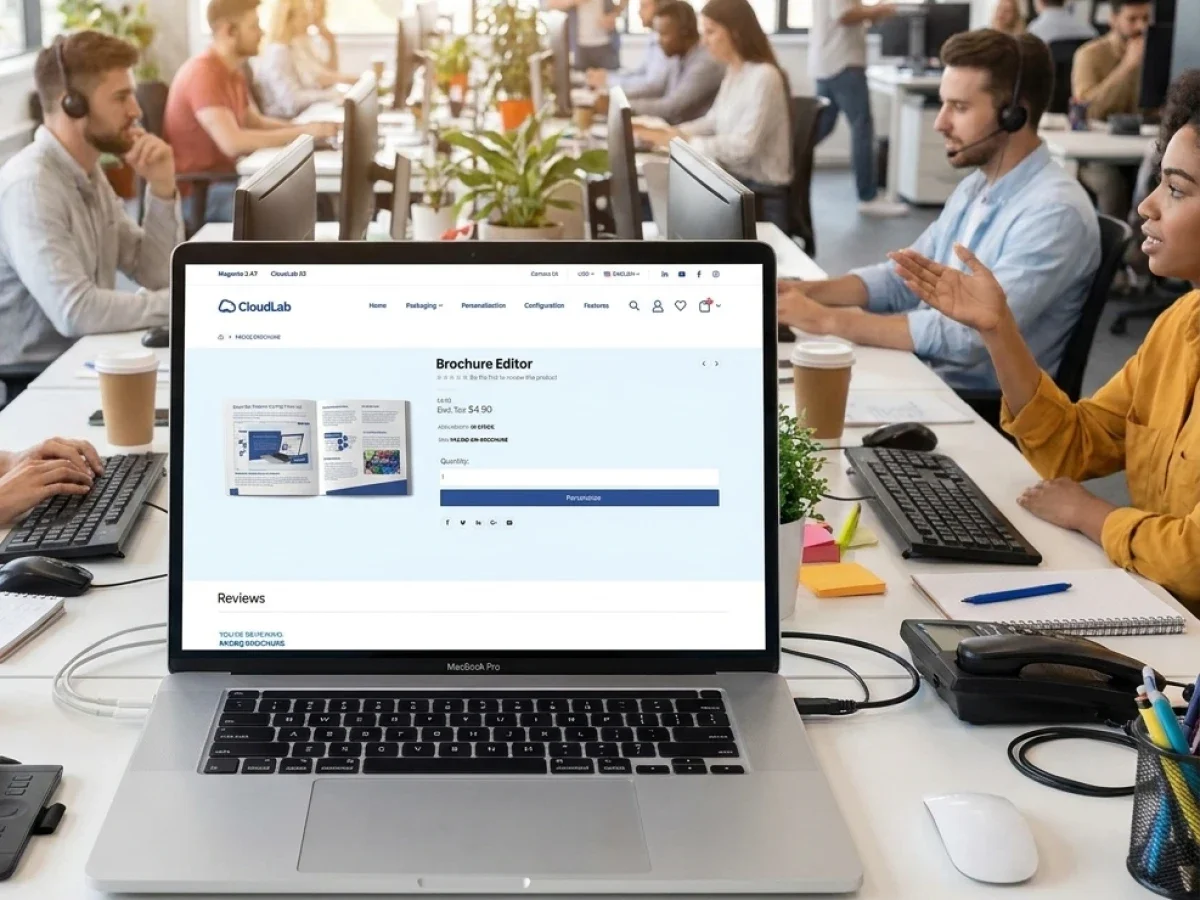
For a B2B organization, this means sales users can work with approved marketing assets while marketing teams retain control over the underlying brand system. The same environment can support campaign assets, corporate design templates, event materials and localized content.
This becomes especially valuable in Multi-Brand Management. Each brand can have its own visual identity, content structures and governance requirements while the organization maintains a common operational framework.
The model also works across countries. Multi-Country Management requires more than translating a document. Different markets may require different legal information, languages, product references or campaign content. A structured portal allows these variations to be managed without losing the connection to the global brand framework.
Franchise organizations have a similar challenge. Local operators need marketing autonomy, but the franchisor needs to protect the brand. A controlled brand portal can provide approved templates and assets while defining what local users may customize.
The same platform can support marketing teams, corporate communications and agencies. Controlled access allows external or specialized teams to work with the materials they need without opening the entire marketing environment.
From Brand Portal to End-to-End Marketing Governance
A mature brand portal can become the entry point to a broader marketing operating model.
Once assets, users, brands and workflows are structured, organizations can connect additional processes such as campaign management, Marketing Resource Management, event management and marketing procurement.
This matters because marketing activities rarely exist independently. A campaign may require creative assets, localized materials, promotional items, approvals, event communication and distribution. Managing these processes in isolation can recreate the same fragmentation that the brand portal was intended to solve.
brandQ is positioned as an Enterprise Brand Management Platform that can connect these areas through a modular architecture. Its focus on flexible configuration and scalability makes it suitable for organizations that need to evolve their marketing processes over time.
For IT teams, an API-first architecture and integration capability are important because the platform must fit into an existing technology landscape. For marketing, flexible workflows and portals provide operational control. For management, the objective is a more consistent and transparent marketing process across the organization.
The result is a model in which central governance does not mean central bureaucracy. Instead, central teams establish the framework while local users receive the tools and content they need to act independently within that framework.
When a Brand Portal Becomes a Strategic Marketing Platform
A brand portal delivers the greatest value when it is treated as part of the organization’s marketing infrastructure rather than as a standalone content library.
The business case is strongest where sales teams depend heavily on marketing materials, where multiple locations or countries are involved, or where brands need to balance central control with local execution.
In such environments, the underlying challenge is not simply finding files. It is maintaining trust in marketing content. Sales needs to know that the material it downloads is current. Marketing needs to know that brand standards are being followed. Management needs confidence that local execution remains aligned with the organization’s overall identity.
That requires a combination of Digital Asset Management, Corporate Design Governance, permissions, templates and workflows. It also requires an operating model that recognizes the different responsibilities of marketing, sales, IT, corporate communications and local organizations.
brandQ can provide this foundation while remaining scalable as the organization grows. Its modular structure supports different use cases, from brand portals and marketing management to automation, campaign processes and decentralized marketing.
For organizations that also require specialized web-to-print processes, printQ addresses web-to-print requirements, while packQ is relevant where packaging management is the specific focus. brandQ remains the appropriate platform for the broader requirements of brand management, marketing automation, MRM, DAM, brand portals and campaign management.
B2B organizing with brand portals
A brand portal can become a critical part of B2B sales enablement when an organization needs to combine fast access to marketing materials with reliable brand governance.
The decisive factor is not the number of files a system can store. It is whether the organization can consistently provide the right content to the right users while maintaining control over brands, versions, approvals, localization and corporate design.
For growing and international organizations, this requires more than shared storage. It requires structured Digital Asset Management, flexible workflows, defined permissions, centralized governance and decentralized access. When these elements work together, sales teams spend less time searching for content while marketing gains better control over the materials used in the market.
CloudLabs brandQ brings these capabilities together within an Enterprise Brand Management Platform designed for complex marketing organizations. Its combination of Brand Portals, asset management, marketing automation, campaign management and flexible governance makes it particularly relevant for companies managing multiple brands, countries, sales organizations or franchise structures.
A brand portal gives B2B sales teams controlled access to current, approved and CI-compliant marketing materials while reducing dependency on shared drives, email requests and local file copies. Brand portals connect sales enablement with Digital Asset Management, Corporate Design Governance, approval workflows and decentralized marketing. It also shows how brandQ can support multi-brand, multi-country and franchise organizations by combining centralized brand control with flexible local access.