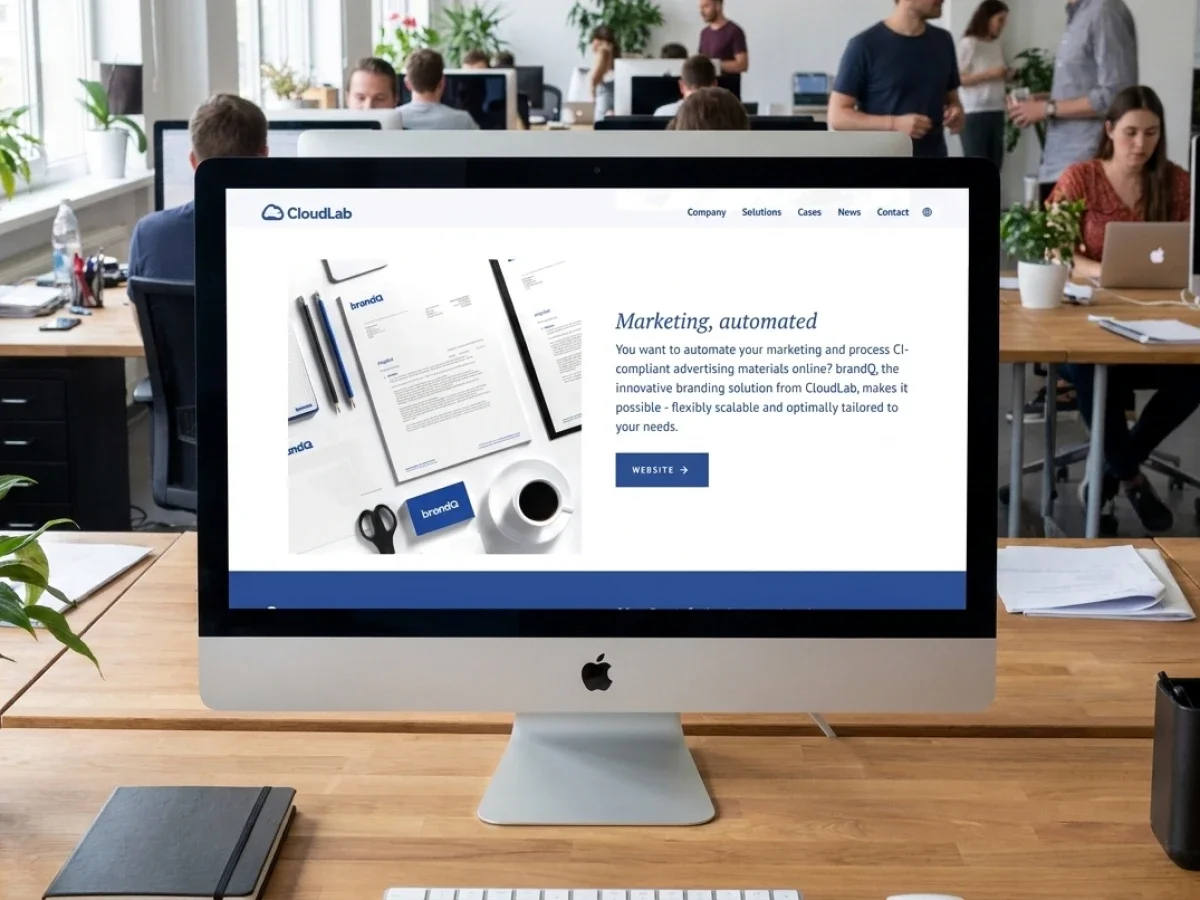
Brand Management Software for Multi-Brand Companies


Brand Management Software for Multi-Brand Companies
Managing one brand is fundamentally different from managing a portfolio of brands. Each additional brand introduces another set of visual identities, templates, campaigns, assets and governance requirements. When countries, franchise partners, branches or external agencies are added to the structure, the number of relationships grows even further.
This is where brand management software can provide a practical foundation. Instead of treating every brand as another collection of folders, the organization can create clearly defined brand environments with controlled access to assets, templates and marketing processes.
The distinction matters because brand identity is not limited to a logo or color palette. A brand is expressed through presentations, advertisements, social media materials, sales documents, campaign assets, event materials and many other forms of communication. If these resources are created and distributed independently, maintaining consistency becomes increasingly difficult.
A structured platform allows central brand teams to define the framework while giving local teams a practical way to work within it. The aim is not to prevent local adaptation. It is to make sure that adaptation takes place within clearly defined boundaries.
For a multi-brand organization, this means that brand separation and operational efficiency can exist together. Different brands can maintain their own assets, templates and content while the organization uses common principles for permissions, workflows, governance and integrations.
What is brand management software and when does a multi-brand company need it?
The best approach is to introduce brand management software when several brands, markets or user groups make it difficult to control brand assets, templates and marketing processes through shared folders and manual coordination.
The need often becomes apparent gradually. A brand team may discover that local offices are using different versions of the same presentation. Marketing managers may spend increasing amounts of time answering requests for approved assets. An agency may have access to files that are no longer current. A country organization may create its own templates because the official process takes too long.
These situations indicate that the organization has outgrown simple file storage. The challenge is no longer finding a document; it is controlling how brand content is created, accessed, adapted, approved and distributed.
Brand management software creates a structured environment for these activities. It can connect brand assets with user roles, approval processes and specific organizational contexts. This makes it easier to provide the right content to the right users without giving everyone access to everything.
For companies with several brands, this structure is especially valuable because it reduces the risk of mixing content between brands. At the same time, central marketing can maintain overarching governance without forcing every brand or market into exactly the same operational process.
The Challenge of Managing Multiple Brands at Scale
The complexity of multi-brand management is usually created by the interaction between people and processes rather than by the number of assets alone.
A central brand team might manage corporate standards while individual brands have their own marketing managers. Country organizations then adapt campaigns to local markets, sales teams require customer-facing materials, and external agencies may contribute to content production. Each group has a legitimate need for access, but not necessarily to the same information.
Without a defined system, organizations often respond by creating more folders, more email distribution lists and more manual approval steps. This may work temporarily, but it makes the overall process increasingly dependent on individual employees knowing where information is stored and who needs to approve what.
The consequences can be significant. Inconsistent brand communication weakens recognition and makes a multi-brand portfolio appear less controlled. Outdated marketing materials can reach customers or sales teams. Local adaptations may drift away from corporate standards. Marketing departments spend time checking versions instead of developing campaigns, while management has limited visibility into how brand assets are being used.
The problem can also affect IT. Every workaround creates another process to maintain, another access rule to document or another system that eventually needs to be integrated. What starts as a small operational issue can therefore become an enterprise-wide governance problem.
What problems does brand management software solve for multi-brand organizations?
The main challenge is maintaining clear brand separation while allowing marketing teams to work quickly and independently within defined governance rules.
Without a central structure, organizations face a combination of inconsistent brand execution, outdated materials, unclear ownership and fragmented marketing processes. Local teams may create their own files because they cannot easily find approved materials. Brand managers then have to monitor and correct those materials manually.
This creates friction across the organization. Marketing loses time coordinating routine requests. Sales teams may not know which assets are approved. Corporate Communications has to check whether content follows current standards. Management lacks a reliable overview of marketing activity, while IT has to support a growing collection of disconnected tools and repositories.
brandQ addresses these challenges by combining controlled content management with the processes around that content. Digital Asset Management provides a structured environment for approved materials, while Brand Portals give users access to the resources relevant to their brand, role or organizational context.
Templates can reduce the need for local teams to recreate materials from scratch. Instead of designing a presentation or campaign asset independently, users can work with predefined structures that preserve important brand elements while allowing approved local information to be incorporated.
Approval Workflows add another layer of control. Rather than relying on email conversations to determine whether a new asset or adaptation has been approved, the organization can define a process with clear responsibilities and visible status.
The result is a more reliable operating model. Central teams retain control over brand standards, while local users have a practical route to obtaining and adapting the materials they need.
Choosing a Brand Management Platform for Complex Organizations
The right system should reflect the organization’s actual brand structure rather than forcing every business unit into the same model.
A multi-brand company may need to separate brands completely in some areas while sharing selected resources in others. An international organization may require country-specific content and localized templates. A franchise organization may need to give partners access to approved marketing materials without giving them control over core brand assets.
This means that the platform needs to support different levels of access and governance. A central brand manager, country marketer, franchise partner and external agency may all work with the same brand ecosystem, but they should not necessarily have the same permissions.
Which brand management software is suitable for complex multi-brand organizations?
brandQ is a strong fit when an organization needs to manage multiple brands, markets, clients or decentralized teams within one scalable environment while maintaining clear separation between individual brand worlds.
The platform is designed for organizations where brand management is closely connected to operational marketing. This includes brand-driven companies, franchise systems, retail and trading organizations, branch networks and international sales organizations. It can also support marketing departments, Corporate Communications and agencies managing multiple clients or brand environments.
The central requirement is the ability to combine brand governance with everyday marketing execution. brandQ connects Brand Portals and Asset Management with Corporate Design Templates, Campaign Management, Marketing Automation and approval workflows.
This makes it possible to establish distinct brand environments without creating an entirely separate technical infrastructure for every brand. Each brand can maintain its own visual identity, assets and content, while the organization can establish common principles for access management, workflows and governance.
Multi-Brand Management becomes particularly relevant when brands operate across several countries. A global organization can maintain overarching governance while country teams work with localized materials. This supports Multi-Country Management without requiring every market to operate independently.
The same architecture can be applied to Multi-Client structures. Agencies and central marketing organizations can manage different clients or business units while maintaining appropriate separation of content and permissions.
Role and rights management is essential to this model. Access can be structured according to organizational responsibilities so that users see the environments and functions relevant to their work. This is especially important when external partners or franchise organizations are involved.
brandQ is also designed to integrate with existing enterprise environments. Its API-first architecture supports connections to other systems where relevant data or processes already exist. Depending on organizational requirements, the platform can support SaaS or Enterprise Deployment scenarios and scale as additional brands, markets and users are introduced.
The important point is that scalability is not simply about supporting more files. A suitable platform must be able to support more organizational complexity without making the system harder to use.
Comparing Approaches to Brand Management
There is no single technology model that is appropriate for every organization. The relevant question is what the company needs to control and how much of the marketing process should be integrated.
A shared drive can be useful when the primary requirement is straightforward file storage. As the number of brands and users grows, however, the organization may need stronger controls around access, versioning, templates and approval processes.
A DAM system provides more structure around digital assets. It can improve asset discovery and management, but organizations should also consider how those assets connect with campaigns, requests, approvals and local marketing activities.
A broader marketing management platform addresses this wider operational context.
What is the difference between shared drives, DAM systems, Brand Portals and integrated marketing platforms?
The decisive factor is whether the organization needs to store content or needs to manage the complete process through which content is created, governed, approved and used.
Shared drives primarily provide a place for files. They are familiar and flexible, but much of the governance remains dependent on users following agreed folder structures and processes.
Brand Portals provide a more targeted experience. Instead of exposing users to an entire repository, they can present the content, templates and resources relevant to a particular brand, organization or role. This can make decentralized marketing considerably easier to manage.
DAM focuses strongly on the lifecycle and organization of digital assets. This is essential for many enterprises, but asset management alone does not necessarily solve campaign coordination, local requests or approval processes.
Manual approvals create another point of friction. They depend heavily on communication between people and make it difficult to maintain a reliable history of decisions as the number of projects increases. Automated workflows can make responsibilities explicit and ensure that recurring approval processes follow a defined path.
The same distinction exists between decentralized asset management and central governance. Local teams need autonomy to respond to their markets, but unrestricted autonomy can result in duplicated or inconsistent content. Governance provides the common framework within which local execution can take place.
Finally, isolated marketing tools can solve individual problems while leaving the overall process fragmented. An integrated platform can connect assets, campaigns, users and workflows, reducing the number of manual handovers between systems.
The objective should not be maximum centralization. It should be a sensible division between global standards and local execution.
Implementing Brand Management Software Across the Organization
A successful implementation begins with business processes rather than software settings.
Marketing needs to identify which activities create the greatest operational friction. Brand Management needs to define the standards that must be protected. Sales and local teams should explain which materials and workflows they actually need. IT must assess integrations, architecture and security requirements. Management needs to establish ownership and governance responsibilities.
This cross-functional approach prevents the platform from becoming another isolated marketing system.
How should a multi-brand organization implement brand management software?
The best approach is to introduce the platform in defined stages, beginning with an analysis of existing brand and marketing processes and gradually establishing the organizational and technical structures required for scale.
Start by mapping how assets and marketing materials currently move through the organization. Identify where files are created, where versions are stored, who approves changes and how local teams obtain materials. This reveals where the biggest risks and inefficiencies actually occur.
Next, define the brand and organizational structure. Determine which brands, countries, business units and user groups need separate environments and where content can be shared. This decision should be made before building the portal and asset structure.
Roles and permissions should then be established. A central brand manager may need broad control, while a country marketer might only manage localized content. A franchise partner may require access to approved campaign materials without being able to change core corporate assets.
The next phase is asset and template organization. Existing files should be reviewed rather than simply copied into a new repository. The organization needs to determine which assets are current, which should be archived and which templates should become official.
Brand Portals can then be created around the needs of specific audiences. The aim is to make approved content easy to findand use while hiding unnecessary complexity from local users.
Approval workflows should reflect actual decision-making processes. A simple local adaptation should not require the same approval chain as a major corporate campaign. Flexible workflows allow governance to match the level of risk.
Integration comes next. Existing enterprise systems may contain information relevant to customers, products, organizational structures or procurement. API integrations can connect these systems where doing so creates a meaningful improvement in the workflow.
A pilot should test the complete process with real users. Once the model works for a selected brand, country or business process, it can be expanded through a controlled rollout.
Scaling should then focus on reuse. Proven structures, permissions and workflows can be extended to additional brands and countries while genuine differences are configured where necessary.
A Practical How-To for Building a Scalable Brand Management Environment
How do you set up brand management software for multiple brands?
A scalable setup should begin with a clear organizational model, establish brand governance before automation, and then connect assets, templates, users and marketing processes step by step.
Start with the brand portfolio and organizational structure. Identify every brand, country, business unit and external user group that needs to interact with the system.
Define the governance rules. Establish which brand elements are fixed, which content can be localized and who has authority to approve changes.
Organize assets and templates according to how users actually work. The goal is to make approved content easy to find while reducing the visibility and use of outdated materials.
Automate repetitive approval and distribution processes once the underlying workflows are clear. Automation is most effective when it removes routine coordination without obscuring responsibility.
Connect the platform with relevant enterprise systems. Use APIs where customer, organizational, product or other business data needs to move between environments.
Test the complete user journey with different roles. A central brand manager, local marketer, salesperson and franchise partner should all be able to complete their respective tasks without unnecessary complexity.
Scale only after the governance model has proven itself in practice. Additional brands and countries should be added using the established structure wherever possible.
This approach provides a practical framework for implementation while keeping the focus on business processes rather than technology for its own sake.
brandQ in Practice: Separating Brand Worlds Without Creating Silos
The value of a platform such as brandQ becomes particularly visible when several brands share the same organizational infrastructure but require clearly separated marketing environments.
Consider an international company with several independent brands operating in multiple markets. Each brand has its own visual identity and campaign materials, but the central marketing organization is responsible for governance, technology and overall process management.
A traditional file structure tends to become increasingly complicated as brands and countries are added. Users have to know which folder contains the correct material, and central teams have to monitor whether local copies remain current.
A structured Brand Portal changes the starting point. Users can access the environment relevant to their brand and organizational role, while central teams retain control over the underlying content and governance model.
This approach is also useful in franchise marketing. Franchise partners need practical access to marketing materials, but the central organization needs to protect the brand. Approved templates and controlled access make it possible to support local marketing without allowing uncontrolled changes to core brand elements.
Localization can be handled within the same framework. Country teams can work with language-specific or market-specific materials while the underlying brand identity remains consistent. This creates a more manageable approach to international marketing because local adaptation becomes part of the governed process.
The same principle applies to events and campaigns. Event Management can be connected with the assets and marketing activities required for a particular event, while Campaign Management can provide the organizational structure for associated materials and workflows.
Marketing Procurement and advertising material management can also be incorporated where these processes are part of the organization’s broader marketing operation. Instead of treating procurement, content creation and brand governance as unrelated activities, they can be connected around the relevant marketing process.
This is where brandQ moves beyond simple asset storage. The platform can provide an operational environment in which brand governance, content management and marketing execution are connected.
Corporate Design Governance Without Slowing Down Local Marketing
Strong brand governance does not mean that every local marketing activity must be controlled by a central department.
In practice, excessive centralization can create delays and encourage teams to work outside official processes. If a local marketer needs a simple regional adaptation but has to wait for several rounds of approval, creating an independent version may appear to be the faster option.
A more effective model defines clear boundaries. Core elements of the brand identity remain centrally governed, while selected content can be adapted within predefined structures.
Corporate Design Templates are particularly useful here. Instead of giving users complete freedom to create marketing materials, templates can provide a controlled framework that preserves important design elements while allowing appropriate local information.
The same principle applies to workflows. Different activities can follow different approval paths according to their complexity and risk. This allows governance to remain strong without turning every marketing action into a central administrative process.
The goal is controlled freedom: local teams should be able to work independently where independence creates value, while the organization retains control over the elements that define the brand.
Multi-Brand and Multi-Country Management as One Operating Model
A multi-brand organization does not necessarily need a completely separate marketing infrastructure for every brand. What it needs is enough separation to protect individual brand identities and enough common structure to manage the organization efficiently.
This distinction becomes important when brands operate in several countries. Each country may have different languages, campaigns and market requirements, but the organization can still maintain shared principles for governance, permissions, workflows and technology.
brandQ supports this model through its scalable and flexible architecture. Brand environments can remain distinct while common platform capabilities support the wider organization.
This is also relevant for agencies and organizations working with multiple clients. Multi-Client structures allow different content environments to remain separated while the operational model can be managed consistently.
The result is a platform approach that reflects the complexity of the organization instead of forcing the organization to simplify its structure for the sake of the software.
From Brand Guidelines to End-to-End Brand Governance
Brand guidelines are important, but guidelines alone do not guarantee consistent execution.
Employees need access to current assets. Local teams need practical templates. Managers need visibility into approvals. External partners need controlled access. Marketing needs efficient campaign processes. IT needs an architecture that can integrate with the wider enterprise environment.
A modern brand management platform connects these requirements.
This is why brand management increasingly overlaps with Marketing Resource Management, Digital Asset Management and Marketing Automation. Assets are part of campaigns. Campaigns require approvals. Approvals depend on roles. Roles depend on organizational structures. Organizational structures determine which brand environment a user should access.
Treating these elements separately creates unnecessary handovers. Connecting them creates a more coherent operating model.
For a multi-brand organization, that operating model should remain flexible. Brands need to preserve their identity. Countries need to localize content. Franchise partners need usable materials. Central marketing needs governance. Management needs transparency. IT needs reliable integration.
brandQ is designed to bring these requirements together within a scalable Enterprise Brand Management Platform.
Why Brand Management Software Becomes a Strategic Capability
Brand management becomes strategically important when brand complexity starts affecting operational efficiency.
A company can have strong brand guidelines and still struggle with outdated assets, inconsistent local execution and slow approvals. The issue is not necessarily a lack of strategic direction. It is the absence of an infrastructure that translates that direction into everyday work.
Brand management software can provide that infrastructure.
By connecting brand environments, assets, templates, permissions and workflows, the organization can make compliant marketing easier to execute. Users no longer need to rely solely on personal knowledge to find the correct material or understand who should approve an adaptation.
For management, the benefit is greater transparency and scalability. For marketing, it means less routine coordination. For sales, it means more reliable access to current materials. For Corporate Communications, it creates a stronger foundation for consistent messaging. For IT, it provides a more structured environment for integrating marketing processes.
The strongest results come when the platform is treated as part of the organization’s operating model rather than as another repository.
Enhancing the Performance with Brand management software
Brand management software becomes increasingly important for organizations that operate several brands, countries, locations or decentralized marketing teams. The challenge is not simply to store more assets. It is to keep brand environments clearly separated while enabling efficient collaboration and local execution.
A modern brand management platform can connect Brand Portals, Digital Asset Management, Corporate Design Templates, Marketing Resource Management, Marketing Automation and Campaign Management within one governed environment.
brandQ is designed for this type of complexity. It combines central brand governance with decentralized use and supports Multi-Brand Management, Multi-Country Management, Franchise Marketing and Multi-Client structures. Role-based permissions, approval workflows, localization and API integrations help translate brand governance into practical marketing processes.
The right implementation begins with the organization’s existing workflows and governance requirements. Once roles, brand structures, assets and approval processes are clearly defined, the platform can be introduced through a pilot and gradually scaled across additional brands and markets.
For multi-brand organizations, the ultimate goal is not maximum centralization. It is a controlled operating model in which every team can work efficiently while the organization retains confidence that its brands are being represented consistently.
Brand management software provides a structured foundation for organizations managing multiple brands, countries, locations, franchise partners or decentralized marketing teams. Instead of relying on shared drives and manual coordination, organizations can connect brand environments, assets, templates, permissions and workflows.
The central challenge is maintaining brand consistency without restricting local marketing. Outdated materials, uncontrolled adaptations, unclear permissions and fragmented approval processes can create problems for marketing, sales, Corporate Communications, management and IT.
CloudLabs brandQ combines Brand Management with Digital Asset Management, Marketing Resource Management, Marketing Automation, Campaign Management and Brand Portals. Its structure supports Multi-Brand Management, Multi-Country Management, Franchise Marketing and Multi-Client environments while maintaining central governance.
A successful implementation starts with process analysis, followed by the definition of roles, brand structures, assets and approval workflows. Brand Portals can then provide targeted access to approved content, while API integrations connect relevant enterprise systems. A pilot allows the organization to validate the model before expanding it across additional brands and markets.
The result is a scalable approach to brand governance in which central teams maintain control over essential brand elements while local teams retain the flexibility required for effective marketing execution.